




MUSCAT, JUNE 29
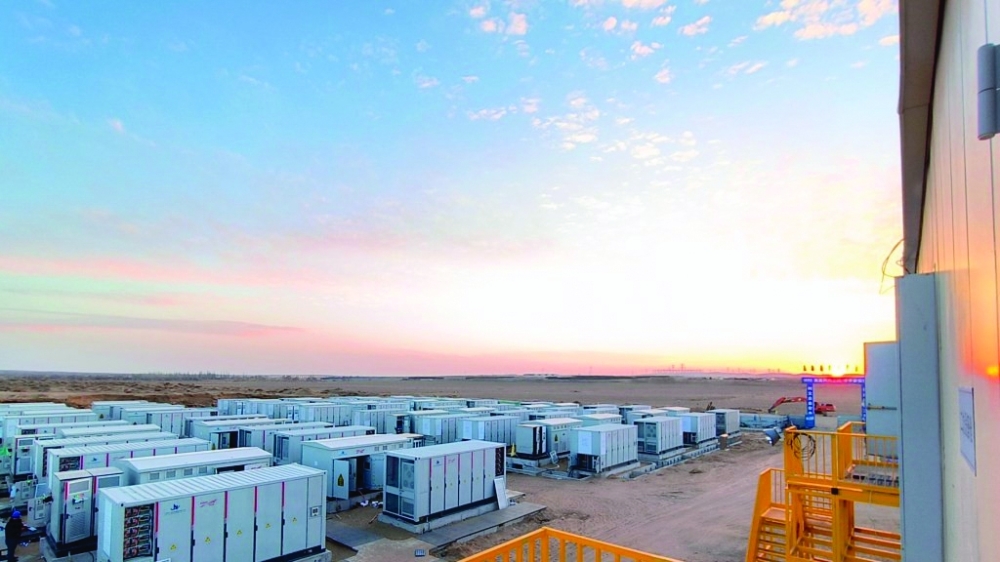
Construction of two utility-scale Battery Energy Storage System (BESS) projects is nearing completion at Ibri in Al Dhahirah Governorate and Duqm in Al Wusta Governorate. The investments are designed to strengthen Oman’s energy security as the Sultanate accelerates its transition to renewable electricity.
Oman Electricity Transmission Company (OETC) - the operator of the national transmission grid - is implementing the projects as part of its strategy to enhance grid stability and reliability amid the increasing integration of intermittent solar and wind power.
Each project has a storage capacity of 500 MW / 2,000 MWh, enabling it to deliver 500 MW of electricity continuously for four hours. This places the facilities among the largest utility-scale battery energy storage projects in the Gulf region.
“BESS is emerging as a critical enabler of grid flexibility, reliability and efficiency, particularly in the context of growing renewable energy integration, peak demand management and the provision of ancillary services,” majority state-owned OETC said. “BESS plays an important role in supporting daily grid operations by addressing supply-demand imbalances, relieving internal network congestion, and responding to system disturbances.”
By storing surplus electricity generated by solar and wind farms and releasing it during periods of peak demand, each BESS facility will play a pivotal role in strengthening grid stability, enabling greater renewable energy integration, and reducing reliance on gas-fired power generation.
Significantly, OETC’s 2025–2040 Master Plan outlines a broader roadmap for battery storage deployment across the Main Interconnected System (MIS), Dhofar Power System (DPS) and Musandam, supporting the country's long-term energy transition.
Under this strategy, OETC plans to deploy an additional 1,000 MW / 2,000 MWh of battery storage in the MIS by the second quarter of 2026, along with a 30 MW / 120 MWh installation in Musandam by the second quarter of 2028.
Meanwhile, Nama Power and Water Procurement (PWP) - the sole buyer of electricity and water output - plans to procure 250 MW / 1,000 MWh of battery storage for the Dhofar system and a further 500 MW / 2,000 MWh for the MIS between the second quarter of 2026 and the second quarter of 2027. According to OETC, these facilities will primarily support peak shaving by storing excess electricity during periods of low demand and discharging it during peak consumption.
“The phased BESS deployment reflects a forward-looking grid modernisation strategy, positioning Oman to accommodate high levels of renewable energy penetration while maintaining reliability, operational security and economic efficiency as the energy transition accelerates toward its 2050 decarbonisation goals,” the company said.
In parallel, OETC is assessing alternative locations to identify further opportunities for battery storage deployment across the transmission network, supporting long-term operational flexibility and energy transition objectives.
“These investments are aligned with Oman’s Net Zero 2050 vision and will enable a more flexible, decarbonised and efficient power system, optimise grid operations, and unlock the full potential of renewable energy and green hydrogen development,” the publicly traded company added.
Oman Observer is now on the WhatsApp channel. Click here