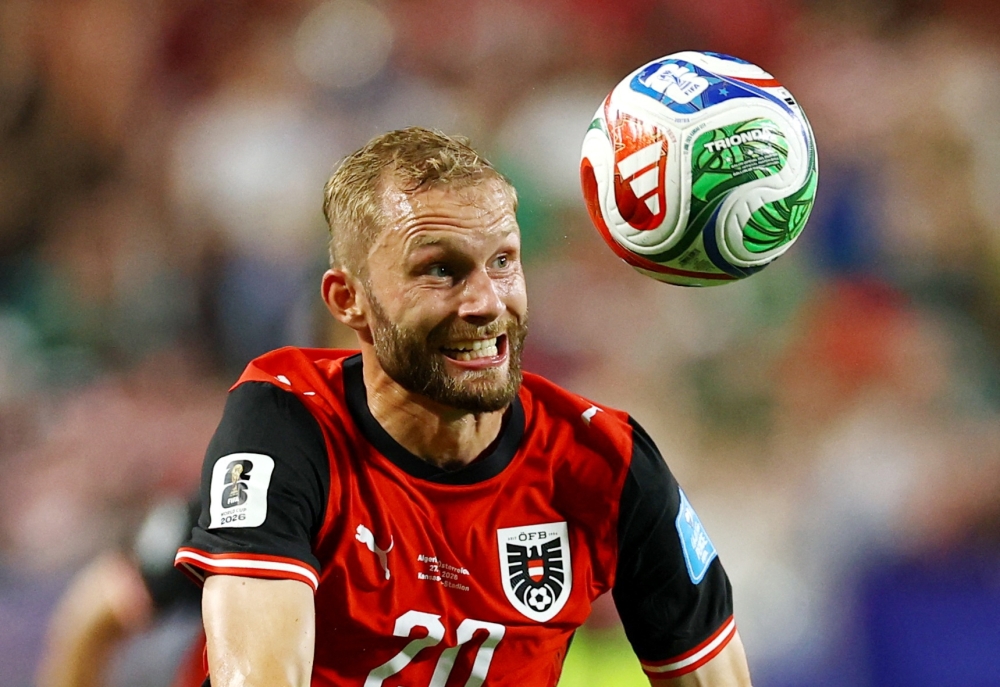
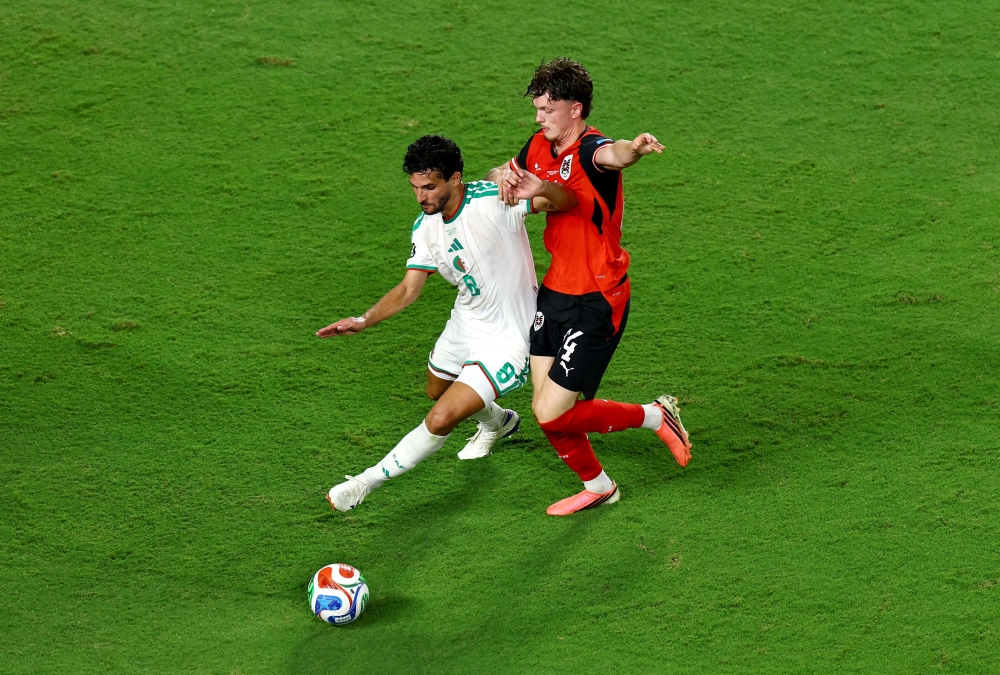
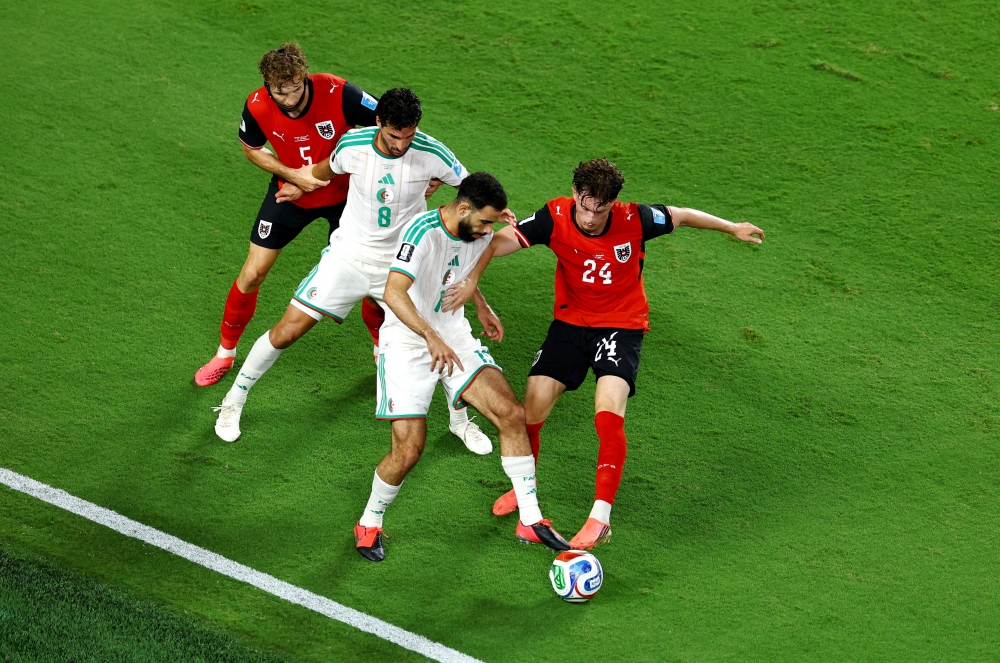





KANSAS CITY: For all the scrutiny surrounding the World Cup's expanded 48-team format, with the advantage its uneven scheduling may give sides playing later in the final round, Austria and Algeria offered a reminder of the sport's unpredictability on Saturday.
Austria coach Ralf Rangnick said he had "no words" to explain the chaos that unfolded in the dying seconds as their 3-3 draw capped a group stage both problematic in design and irresistible in drama.
They produced one of the most gripping encounters of the tournament so far, full of momentum swings and late heroics.
Austria led twice, but the North Africans fought back relentlessly.
When Riyad Mahrez fired home in the 93rd minute to make it 3-2, it appeared to be a goal that would give Algeria victory and eliminate Austria. But the Europeans struck again three minutes later, sending both into the round of 32.
"It was a serious, disciplined performance. We were solid," Mahrez said. "In the end, we could have won it, but it's a draw. The most important thing is to go through."
1982 REMINISCENCES PUT TO REST
Memories of the "Disgrace of Gijon" in 1982, when West Germany and Austria played out a mutually beneficial, uncompetitive match that eliminated Algeria, lingered in the build-up, but both coaches dismissed fears of a repeat.
"I'm extremely happy that at the end it was football that won, that prevailed. 3-3 as a score says it all," said Algeria manager Vladimir Petkovic.
A direct result of the 1982 match was FIFA changing rules to ensure the final matches in World Cup group stages are played simultaneously, though the new 48-team format may have reintroduced some asymmetry.
In the final round, some teams - including the Group J sides - took the field knowing what they needed to advance, while others, such as South Korea and Scotland, ended up eliminated days after playing without that clarity.
But there was no repeat of the infamous 1982 script in Kansas City. Instead, the North African side came within seconds of what might have felt like sporting revenge.
A third team, which had played a day earlier, ended up affected.
Iran, who would have progressed as one of the best third-placed teams with an Algeria victory, ended up eliminated. Austria advanced as Group J runners-up, while Algeria reached the round of 32 among the best third-placed teams.
BEYOND HITCHCOCK'S IMAGINATION
Saturday's drama gained extra layer as Austria's 96th-minute equaliser arrived from Sasa Kalajdzic, who had only just came on to replace Philipp Mwene.
It was his first touch, a decisive finish following a flicked header that rescued Austria from elimination and completed one of the tournament's most dramatic substitutions.
"You concede the 3-2 in the 94th minute and you think it's over, what more can happen?" Austria midfielder Marcel Sabitzer said. "But then we still get a clear chance. And we still believe."
Rangnick was left grasping for words, later saying that not even Alfred Hitchcock could have scripted such an ending.
The new group-stage structure may continue to raise questions, but at least Algeria and Austria showed that soccer's uncertainty and drama remain alive.
While many feared that Saturday's match would enter history books as the "Disgrace of Kansas City," it may actually make them as the "Thriller of Kansas City." — Reuters
Oman Observer is now on the WhatsApp channel. Click here