




MUSCAT, JUNE 22
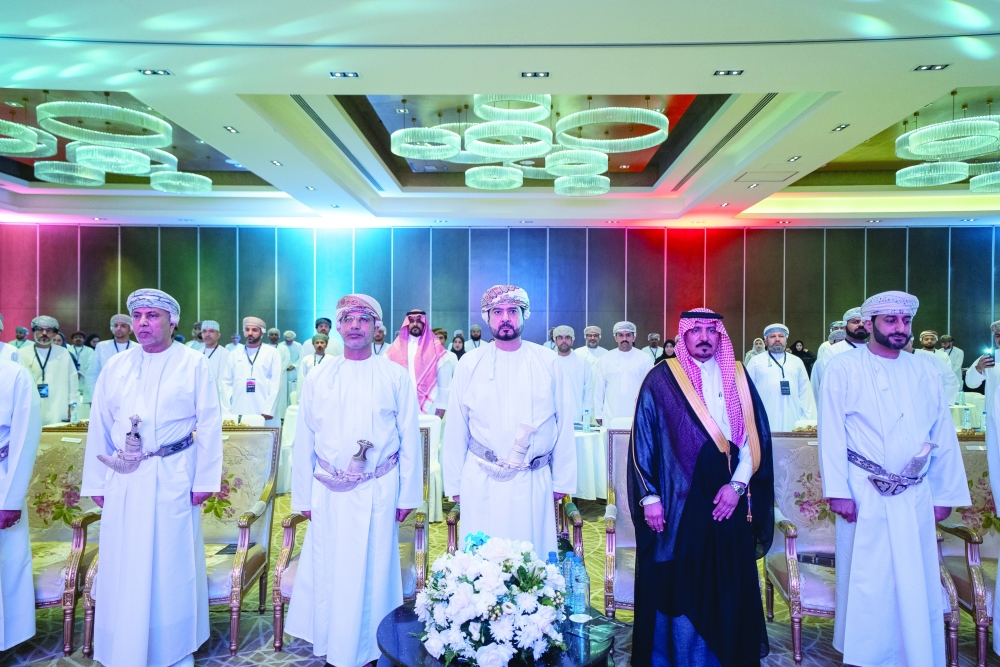
The first edition of the Resilience Conference for Risk and Crisis Management and Business Continuity opened here on June 22, 2026, under the auspices of Qais bin Mohammed Al Yousef, Chairman of the Public Authority for Special Economic Zones and Free Zones (OPAZ), highlighting the importance of strengthening institutional preparedness and resilience amid evolving global challenges.
The conference serves as a specialized platform, bringing together leading experts, decision-makers, academics, and specialists from within and outside the Sultanate of Oman to discuss the latest global practices in risk and crisis management and business continuity, with a focus on supply chains as a crucial pillar supporting the sustainability and competitiveness of national economies.
Nasser bin Khalid al Yaarubi, CEO of Jabreen Scientific Academy, affirmed that the conference aims to raise institutional awareness of the importance of building effective risk management systems and enhancing business continuity.
He explained that rapid economic and technological developments, coupled with global geopolitical challenges, necessitate that institutions adopt a proactive approach to risk management. This approach ensures business sustainability, protects supply chains, and maintains the stability of services and operational processes.
In one of the conference's main sessions, Dr. Moataz Salama, Editor-in-Chief of the Arab Strategic Report at the Al-Ahram Centre for Political and Strategic Studies, reviewed the most prominent geopolitical changes the world has witnessed in recent years and their direct impact on global trade and supply chains. He emphasized that escalating regional and international tensions have made supply chains more vulnerable to cross-border risks and disruptions.
He pointed out that confronting these challenges requires governments and institutions to adopt more flexible and adaptable strategies, diversify supply sources, and strengthen risk management and business continuity plans to ensure market stability and the flow of goods and services.
Dr Raed bin Mohammed al Rubaie, CEO of Sohar Freezone and Deputy CEO of Sohar Port, highlighted the pivotal role of Omani ports in the regional and international trade system, stressing that they represent a fundamental pillar in supporting the continuous flow of goods and services and enhancing the efficiency of supply chains.
"Enhancing the resilience of supply chains has become a strategic priority for institutions and countries," Dr Al Rubaie emphasised, adding that Omani ports continue to develop their operational and service capabilities, contributing to economic growth and strengthening the Sultanate's position as a regional and global logistics hub.
The official stressed the importance of the land customs corridor in strengthening regional value chains and supporting food security and manufacturing industries by facilitating the movement of goods and vital raw materials during periods of challenges and uncertainty.
In the food supply sector, grains are imported through SOHAR Port and Freezone and redistributed to GCC markets, contributing to regional food security and ensuring the flow of essential goods. Approximately 30,000 metric tonnes of general cargo and 60,000 metric tonnes of dry bulk cargo are handled weekly.
The corridor also supports the aluminium sector by transporting alumina to smelters in the UAE and Bahrain, thus maintaining the continuity of strategic downstream industries. Amounts transported to GCC markets reached 123,028 metric tonnes, while total exports amounted to 209,991 metric tonnes.
The Resilience Conference emphasises that building more resilient and adaptable institutions is no longer an option, but a strategic necessity to ensure the sustainability of economic growth, enhance national competitiveness, and solidify the Sultanate of Oman's position as a leading regional hub for risk management, business continuity, and logistics.
Oman Observer is now on the WhatsApp channel. Click here