




MUSCAT, JUNE 20
The group stage of the Fifa World Cup 2026 has not only delivered thrilling football action and memorable goals but has also generated significant debate surrounding several controversial refereeing decisions. As modern football continues to rely heavily on the Video Assistant Referee (VAR) system, discussions regarding the interpretation of the Laws of the Game remain a major talking point among players, coaches, analysts and supporters.
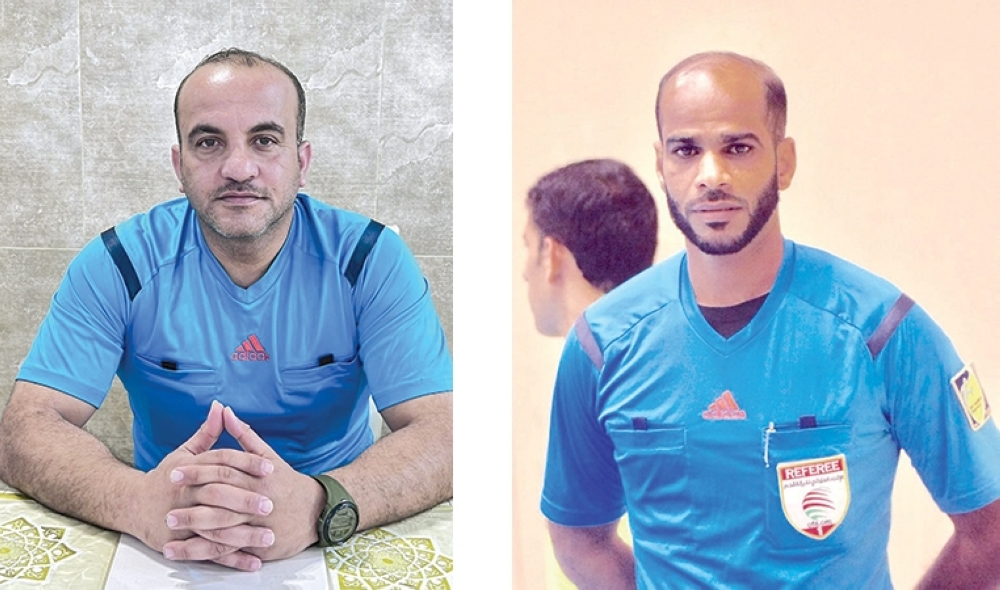
To provide a professional assessment of some of the tournament's most discussed incidents, The Observer spoke to former Omani international referees Hilal al Shraiqi and Majid al Raqadi, who offered their technical opinions on three controversial moments from the opening round of matches.
1. Egypt vs Belgium
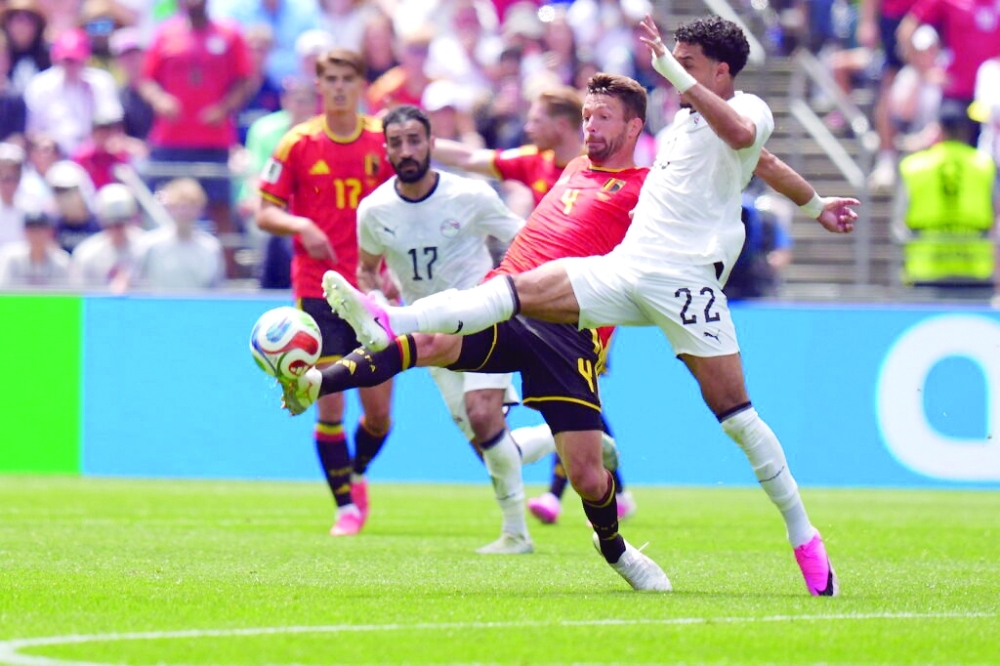
One of the most debated incidents occurred during the closing stages of the match between Egypt and Belgium. In the 88th minute, Egyptian attacker Ahmed Sayed "Zizo" advanced into the right side of the Belgian penalty area before being challenged by a Belgian defender. The Egyptian player appeared to be impeded and held while attempting to move toward goal, eventually falling to the ground and immediately appealing for a penalty. The referee allowed play to continue and did not award a spot-kick. Furthermore, despite the existence of VAR, no on-field review was recommended.
Former Fifa referee Majid al Raqadi said the referee was correct in not awarding a penalty kick. "After reviewing the incident, the contact clearly started outside the penalty area. Therefore, it cannot be considered a penalty. The correct decision should have been a direct free-kick outside the area and a yellow card for the Belgian defender because the foul interrupted a promising attacking move," Al Raqadi explained.
He added that the VAR team likely determined that the point of contact occurred before the player entered the penalty area, which would explain why no intervention was recommended.
2. Argentina vs Algeria
Another controversial moment came during Argentina's match against Algeria when Argentine captain Lionel Messi became the centre of attention for reasons unrelated to his attacking brilliance. Around the 23rd minute of the first half, Messi challenged Algerian captain Aissa Mandi in a duel for possession. Television replays appeared to show Messi stepping on the Algerian defender's leg with the sole of his boot. Despite multiple replays, Polish referee Szymon Marciniak took no disciplinary action, while the VAR officials did not advise an on-field review.
Al Raqadi strongly disagreed with the decision and believes the incident met all the criteria for serious foul play. " When evaluating a potential red-card offence, referees consider several important elements. These include whether the player's leg is extended, the distance and force involved, the point of contact, and whether the sole of the boot makes direct contact with the opponent," Al Raqadi said.
"In this incident, all the required criteria for a direct red card were present. Unfortunately, both the referee and the VAR team failed to reach the correct conclusion. In my opinion, Messi should have been sent off for serious foul play." Al Raqadi noted that such decisions are precisely why VAR was introduced, particularly in situations where player safety is involved.
3. The US vs Paraguay
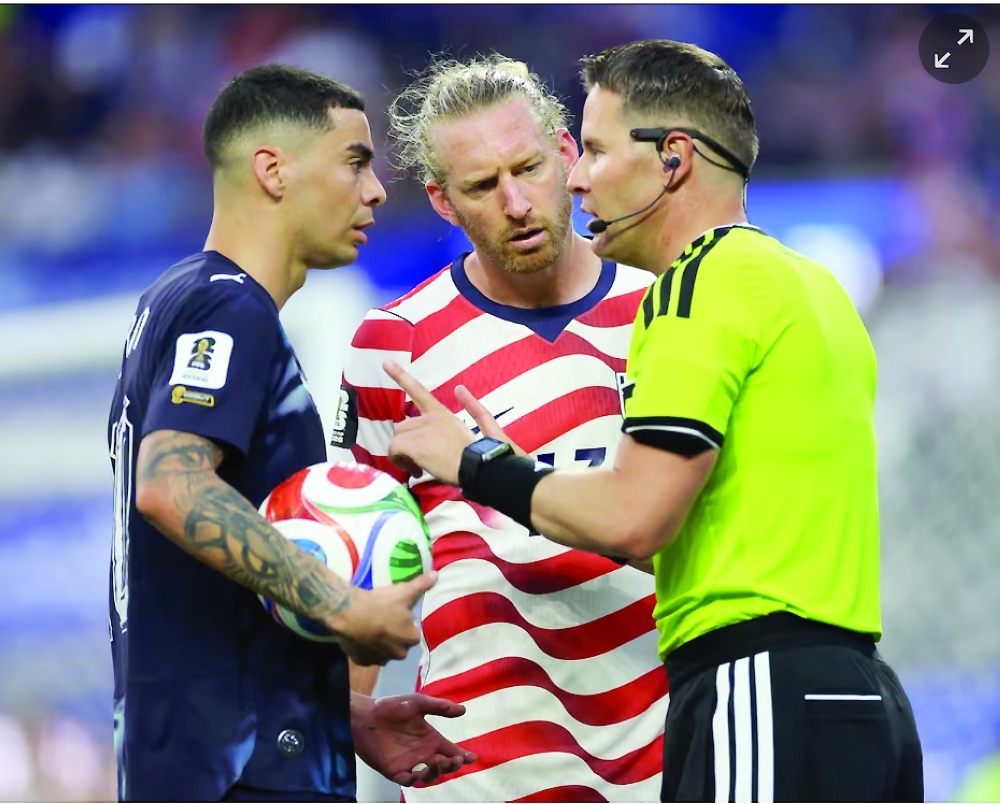
The match between the United States and Paraguay also produced a controversial VAR discussion during the second half. In the 68th minute, American defender Tim Ream received a yellow card after the referee awarded a foul against Paraguay's Miguel Almiron. Following a VAR review, officials concluded that Almiron had exaggerated the contact in an attempt to win a free-kick. As a result, Ream's yellow card was rescinded and Almiron was instead cautioned for simulation. However, former Omani international referee Hilal al Shraiqi believes the original on-field decision should have stood.
"Unfortunately, I do not believe the VAR team was correct in recommending a review of the yellow card situation," Al Shraiqi said.
"The replay clearly shows that there was contact and that the defender's challenge caused the attacker to lose his balance. The original yellow card issued against Tim Ream was justified and should not have been overturned."
According to Al Shraiqi, the incident highlights the importance of maintaining a high threshold before VAR intervenes in subjective fouls that are already correctly assessed by the referee.
4. Saudi Arabia vs Uruguay
Perhaps the most emotional controversy involving Arab football supporters came during Saudi Arabia's clash against Uruguay. Deep into stoppage time at 90+4 minutes, Saudi Arabia launched a promising counterattack with one of its attackers advancing into space and moving toward the Uruguayan penalty area.
Unexpectedly, Italian referee Maurizio Mariani blew the final whistle while the attack was still developing. The decision immediately sparked frustration among Saudi players, coaching staff and supporters. Many observers questioned why the referee ended the match at that exact moment instead of allowing the attacking phase to conclude.
Al Shraiqi believes the referee should have exercised greater flexibility. "When a team is in possession and building a dangerous attacking opportunity, particularly during added time, referees are generally encouraged to allow the move to finish before ending the game. In this case, Saudi Arabia had a promising attacking situation and I believe the referee should have allowed play to continue for a few more seconds before blowing the final whistle."
Oman Observer is now on the WhatsApp channel. Click here