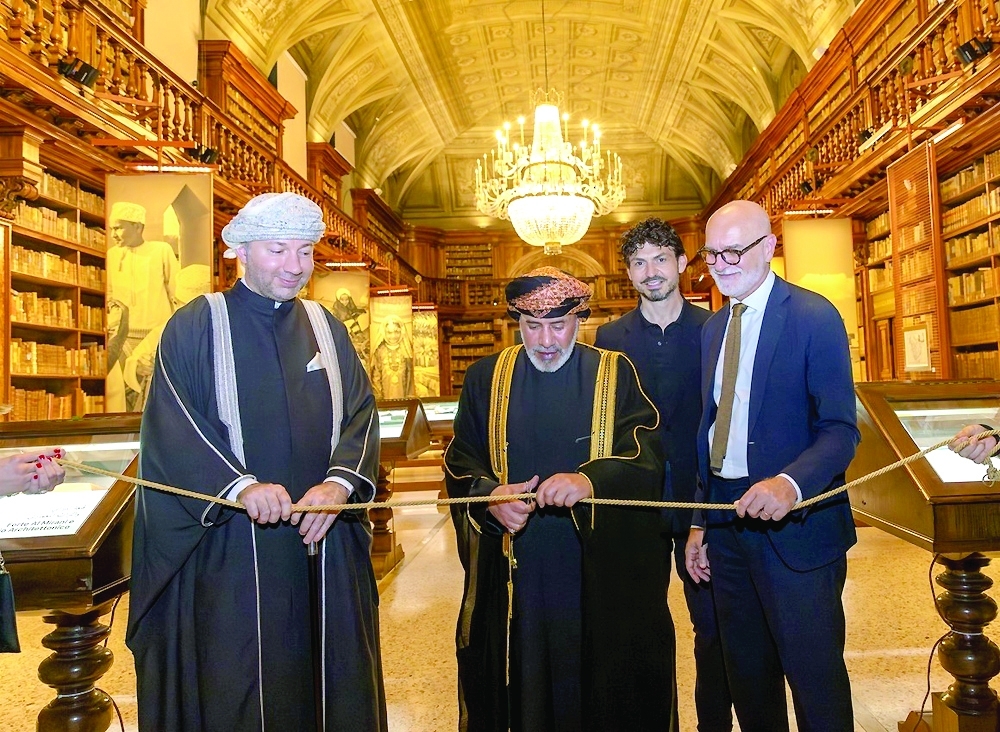





MILAN: The National Museum inaugurated 'Oman and Italy: Two Millennia of Cross-Civilisational Dialogue' at the prestigious Pinacoteca di Brera in Milan, Italy, on Thursday.
The exhibition explores the enduring dialogue and deep historical ties that have connected Oman and Italy for nearly two millennia through vibrant networks of trade, knowledge and cultural exchange. Drawing on archaeological discoveries, travel literature, cartography and the arts, it traces a shared civilisational legacy across the Mediterranean and the Indian Ocean.
The exhibition is organised under the National Museum’s Oman Day initiative, which aims to showcase Oman’s civilisational, historical, cultural, and scientific heritage in leading international museums and cultural institutions, reaching diverse audiences around the world.
The opening ceremony was attended by HH Sayyid Nizar bin Al Julanda al Said, Ambassador of Oman to Italy, and Jamal bin Hassan al Mousawi, Secretary-General of the National Museum, together with a number of officials and cultural and museum professionals from Italy.
Al Mousawi stated, “The National Museum is honoured to present this exhibition within the confines of the momentous Braidense National Library, the first such museum initiative by the Sultanate of Oman in the Italian Republic. Throughout the past centuries, the noblest of Italian minds have played a key role in the revelation of the primary characters of Oman, its archaeology, architectural heritage, customs and traditions, geography, geology, fauna and flora, and its government. Some notable Italians have left their particular mark on our history too”.
He added, “This exhibition focuses on the archaeological legacy, publications of anthologies of travelogues, accounts which give an overview of documents and books, cartography, and the arts. Likewise, common threads that attest to the bonds of our cultures are explored and highlighted, including the aflaj water management system, known in Sicily by its Arabic name Qanat, and the ritualistic significance of the Luban (frankincense). Another point of contact of the Imperial epochs of Oman and Italy was the lands of the African continent."
On his turn, HH Sayyid Nizar said, “It is a source of immense pleasure that the Omani exhibition, titled 'Oman and Italy: Two Millennia of Cross-Civilisational Dialogue', is being hosted at the Grande Brera in Milan. This exhibition showcases a curated selection of collections from the National Museum of the Sultanate of Oman, which chronicle the deep-rooted relationships and civilisational exchange spanning two thousand years between Oman and Italy. It brilliantly highlights the cultural and historical richness of both civilisations as manifested in archaeology, travel literature, cartography and the arts."
Meanwhile, Angelo Crespi, Director-General of Pinacoteca di Brera, said, “Between Grande Brera and the National Museum of Oman, a profound scientific and cultural collaboration has been underway for the past two years. It is within this framework that the idea for this exhibition was conceived: not only to celebrate two millennia of dialogue between our cultures, but also to define the meaning of a living heritage that continues to look towards the future.”
He added, “In the spirit of cultural cooperation between our two countries, highlighted during the official visit of the Italian Prime Minister to Oman and shared by His Majesty the Sultan, the exhibition 'Oman and Italy: Two Millennia of Cross-Civilisational Dialogue' bears witness to the multiplicity of artistic languages that have given value, including through customs and traditions, to the significance of the historical bond between Oman and Italy.”
Among the exhibition’s most significant artefacts are objects that place Oman’s Iron Age artistic and religious heritage in dialogue with the classical Mediterranean world. These include a bronze Snake figure discovered at Saih Al Qa’a in the Wilayat of Al Hamra and pottery fragments from the Salut archaeological site, displayed alongside two snake-shaped vessel handles of Roman Italian origin uncovered on Masirah Island. A Plaque with Old South Arabian (Hadhramitic) Inscription from the ancient port of Samharam further underscores the exalted status of frankincense in the ancient world.
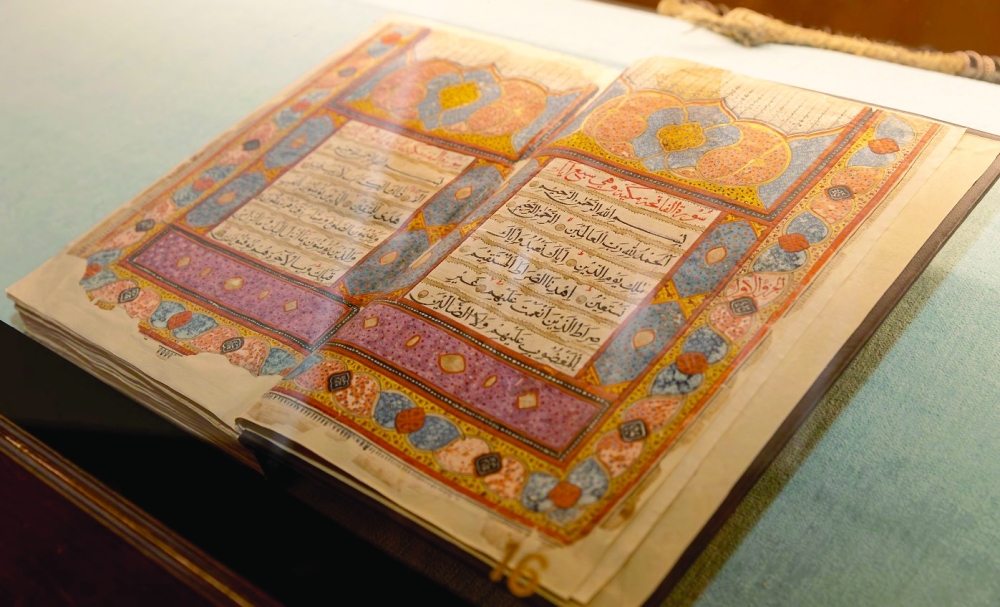
The exhibition further explores Oman’s early embrace of Islam and its flourishing tradition of jurisprudential scholarship as a centre of Ibadi thought. Rare manuscripts on display include Digest of Laws (Bayan Ash Shar) and Dictionary of Islamic Law (Qamūs Ash Sharī'ah), printed in Zanzibar, alongside illuminated Quranic manuscripts and a Swahili translation of the meanings of the Holy Quran. This intellectual heritage is placed in dialogue with Western engagement in Quranic studies through a European printed edition of the complete Quran translated by Ludovico Marracci and published in Padua in the eighteenth century.
Oman Observer is now on the WhatsApp channel. Click here