




Traditional Omani architecture was never only about shelter. In the past, Omanis paid great attention to decorating their homes, especially doors and windows, turning houses into expressions of privacy, dignity, beauty and collective identity.
Ancient Omani doors, for example, were not merely architectural features. They were visual social texts that reflected the cultural, religious and economic values of society.
One of the most prominent examples is the Masmari door, known for its strong construction and the rows of large nails visible on its surface. A 2021 study by Prof Dr Hani Farouk Ahmed, published in the Journal of Arts, Literature, Humanities and Social Sciences, notes that this door carries a social meaning connected to resilience and the ability to withstand harsh environmental conditions. It also reflects the high level of craftsmanship developed by Omani society despite limited resources.
From a sociological perspective, Abrar bint Nasser al Hadhrami, social researcher and member of the Omani Social Association, said the Masmari door can be read as a symbol of collective strength and self-reliance. The scarcity of wide timber was transformed into an opportunity for architectural innovation, producing doors that were both durable and aesthetically pleasing. This type of door can still be seen in Nizwa Souq.
Another example is the Abu Furkha door, which embodies the values of privacy and modesty. The small opening within the larger door allowed people to enter and leave without exposing the interior of the house. In this way, the door translated religious and social values linked to safeguarding family life. It also showed how architecture balanced openness to the outside world with the protection of domestic privacy. This type of door can be found in Al Hazm Castle in Al Rustaq.
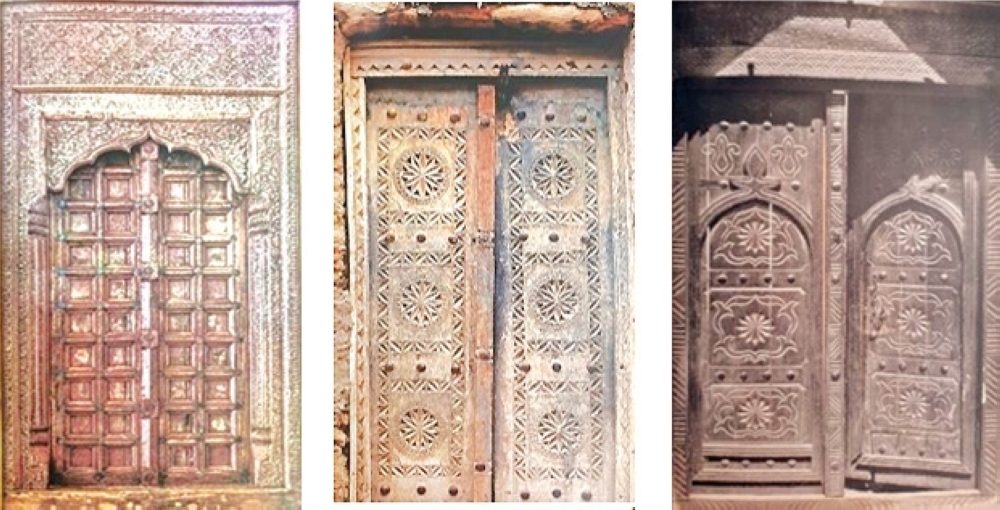
The Maqtaa door, composed of decorated squares or rectangles, was often linked to the internal functions of houses. Its social significance lies in its simplicity and practicality, while still reflecting the community’s insistence on incorporating beauty into everyday life. Decoration was not limited to exterior appearances, but was integrated into rooms and interior spaces, showing society’s appreciation of beauty as a basic human value.
According to Al Hadhrami, these doors and their ornamentation reveal how Omani society perceived itself and its relationship with the world. Each door represents a different dimension of social values: strength and resilience, privacy and modesty, simplicity and beauty. Together, they show that traditional architecture reproduced social values in tangible form and that ornamentation was not merely decoration but a symbolic language of identity, dignity and privacy.
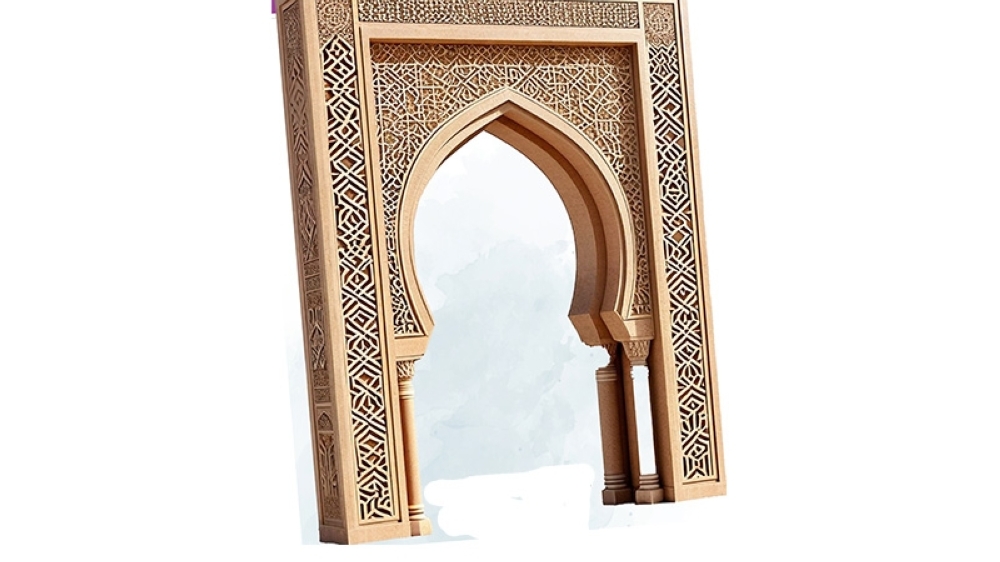
Windows in traditional Omani architecture carried similar meanings. They were not only openings for ventilation and light, but also cultural and social symbols. Window screens were usually made of gypsum or solid wood and often featured intricate geometric designs, including repeated units, diagonal lines, circles and rectangular grids with Islamic or Persian-inspired motifs.
These patterns expressed a wider appreciation for order, symmetry and harmony. Socially, decorated windows played a crucial role in protecting privacy. Wooden mashrabiyyas allowed household members to look outside without being seen from the street, a function especially important in preserving family life and modesty.
At the same time, these windows allowed air and natural light to flow through the house, showing how Omani architecture harmonised beauty with function and responded to the local environment. When made from more durable materials, they were known as Qamariyyas, symbolising craftsmanship and sustainability.
For Al Hadhrami, doors and windows show that the Omani house was not just a shelter, but a space where values were lived and expressed. It protected the family, reflected social identity, and connected the private world of the home with the wider community.
She added that the making of doors and windows was also influenced by Oman’s trade links with India and East Africa, which introduced new motifs. Yet these influences were reinterpreted locally, reflecting an Omani character that was open to the world while preserving its own identity and collective memory.
Oman Observer is now on the WhatsApp channel. Click here