




MUSCAT, JUNE 15
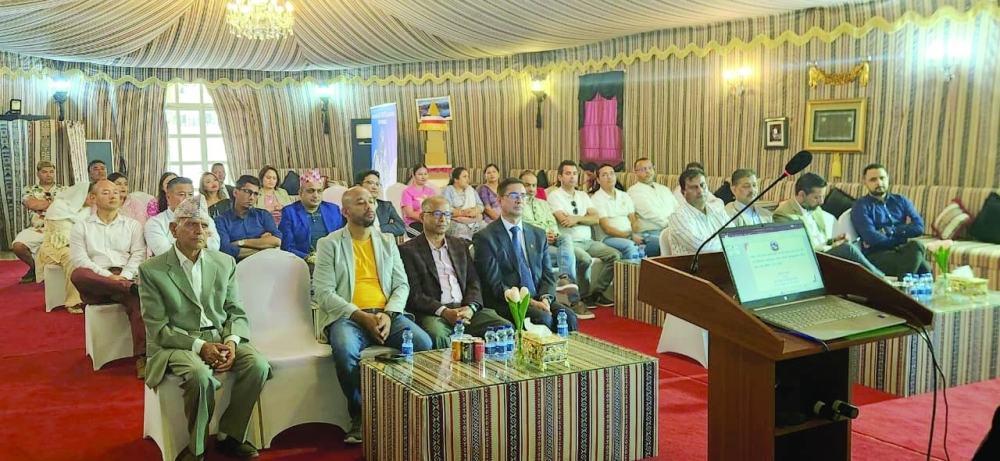
As Oman’s Ministry of Commerce, Industry, and Investment Promotion (MoCIIP) steps up efforts to enhance export readiness and develop the competitiveness of Omani enterprises, industry leaders from across sectors are engaging in workshops and dialogue aimed at positioning the Sultanate of Oman more decisively in global markets.
The Observer spoke with two Omani exporters — Abdullah al Qulaibi, a veteran electrical transformer manufacturer, and Abdulrahman al Harousi, Omani Farmers Association — to understand what export success actually looks like on the ground, what stands in the way, and what Oman must do differently to compete.
Both interviews reflect a broader truth emerging from MoCIIP’s export readiness efforts workshop: Oman has genuine competitive strengths — in manufacturing heritage, in agricultural quality, in its geographic position — but converting those strengths into sustained export growth demands infrastructure investment, institutional coordination, and a generational commitment to quality standards. The conversation is encouraging. The hard work, as both exporters acknowledge, is only beginning.
WILLINGNESS TO ADAPT
Abdullah al Qulaibi, a veteran electrical transformer manufacturer
Your company has been exporting for nearly four decades. What does that longevity tell us about the state of Omani manufacturing exports?
It suggests that Omani manufacturers can compete in regional and international markets when they maintain consistent quality and respond to changing customer requirements. Long-term success in exporting depends on understanding market needs, meeting industry standards and adapting to changes over time.
You have said that the main challenge is not exporting itself, but keeping pace with market developments. What exactly is changing, and are Omani companies keeping up?
Export requirements are constantly evolving. Technical standards, documentation, compliance requirements and customer expectations can change from one market to another and often become more demanding over time. Energy efficiency standards, for example, are becoming increasingly stringent in many countries. Manufacturers need to stay informed about these developments to remain competitive. Industry workshops and training programmes can help companies understand new requirements and prepare for them.
Should Omani companies prioritise direct or indirect exporting when entering new markets?
Both approaches have advantages. Direct exporting allows companies to maintain closer relationships with customers and greater control over pricing and branding. Indirect exporting, through distributors or agents, can help businesses enter unfamiliar markets where they lack established networks or local knowledge. The most suitable approach depends on the company's size, experience and target market.
Is e-commerce relevant for industrial manufacturers?
For large industrial equipment, online sales platforms are generally not the primary sales channel because products often require customised specifications, technical assessments and contract negotiations. However, digital platforms remain important for marketing, customer engagement and sharing information about products, services and industry developments. A strong online presence can also help companies reach potential customers and build brand awareness in international markets.
QUALITY ENFORCEMENT IS KEY
Abdulrahman al Harousi, Omani Farmers Association
We believe that, as a company working closely with Omani farmers, we have created this channel to help them generate sustainable income. We are proud of Omani farmers and the quality of Omani agricultural produce. We are now exporting Omani fruits and vegetables to Germany and the United Kingdom, having pivoted toward European markets, particularly targeting Asian diaspora communities that are familiar with the types of products we grow.
The key insight is that you do not need to convert the entire European consumer market. You find your niche, a community, a distribution channel, a set of buyers who already understand the value of what you have and you build from there. This session is excellent to build knowledge that will guide us to build a new roadmap for spreading our business to new markets in Europe.
You described this season as excellent, and praised Omani farm quality. But is that optimism fully warranted? What are the hard structural challenges that don’t disappear in a good season?
Contract farming brings planning to the process. We can look at what European markets need, what diaspora communities are buying, what prices are holding, and then coordinate production accordingly. The farmer gets a guaranteed buyer. We get consistent supply. The buyer gets reliable quality. When people hear about Omanis’ products quality they start looking at all products, rather than only ours.
You mentioned that once buyers hear about Omani product quality, it becomes easier for other Omani products to enter those markets. But how do you protect that halo effect?
One exporter sending substandard product can damage the reputation of all Omani exporters.
This is exactly right, and it is one of my genuine concerns. The reputation of “Made in Oman” in European agricultural markets is still being built. It is fragile. One bad actor, one shipment of produce that does not meet quality standards, creates a negative association that is very difficult to reverse.
This is why coordination among Omani exporters, and between exporters and government, is so important. There needs to be quality enforcement before products leave the country. The export certificate is not enough. The product must actually meet the standard it is certified to. That requires investment in inspection capacity, in cold-chain integrity, and frankly in a culture among exporters of taking quality seriously as a collective responsibility.
On direct versus indirect exporting, what is better for agricultural products?
For agricultural products we prefer direct exporting because the profit will be higher at the same time you build a brand for the future and for Oman. We began exporting to Europe two years ago; however, we started to export 13 years ago to Japan, but stopped after Covid-19. The European markets focus a lot on the quality, that’s why we try to build our brand in the European markets based on quality.
Finally, on e-commerce in agricultural markets — you mentioned digital auction platforms. Is this the future of agricultural trade?
It is certainly part of the future. Digital auctions are already operating for some commodity categories — buyers log on, see available quantities and specifications, and bid competitively.
Oman Observer is now on the WhatsApp channel. Click here