




MUSCAT, JUNE 15
Oman's economy is projected to grow by 2.4 per cent in 2026 despite a sharp slowdown across Gulf hydrocarbon exporters, according to the World Bank's June 2026 Global Economic Prospects report. The forecast is 1.2 percentage points lower than the Bank's January projection.
The outlook contrasts with a challenging regional environment. GCC growth is projected at 1.3 per cent in 2026, down from 4.5 per cent in 2025, while hydrocarbon exporters across the Middle East are forecast to grow by just 0.3 per cent this year, a downgrade of 4.3 percentage points from the World Bank's January estimates.
Oman is expected to outperform several GCC peers. Kuwait's economy is forecast to contract by 6.4 per cent in 2026, while Qatar is projected to shrink by 5.7 per cent, representing downward revisions of nine and 11 percentage points, respectively, from January forecasts. Bahrain is expected to grow by 1.3 per cent, while the UAE is forecast to expand by 2.4 per cent and Saudi Arabia by 3.1 per cent.
The World Bank attributed Oman's relatively moderate slowdown to its port geography, noting that the country "is less exposed to the conflict primarily because its major ports are located outside the Strait of Hormuz."
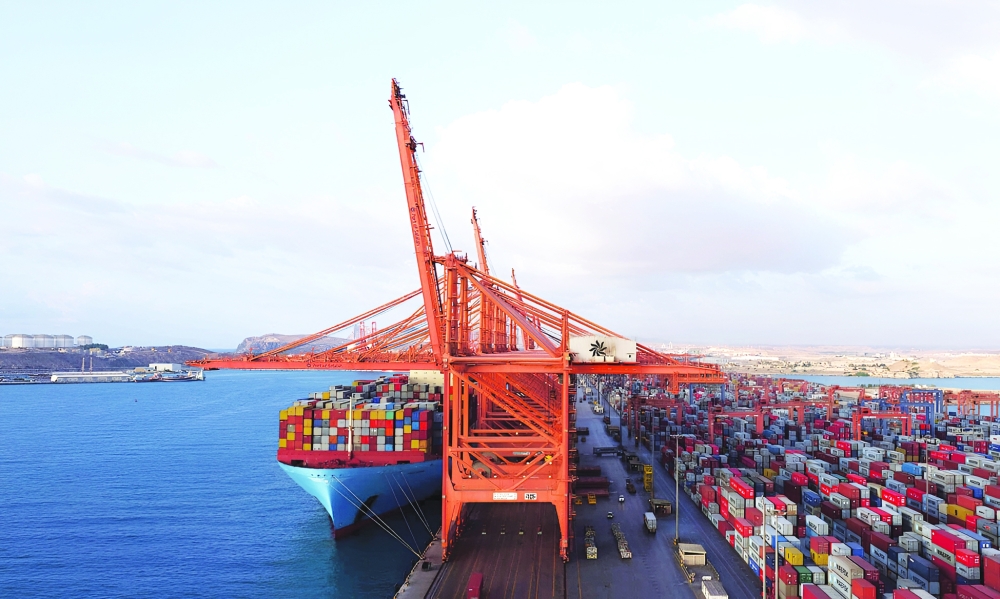
While regional shipping routes have faced disruption, Oman's ports at Salalah, Al Duqm and Suhar have helped maintain the flow of trade and cargo. By comparison, several Gulf economies have faced greater exposure to disruptions affecting energy exports and maritime traffic. The report also cited Saudi Arabia's ability to reroute oil exports through the East-West pipeline as a factor supporting its growth outlook.
The World Bank noted that limited ship transit through the Strait of Hormuz and damage to energy-related infrastructure have affected oil and gas production in parts of the region. Rising food prices and higher shipping costs are also expected to add inflationary pressures this year.
On the fiscal side, the World Bank warned that economic slowdowns in Kuwait and Qatar are likely to be accompanied by worsening fiscal and current account balances due to lower hydrocarbon revenues and higher defence spending.
The World Bank expects Oman's growth to strengthen to 3 per cent in 2027 and 3.4 per cent in 2028 as hydrocarbon output recovers, infrastructure investment continues and non-oil sectors maintain their expansion.
Inflation is projected to ease as trade conditions improve and transport costs moderate. Fiscal balances are expected to improve as higher hydrocarbon production boosts revenues, while current account surpluses are projected to narrow amid lower energy prices.
For the wider Middle East, North Africa, Afghanistan and Pakistan region, growth is forecast to slow to 1.6 per cent in 2026 from 4 per cent in 2025. The World Bank expects regional growth to recover to an average of 4.5 per cent during 2027 and 2028, assuming conflict-related disruptions begin to ease by the end of this year, although it cautioned that the outlook remains subject to significant uncertainty.
Oman Observer is now on the WhatsApp channel. Click here