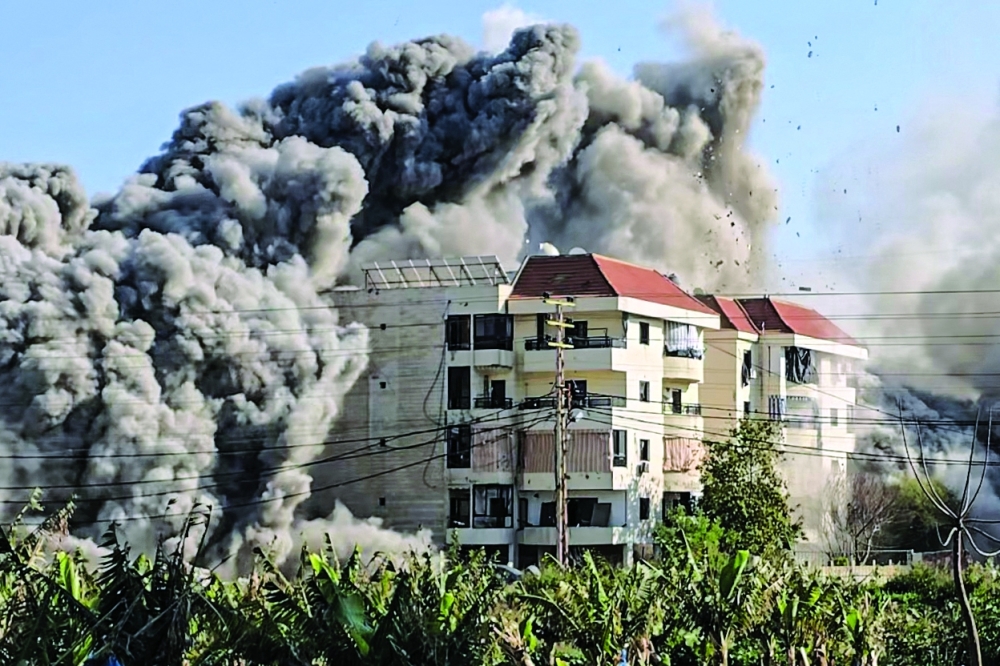





DUBAI/WASHINGTON: The United States and Iran traded air attacks on Thursday, and President Donald Trump threatened more strikes if Tehran does not immediately agree to a peace deal, but Iranian sources said talks on a preliminary deal had intensified. Three Iranian sources and a European official said the U.S. and Iran were exchanging messages on details of a memorandum after reaching a political understanding, but some issues still had to be discussed in detail, including a mechanism for the release of billions of dollars in frozen Iranian funds. "This war, from a military standpoint, is a dead end. The Americans could not achieve their goals by attacking Iran. There has been progress in negotiations," said one of the Iranian sources. Trump has repeatedly said a deal is close, but U.S. officials did not immediately comment on the latest status of the indirect negotiations.
TIT-FOR-TAT ATTACKS
The war has killed thousands of people, mainly in Iran and Lebanon, and pushed up global oil prices since the U.S. and Israel launched heavy airstrikes on Iran on February 28. Hostilities have escalated this week despite a fragile ceasefire agreed in early April, with tit-for-tat attacks across Iran and on U.S. bases in the region following Monday's downing of a U.S. Apache helicopter near the Strait of Hormuz.
The U.S. military said its latest attacks targeted "military surveillance capabilities, communication systems and air defense sites across Iran" in response to what it called Tehran's "unwarranted and continued aggression."
Trump told Fox News reporter Trey Yingst on Wednesday evening the U.S. strikes would stop shortly but that he would resume heavy bombing if Iran's leaders did not sign an agreement with the U.S. immediately, Yingst wrote on X. Oil prices rose after those comments, but later fell back as traders assessed the actual impact of supply disruptions.
The U.S. military's Central Command announced strikes were complete about four hours after they began soon after midnight in Tehran.
Iran's Islamic Revolutionary Guard Corps said it had launched counter-attacks on 18 U.S. military targets at airbases in Kuwait and Bahrain, as well as the U.S. Navy's Fifth Fleet in Bahrain.
It later said it had also targeted the al-Azraq air base in Jordan for a second successive night, firing 12 ballistic missiles at the U.S. base.
Bahrain's interior ministry said an 11-year-old girl suffered minor injuries, and homes were damaged in the town of Hamad and the capital, Manama, after debris fell from Iranian drones that were intercepted and destroyed.
Kuwait said it briefly closed its airspace because of an Iranian attack.
FROZEN IRANIAN FUNDS
Trump has said Tehran has taken too long to negotiate a deal. The three Iranian sources and the European official underlined the need to reach an agreement on a mechanism for releasing Iranian oil revenues frozen in foreign banks. "Iran wants $6 billion to $12 billion of its frozen funds to be released to Tehran, while Washington wants to release funds in stages for humanitarian goods and rejects returning funds to Iran outright," one Iranian source told Reuters. The priority for Iran's clerical establishment is not a comprehensive settlement but a framework that restores a minimum breathing space for the establishment in Tehran by unlocking its frozen assets and halting the war, the Iranian sources said. Tehran's demands also include an end to Israeli attacks in Lebanon following cross-border strikes by Iran-aligned Hezbollah, the lifting of sanctions on Iran and recognition of its control of the strait.
Trump says Iran must end its restrictions on shipping through the Strait of Hormuz and that any peace deal must ensure Iran cannot develop a nuclear weapon. Iran denies any such ambition. The conflict has become a political headache for the White House, with polls showing Trump's approval ratings sinking amid voter anger over high gasoline prices.
Some Republicans worry that the war's unpopularity could cost them control of Congress in November's midterm elections.
U.S. DENIES STRAIT IS CLOSED
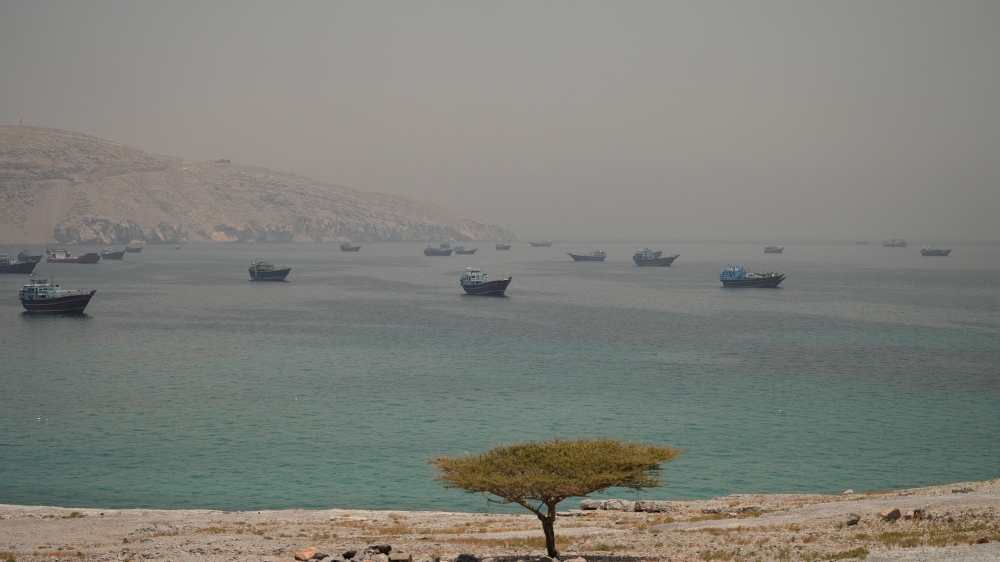
Iran's top joint military command warned it would fire on any vessel trying to pass through the Strait of Hormuz, a vital supply route for oil and liquefied natural gas that has been largely closed for months. Iranian media said two U.S. ships had been fired on.
U.S. Central Command denied the strait was closed or that any of its ships had been struck, saying commercial ships were still transiting the strait despite Iran's threats. The U.S. has maintained its own blockade on Iranian ports. It said on Wednesday it had fired on a vessel in the Gulf of Oman that flouted instructions and was carrying oil from Iran. Indian authorities confirmed the deaths of three Indian sailors in a U.S. military operation to halt a tanker off Oman as part of Washington’s blockade. India's embassy in Oman reported a separate incident involving a tanker off Oman, but an Indian shipping official said all Indians aboard were safe. Iranian news agencies reported explosions in several cities across the country of 93 million, including Sirik, Kargan, Bandar Abbas, Minab, and Karaj near the strait, as well as Varamin far to the north, closer to the Caspian Sea. Five people were hurt, Iranian authorities said.
Oman Observer is now on the WhatsApp channel. Click here