Four decades of confrontation between the United States and Iran have left both sides with deep institutional scepticism, and a lack of trust now shapes every diplomatic effort to avoid wider conflict.
Negotiations between the two countries have repeatedly stalled over sequencing and enforcement, with each side citing past actions as evidence that the other cannot be relied upon to uphold commitments.
From Washington’s perspective, officials point to Iran’s nuclear programme, its support for regional armed groups, and its ballistic missile development as factors that complicate talks. Iranian officials cite the US withdrawal from the 2015 Joint Comprehensive Plan of Action, or JCPOA, in 2018, the imposition of sweeping economic sanctions, and the 2020 killing of General Qassem Soleimani as reasons to question US follow-through.
The result is a diplomatic impasse where both governments call for the other to act first. The US has pressed Iran to scale back nuclear activity before sanctions are eased.
Iran has demanded economic relief before curbing its programme. In the meantime, Iran’s uranium enrichment has continued and US naval deployments in the Gulf remain frequent.
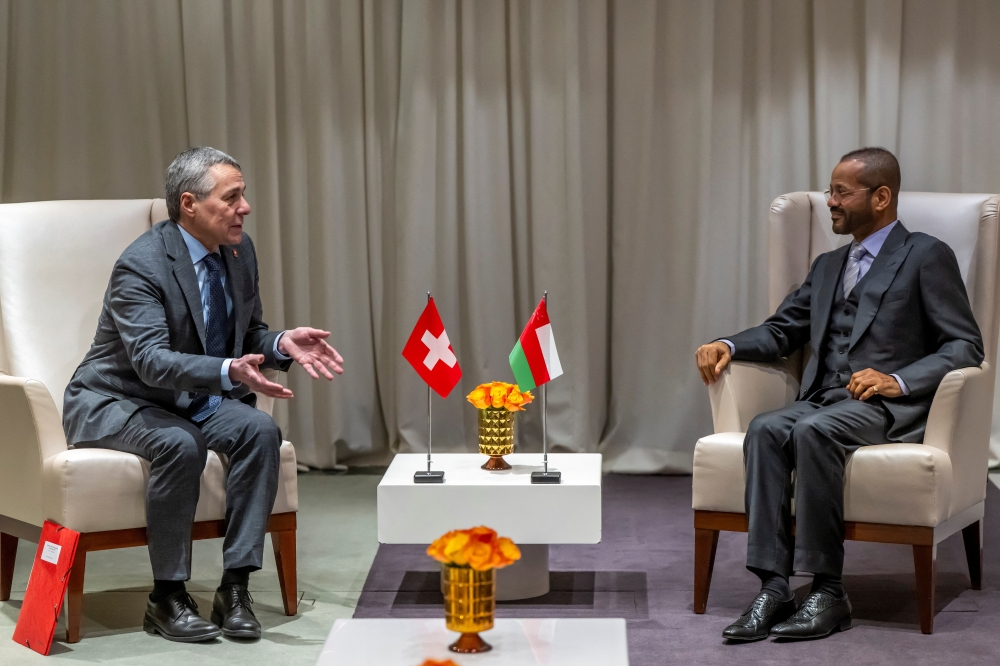
The Sultanate of Oman has always been in favour of peace and is calling for an extension of the current ceasefire and the continuation of peace talks between the US and Iran, renewing its decades-long role as a discreet but decisive intermediary in one of the world’s most volatile rivalries.
Dialogue remains the only viable path to prevent further escalation in a region already strained by shipping disruptions, armed proxy clashes and renewed concerns over nuclear enrichment.
Oman’s appeal comes at a moment when the cost of miscalculation is rising for all parties, with commercial shipping rerouted, insurance premiums climbing and energy markets reacting to every new incident in the Gulf.
The Sultanate of Oman occupies a unique diplomatic space. It maintains warm and cooperative ties with Washington while sharing the strategic Strait of Hormuz with Tehran. That balancing position is not accidental. It was deliberately built through the late His Majesty Sultan Qaboos 'friend to all, enemy to none' doctrine, a foreign policy approach that rejected bloc politics and emphasised quiet engagement. His Majesty Sultan Haitham bin Tarik has preserved and deepened that tradition, keeping Oman’s channels open even when regional tensions have peaked.
The US and Iran have not had formal diplomatic relations since 1979. Major incidents since then — including the 2018 US withdrawal from the JCPOA and attacks on shipping and infrastructure in the region — have reinforced domestic political opposition to compromise in both countries. Analysts note that sustained behaviour over multiple months or years is typically required to change threat perceptions.
US officials have said any new arrangement must address Iran’s nuclear programme and regional activities. Iranian officials have said any talks must account for what they describe as security threats from US military bases in neighbouring countries and sanctions on the Iranian economy.
The JCPOA provided phased sanctions relief in exchange for limits on Iran’s nuclear programme and IAEA monitoring. After the US exit in 2018, Iran gradually expanded its nuclear activity beyond the deal’s limits. Efforts to revive the agreement between 2021 and 2022 did not produce a final outcome.
Without a functioning framework, Iran’s nuclear programme operates with reduced international monitoring compared to the JCPOA period, according to IAEA reports.
Sanctions continue to affect Iran’s economy, including oil exports and access to the international banking system. Regional tensions have led to periodic maritime incidents, strikes on infrastructure, and exchanges between US forces and Iran-backed groups.
Officials in both countries continue to state that diplomacy is preferable to conflict. Whether further steps are taken depends on domestic political conditions in Washington and Tehran, as well as developments in the region.
The core challenge, according to multiple former negotiators, is establishing procedures that make compliance more beneficial than non-compliance for both sides. Without that, they say, written agreements alone have proven insufficient to sustain de-escalation.
Oman Observer is now on the WhatsApp channel. Click here