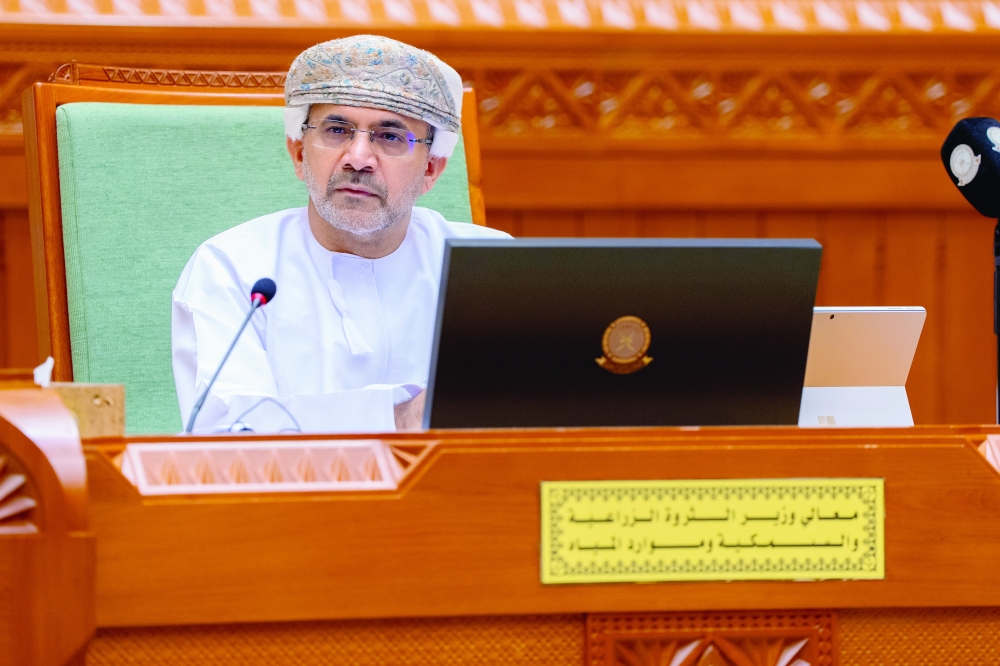
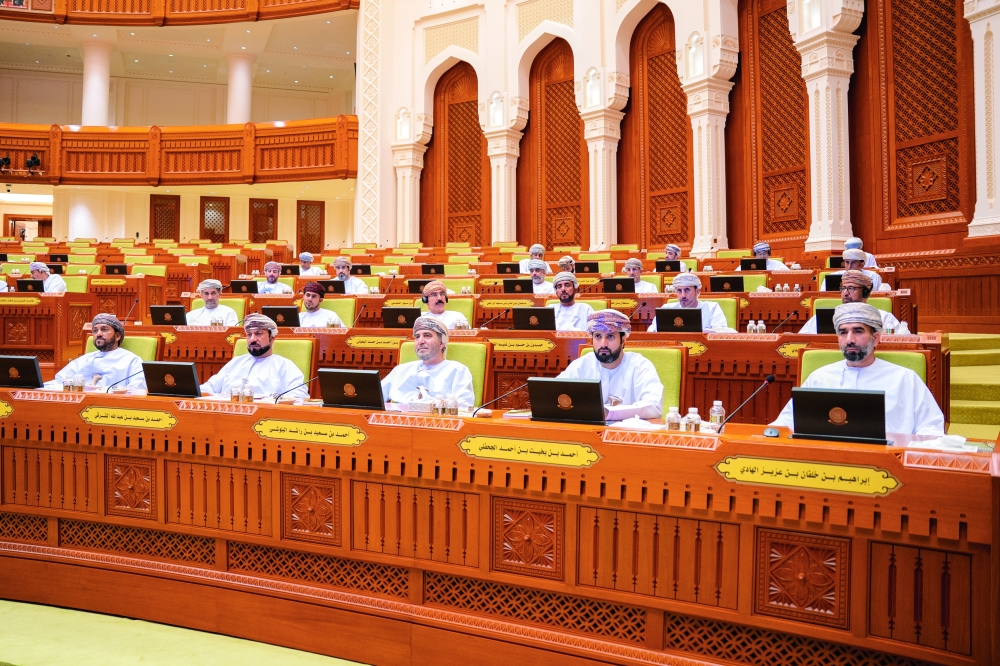





MUSCAT: The Majlis Ash’shura discussions on Monday continued focusing on the statement delivered by Dr Saud bin Hamoud al Habsi, Minister of Agriculture, Fisheries and Water Resources, that saw interventions centring on issues concerning food and water security, sustainability of productive sectors, and the challenges faced by farmers, livestock breeders, and fishermen across the country.
Dr Saud emphasised that the upcoming phase will concentrate on strengthening food and water security, enhancing resource management efficiency, accelerating technical and digital transformation, and maximising the economic impact of productive sectors in alignment with the goals of Oman Vision 2040.
During the discussions, Mansour bin Zahir al Hajri, Deputy Chairman of Majlis Ash’shura, underscored the significance of dam projects as crucial components for water and food security. He stressed the need to reassess implementation priorities and expedite projects related to water resource protection and sustainability, particularly in the face of recurring climate-related challenges.
Meanwhile, Omar al Hosni, Member of the Majlis Ash’shura representing Al Khabourah, brought attention to challenges related to the degradation of agricultural lands due to salinity. He called for technical solutions such as water treatment and modern irrigation systems to maintain agricultural land and support local production.
The session also included discussions and observations on agricultural support, land regulation, livestock development, agricultural product monitoring, dams, aflaj irrigation systems, agricultural marketing, illegal fishing practices, and infrastructure related to agricultural and fisheries services and markets.
Members further discussed the importance of strengthening field inspection systems regarding the use of pesticides and fertilisers, supporting livestock breeders through designated grazing lands, exploring the use of treated wastewater for fodder cultivation, and expanding the utilisation of modern technologies and artificial intelligence in water resource management and agricultural productivity.
Oman Observer is now on the WhatsApp channel. Click here