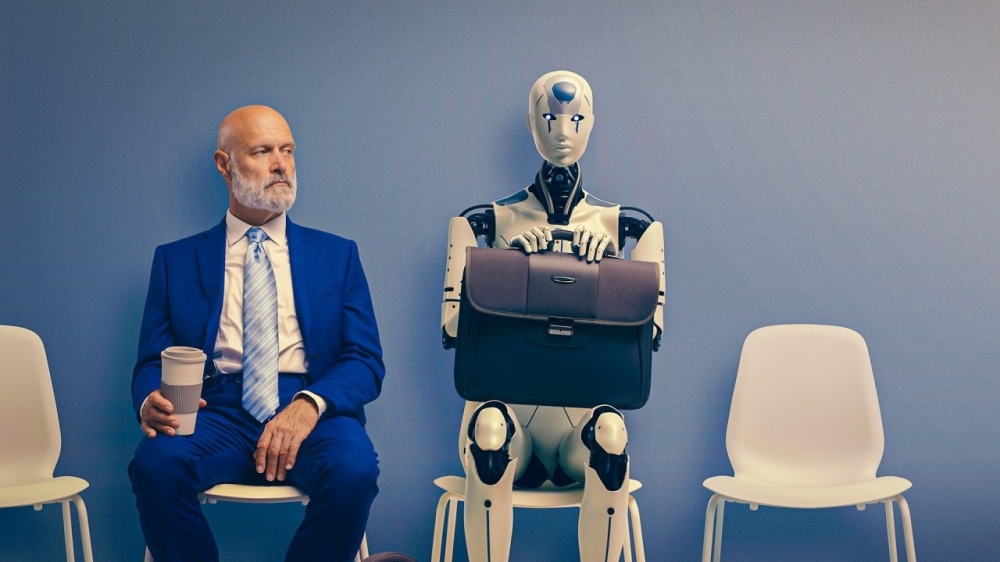
Across the world, corporations are prioritising and deploying artificial intelligence, but people are still lagging. The critical shortage of Artificial Intelligence (AI) and digital capabilities will lead to delayed products, missed revenue, and lost competitiveness.
The real issue or bottleneck in the AI boom is not computing power or data; it is human capability, and whether leaders prioritise and invest quickly to enhance employees' competencies to learn to work with machines rather than compete against them. If the globe does not, the skills gap will continue to widen.
According to the World Economic Forum, nearly 44% of workers will require reskilling within the next few years, while millions of roles are expected to evolve rather than disappear. Yet, education systems remain largely anchored in classic models designed for a pre-digital economy. Universities continue to emphasise static knowledge over adaptability, even as artificial intelligence reshapes how work is performed. This disconnect leaves graduates entering a workforce that expects not only technical competence but also the ability to collaborate with intelligent systems, interpret AI outputs, and continuously update their skills. The rise of AI is therefore exposing a deeper issue: the inertia of institutions in the face of rapidly changing technologies.
Governments and policymakers must play a crucial role in managing this transition. Large-scale investments in AI infrastructure, such as data centers, cloud computing, and advanced semiconductor technologies, accelerate innovation. Still, they must be matched with equally strong investments in human capital. Without parallel efforts in workforce development, the benefits of AI might be unequally distributed. Countries that succeed in this new era will not be those that merely adopt AI technologies, but those that build ecosystems of sustained learning. National strategies have to prioritise vocational training, digital competencies, and accessible upskilling programmes that enable workers at all stages of their careers to remain relevant. This is particularly critical in emerging economies, where demographic advantages can quickly turn into liabilities if the workforce is not adequately prepared.
At the same time, businesses must rethink how they approach talent. The infusion of AI into workflows is not solely a technological upgrade; it is a fundamental redesign of how work is organized. Companies are increasingly seeking employees who can work alongside AI tools, individuals who combine domain expertise with analytical thinking and adaptability.
This change makes skills that computers can't replicate, such as creative thinking, intellectual thought, ethical judgment, and emotional acuity, more valuable. Rather than viewing AI as an alternative for human labour, forward-looking organisations are treating it as an augmentation layer that improves productivity while creating new roles that did not previously exist.
However, this transition requires deliberate investment in staff training and preparedness for revised job roles, performance measures, and career pathways.
Ultimately, the future of work in the age of artificial intelligence will be defined not by the capabilities of machines but by the choices made by societies. The narrative of inevitable job loss oversimplifies a far more subtle reality. AI will remove routine tasks, change many jobs, and create brand-new opportunities. The real risk lies in failing to prepare people to navigate this complexity. Education systems must evolve from one-time knowledge providers into lifelong learning enablers. Employers must shift their hiring practices for regular roles to cultivate adaptable talent. The lawmakers have to ensure progress is inclusive, not disruptive.
Artificial intelligence is not the end of work; it is the beginning of a new association between people and technology. Those who learn to adapt, collaborate, and advance alongside intelligent systems will not only remain relevant but also thrive. The responsibility now lies with institutions, industries, and individuals to ensure that this transition is driven not by fear but by foresight and readiness.
Oman Observer is now on the WhatsApp channel. Click here