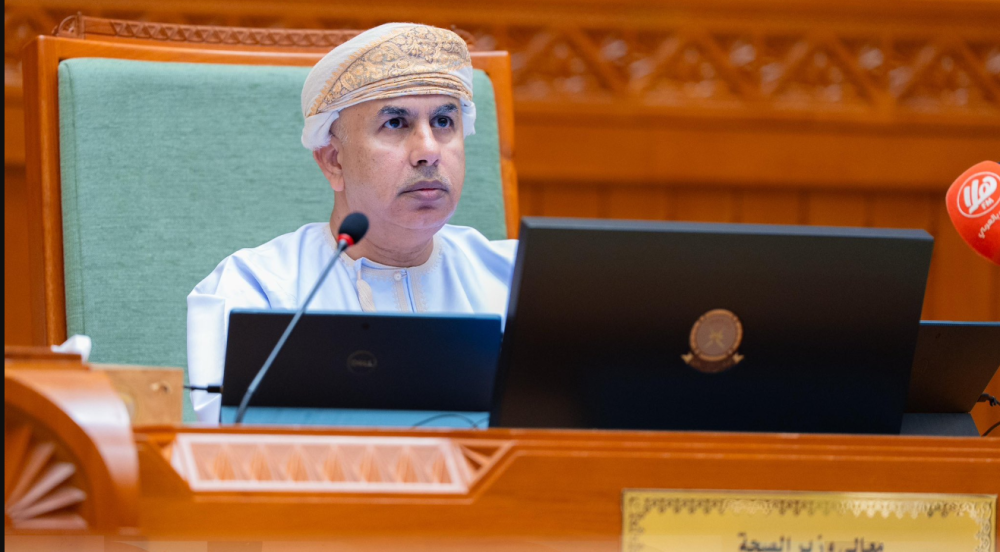





Muscat: Majlis A' Shura is hosting Dr. Hilal Al-Sabti, the Minister of Health, to discuss various topics related to the health sector, following his statement.
Highlights of his speech;
A package of strategic projects is under planning and design within the 11th Five-Year Plan, including the National Center for Women's and Child Health, the National Center for Ophthalmology and Eye Surgery, the National Rehabilitation Center, and the completion of the Nama, Samail, and Al Falaj Hospitals projects, in addition to several other hospitals.
The Ministry succeeds in increasing the percentage of patients waiting less than 18 weeks for non-emergency surgical procedures to reach 83 percent, thereby achieving time standards consistent with the best international practices.
The Ministry succeeded in reducing the under-five child mortality rate to 9.9 deaths per 1,000 live births in 2024, compared to 10.3 in 2021, and reducing the infant mortality rate to 8 deaths per 1,000 live births, while national (tertiary) hospitals record an improvement in reducing the waiting time ratio for more than four weeks from 50 percent to 30 percent, representing a qualitative leap in the speed of response to complex specialized cases.
The Ministry succeeded in reducing the under-5 child mortality rate to 9.9 deaths per 1,000 live births in 2024, compared to 10.3 in 2021
The Omanisation ratios are witnessing an improvement to reach approximately 71.0 percent, particularly in the nursing categories and the auxiliary medical and administrative jobs, where it has reached 97.7 percent for pharmacists and medical equipment engineers in the government health sector.
The private health sector is a key partner in the health system of the Sultanate of Oman, comprising 36 hospitals, 191 centers for examining expatriates, and 2,322 health institutions. It receives more than 4 million visits annually and performs approximately 45,000 surgeries.
The number of existing medical factories is 20, including 8 pharmaceutical, 2 pharmaceutical raw materials, 7 for medical supplies, and 15 for full manufacturing operations, along with 5 for repackaging activities within transitional grace periods ranging between two and three years.
Additionally, there are 18 industrial projects in the construction and implementation phases, including 11 pharmaceutical factories, 1 factory for pharmaceutical raw materials, and 6 factories for medical supplies and devices.
The Minister of Health: Premarital medical examination has come into effect as of January 1, following the issuance of the Royal Decree No. 111/2025 to protect family stability and reduce hereditary health risks.
There will be a linkage between the university hospital and the rest of the hospitals, and the "Shifa" system will be an independent governmental technical entity under the umbrella of the Investment Authority. It will work to unify health data among various institutions, including the private sector, to reduce the repetition of medical examinations.
Diabetes is not widely prevalent in the national survey. The rate is 13%. What concerns us is not the rate itself, but rather that some people cannot control their sugar levels in terms of taking medications, in terms of diet, and in terms of lifestyle.
Treatment abroad is a legitimate right, and some patients who opt for treatment abroad may seek to obtain healthcare services quickly, with high quality, and at a cost they deem reasonable from their perspective. This does not guarantee quality, and caution is required.
Oman Observer is now on the WhatsApp channel. Click here