




BEIRUT: Lebanon's president and prime minister discussed on Saturday preparations for the first direct negotiations with Israel in decades, as southerners headed home after the ceasefire in the Israel-Hezbollah war. In a statement, the office of President Joseph Aoun said he and Prime Minister Nawaf Salam conducted "an assessment of the post-ceasefire phase and the ongoing efforts to consolidate it", and discussed "Lebanese readiness for the anticipated negotiations" with Israel.
Their meeting came a day after a strongly-worded speech to the nation from Aoun stating that the country was entering a new phase to work on "permanent agreements" with Israel and insisting that direct talks were not a "concession" — an apparent rebuttal of Hezbollah criticism.
The 10-day ceasefire seeking to end more than six weeks of war between Hezbollah and Israel has been in place since midnight on Thursday after being announced by US President Donald Trump. More than 2,300 people have been killed in Israeli attacks and more than a million displaced since Hezbollah dragged Lebanon into the Middle East conflict last month. Hezbollah and its supporters strongly oppose the negotiations and have rejected several government decisions over the past year, including Beirut's commitment to disarming the group in 2025.
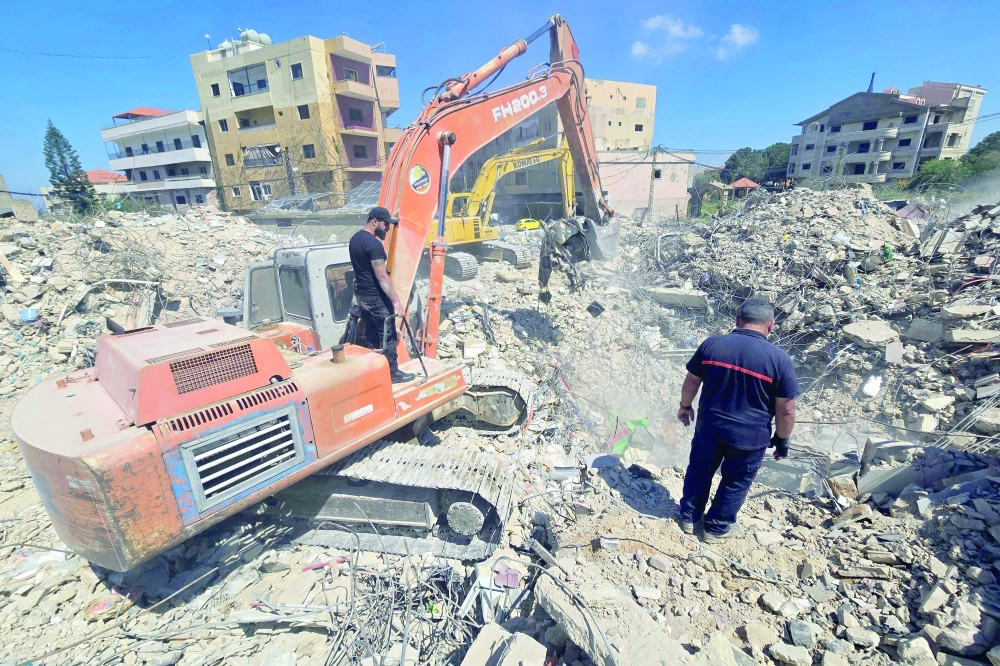
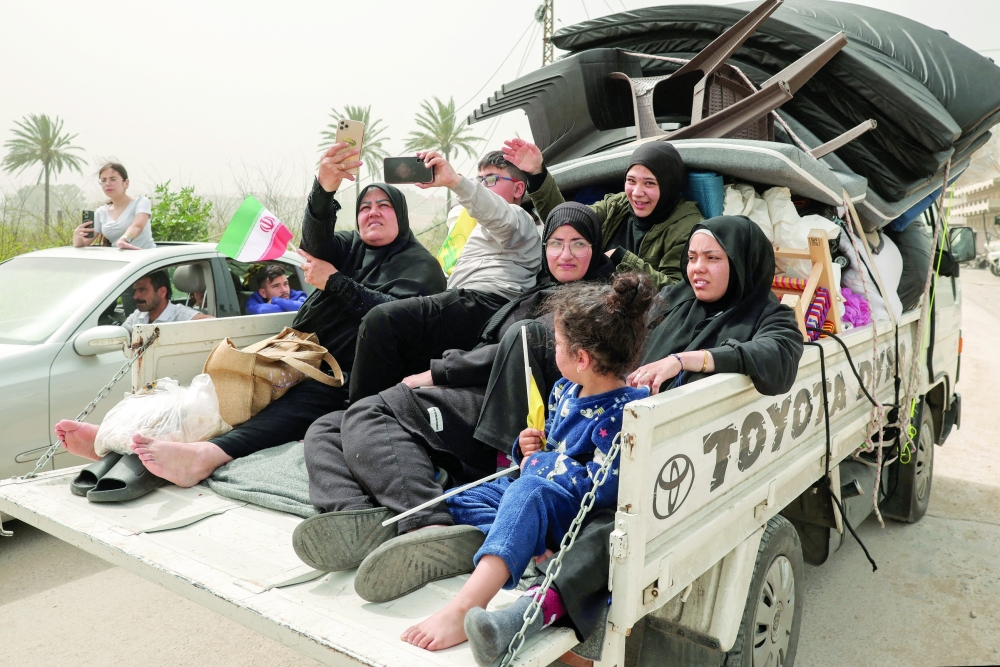
Addressing Aoun at a press conference in Beirut's southern suburbs, senior Hezbollah official Mahmud Qamati said the president "does not respect" Lebanon. "Defeated, you go to the Israelis and Americans, let's see what you will get out of it." As the truce entered its second day, displaced people were still flocking to the south, which saw the brunt of the fighting, with roads packed with cars. Lebanon's military and other local bodies are working to open roads that were blocked due to Israeli strikes.
In the heavily bombed southern suburbs of Beirut, families came to inspect their homes and grab belongings, though neighbourhoods in the area remained largely empty, with people hesitant to return. Among the residents briefly visiting was Samah Hajoul, who is currently staying in a tent on Beirut's seafront. "We do not feel safe to return, for fear that something might happen at night and I would not be able to carry my children and flee with them," she said. "We will wait and see what happens during the days of the truce. If the ceasefire is consolidated, we will return to our homes," she added, saying that dozens of families staying in nearby tents were doing the same.
During his meeting with Aoun, Salam expressed hope that "the displaced will be able to return safely to their homes as soon as possible after the ceasefire holds". He stressed that the government was working to "facilitate this return, especially by repairing the destroyed bridges, opening roads, and providing supplies in the areas where the return will be safe and possible".
Meanwhile, the Israeli military said Saturday it had established a "Yellow Line" demarcation in southern Lebanon, similar to the one separating its forces from territory still held by Hamas in Gaza, adding that it had already struck suspected militants approaching its troops along the line. — AFP
Oman Observer is now on the WhatsApp channel. Click here