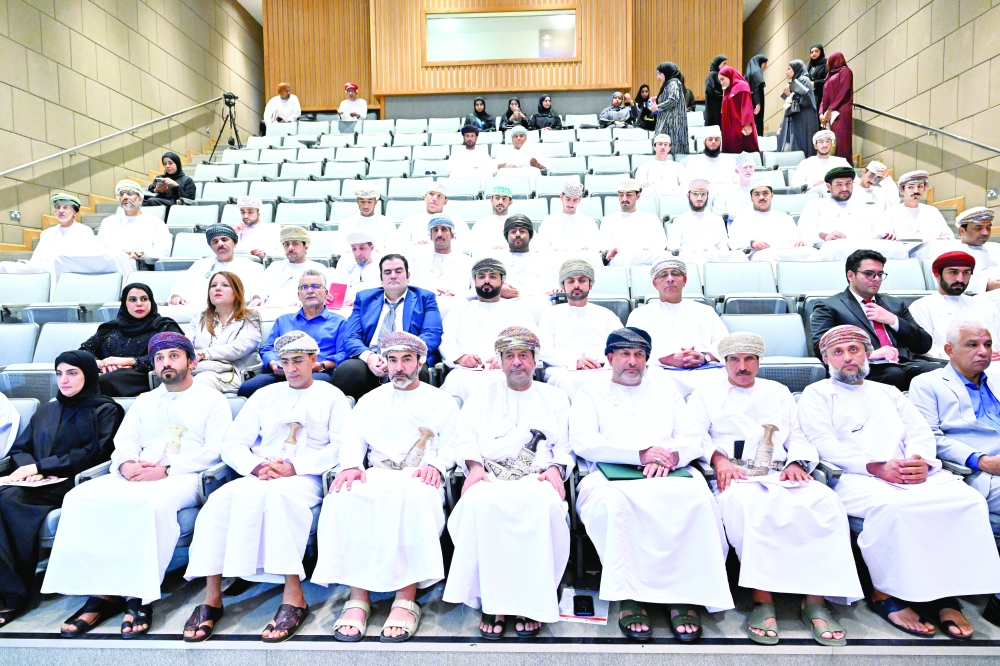





MUSCAT, APRIL 15
The Sultan Qaboos University and the Oman Journalists Association on Wednesday organised a symposium on the Media Law in the Sultanate of Oman.
The symposium, which highlighted the legislative context of media and the system governing the work of media establishments, saw the participation of academics, media professionals and media students. It was held under the auspices of Shaikh Rashid bin Ahmed al Shamsi, Under-Secretary of the Ministry of Social Development for Family Affairs and Community Development.
The symposium aimed to reflect the ongoing partnership between academic institutions and professional establishments. It stressed the role of academic institutions and professional establishments in spreading the culture of law-abiding media action. It also sought to develop media awareness among students and young media professionals, in addition to promoting integration between academic institutions and civil society institutions in the field of media education.
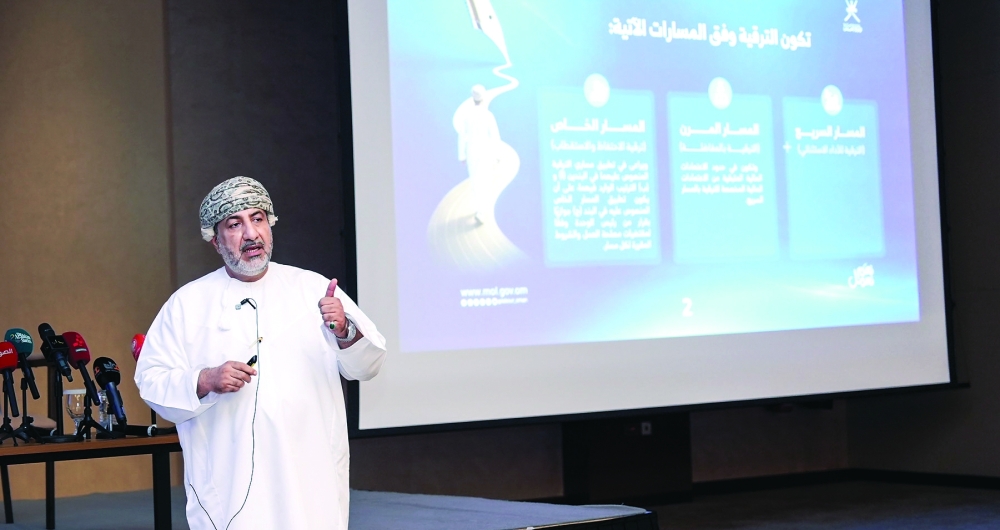
The symposium included a presentation that outlined the key features of the Media Law in Oman. It included two sessions, the first of which provided insights into the principles governing freedom of expression and media licences.
Dr Abdullah bin Khamis al Kindi, Head of the Department of Media at SQU, emphasised that the Media Law issued in November 2024, along with its executive regulations issued in early 2025, marks a significant legislative development. He noted that the law consolidates various aspects of media work into a unified legal framework, replacing previously fragmented legislation, thereby enhancing the coherence of the legal system and keeping pace with developments in both traditional and digital media.
Dr Khalid bin Rashid al Adawi, Chairman of the Freedom Committee at the Oman Journalists Association, stated that the law establishes key principles, including guaranteeing freedom of opinion and expression within a framework of responsibility, regulating media activities through clear professional standards, and defining the rights and duties of media practitioners to ensure a balance between freedom and accountability.
Dr Mohammed bin Ali al Hinai, Director-General of Publications and Artistic Works at the Ministry of Information, explained that the law integrates three previous laws into a unified framework covering all media activities, including digital media. He added that the law is based on the Basic Law of the State and Oman Vision 2040, and was developed through extensive consultations with official and professional stakeholders.
While Dr Ahmed bin Said al Jahwari, a lawyer and legal consultant, addressed the principles governing freedom of expression, noting that it is exercised through a balance between individual rights and national interests, Dr Hosni Mohammed Nasr, Associate Professor in the Department of Media at at SQU, highlighted that the law adopts the concept of “responsible freedom” and replaces prior censorship with post-publication accountability, marking a qualitative shift in media regulation.
Dr Moza bint Abdullah al Rawahi, Professor of Journalism and Electronic Publishing at SQU, affirmed that the law aligns with rapid media transformations and applies to individuals, institutions, and digital platforms.
Oman Observer is now on the WhatsApp channel. Click here