




A group of students from the Indian School Muscat won the Innovation hackathon conducted by Middle East College recnetly.
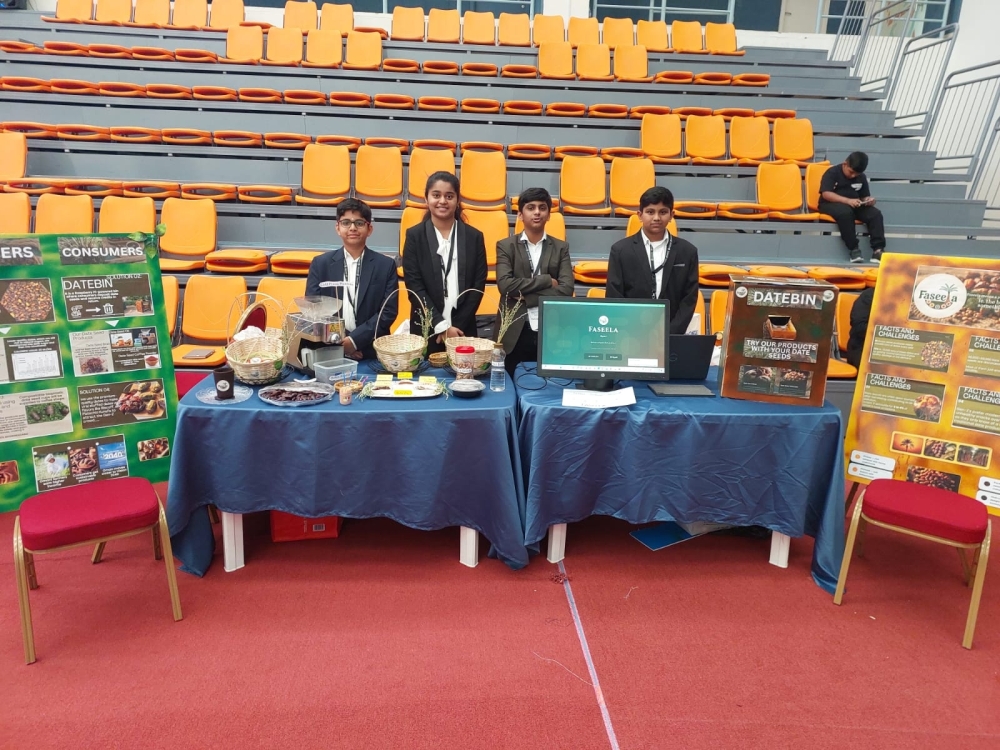
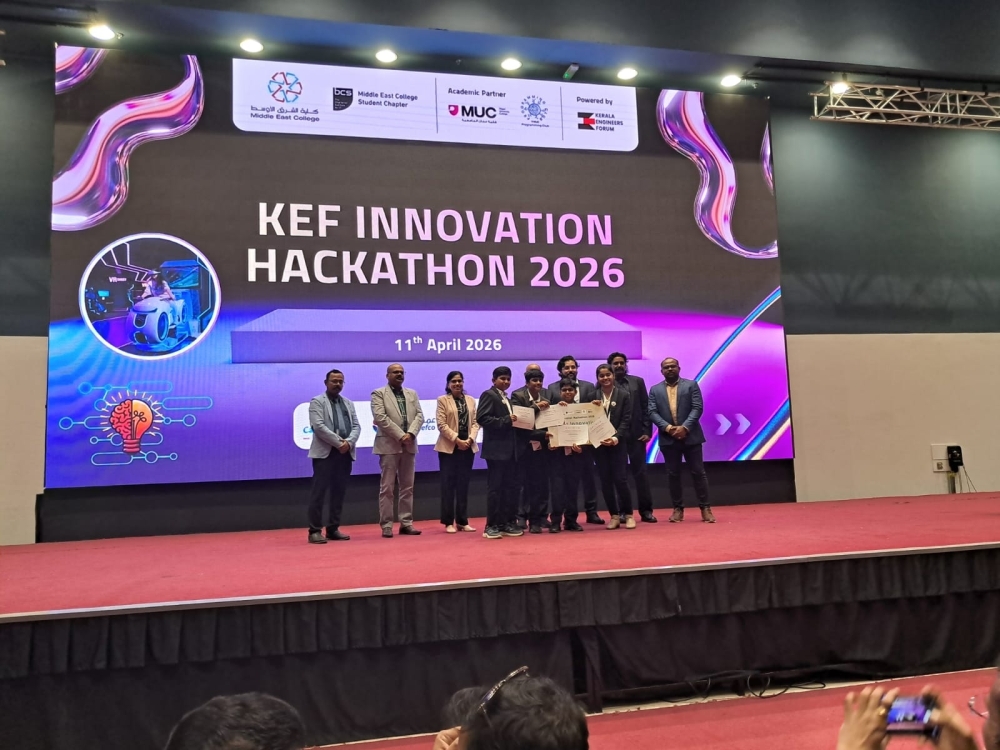
The Team FASEELA, comprising Mohammed Maaz Quadri (Class 10), Aarohi Hegde ( Class 10), Anurag Sashidar (Class 8), and Basaayir Rehman (Class 9) of the Indian School Muscat, won the 'Most Innovative Green Project Award' at a hackathon conducted by Middle East College in collaboration with Mazan University College and Kerala Engineering Forum.
The event was held on April 11 under the guidance of Dr. Vikas Rao, Professor at Middle East College.
The annual hackathon, held under the slogan “Join the Next-Gen Tech Showdown,” witnessed participation from around 60 teams all over Oman , bringing together young innovators to showcase creative and impactful solutions. The event provided an excellent platform for students to demonstrate their technical skills and contribute ideas for a sustainable future.
The winning team presented their project titled “Code for the Earth,” a forward-thinking initiative addressing one of Oman’s key agricultural challenges. Oman is widely known for its date production, generating nearly 400,000 tons annually. However, approximately 25% of this production, around 70,000 tons, is wasted each year due to poor quality, low demand, or spoilage. Additionally, large quantities of palm leaves are burned, causing air pollution, while 40,000 to 50,000 tons of date seeds go unused. Changing consumer preferences, especially among younger generations, have also reduced the demand for traditional date products.
The team developed FASEELA, a sustainable and innovative solution based on the concept that no part of the date palm should go to waste. The platform enables farmers to sell dates in trendy, value-added flavors while supplying otherwise discarded dates to be transformed into new products./
In an additional sustainability push, the team proposed supplying compostable bioplastic cups made from starch and date seed powder to coffee shops. These cups can decompose naturally within 180 days, significantly reducing environmental waste.
Oman Observer is now on the WhatsApp channel. Click here