


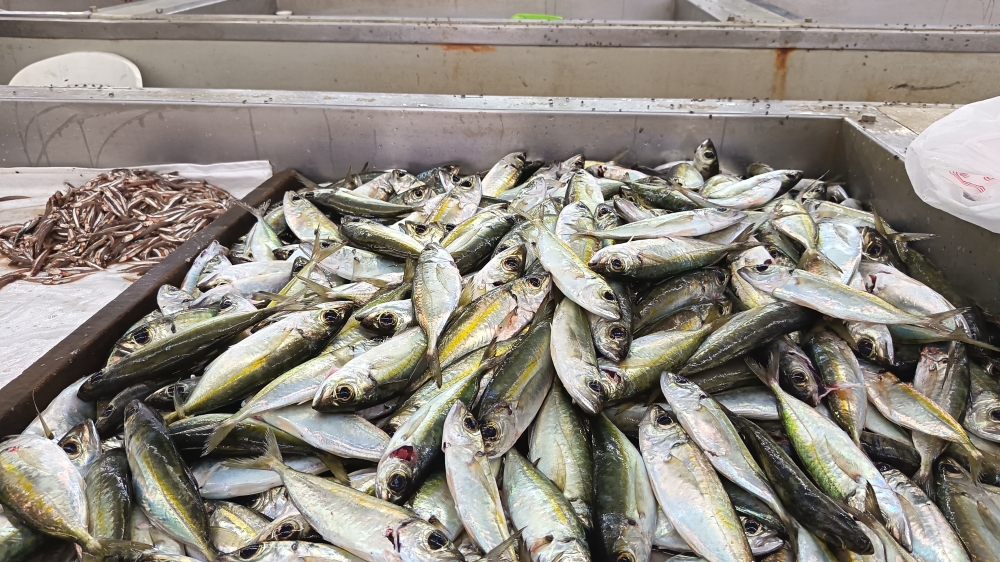





Muscat: Disruptions to trade routes and means of transportation, as well as a low-pressure system, have had an impact on food at the table.
The weather system Al Masarrat had kept the fishermen away for a while from the sea, and what was available was frozen fish. A fish shop in Ruwi showcased around 10 varieties of frozen fish that had come all the way from Myanmar.
At Muttrah fish market, Hussain Ahmed explained that the fishermen have not gone to the sea due to strong winds, and they are expecting rains on Friday.
"Anchovies are at a high price now. The top range is kingfish, which can go above RO four per kilo. It is the season for tuna, and it is ranging RO 1.4 to 1.6 per kilo. The price of sardines continues to be the same," he said.
Rayd Mohammed, meanwhile, explained the price of fish is high because the export market has been affected by geopolitics.
"Before, the fish were sold to the Gulf countries, but now it is difficult to do so. The fish used to fetch a good price. Now that they cannot sell it outside, they want to sell it in Oman at the same price. But in some wilayats, they sell the fish at a very low price, like in Barka. At the same time, in some places like Sinaw in Sharqiya, the cost of fish is high. It has even been known to go up to RO 4.5 a kilo. Shawmiya is a very good place for fishing, as it has a variety of fish, and there is a company that transfers them to other areas, including neighbouring countries. What I know is that in Muscat, Sharqiya, and Dakhiliyah, the cost of fish is high."
Ziad Hamad al Busaidi from Nizwa agreed, "One of the most expensive fish is blue marlin, known as Sensol locally.
Currently blue marlin costs about RO 3.5 for 1 kg.
A digital advertisement in Nizwa said, 'A new shipment of fresh kingfish has arrived: four kg for 10 riyals.'
Meanwhile, shoppers have also noticed a rise in vegetables. An ash gourd that would have cost around 300 baizas is now ranging around 700 baizas; tomatoes cost 850 baizas for a kilo, and onions continue to grow in cost.
The salad can be expensive.
"I paid 600 baizas for five tomatoes. One kilo of lemons costs RO 1.500 whereas in the past it used to cost about 300 to 400 baizas. The cost of Omani lettuce has also gone up," said a customer.
The UN Food and Agriculture Organization (FAO) has warned that if Middle East tensions persist, rising fertilizer and energy costs could lead to further global food price hikes.
Dining out is also facing a similar scenario. Beyond grocery stores, the cost of eating at restaurants and hotels has also increased, note diners.
Restaurant businesses are also facing challenges.
"We are still maintaining the same price for our food items on the menu but not offering discounts anymore because the prices have gone up, for example, the cost of chicken. We are buying locally, but the demand has increased and, along with it, cost. However, we are not compromising on quantity and quality," said a restaurant owner.
Oman Observer is now on the WhatsApp channel. Click here


