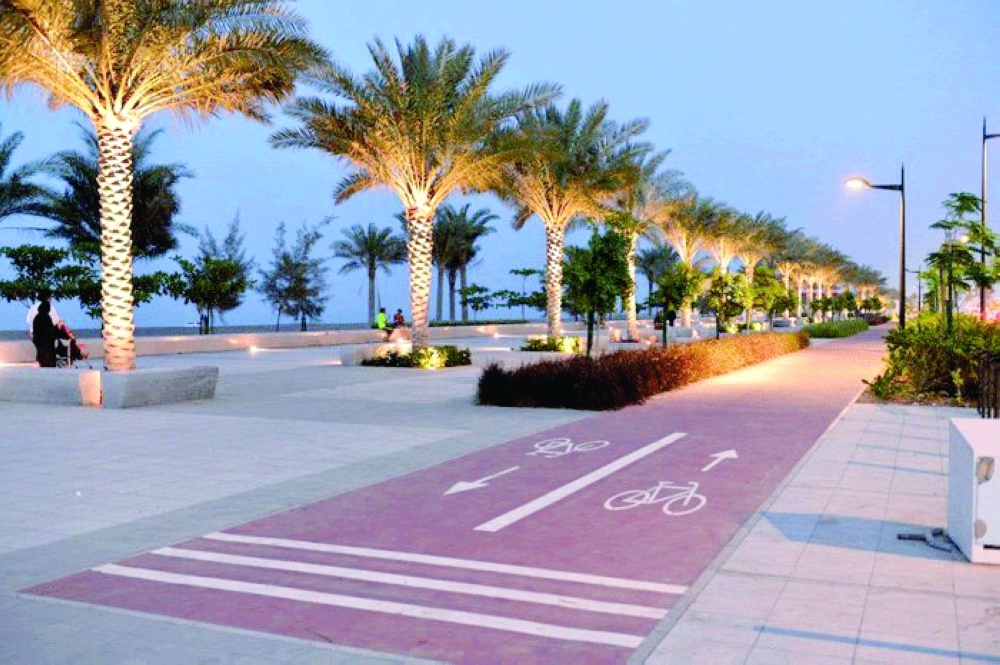





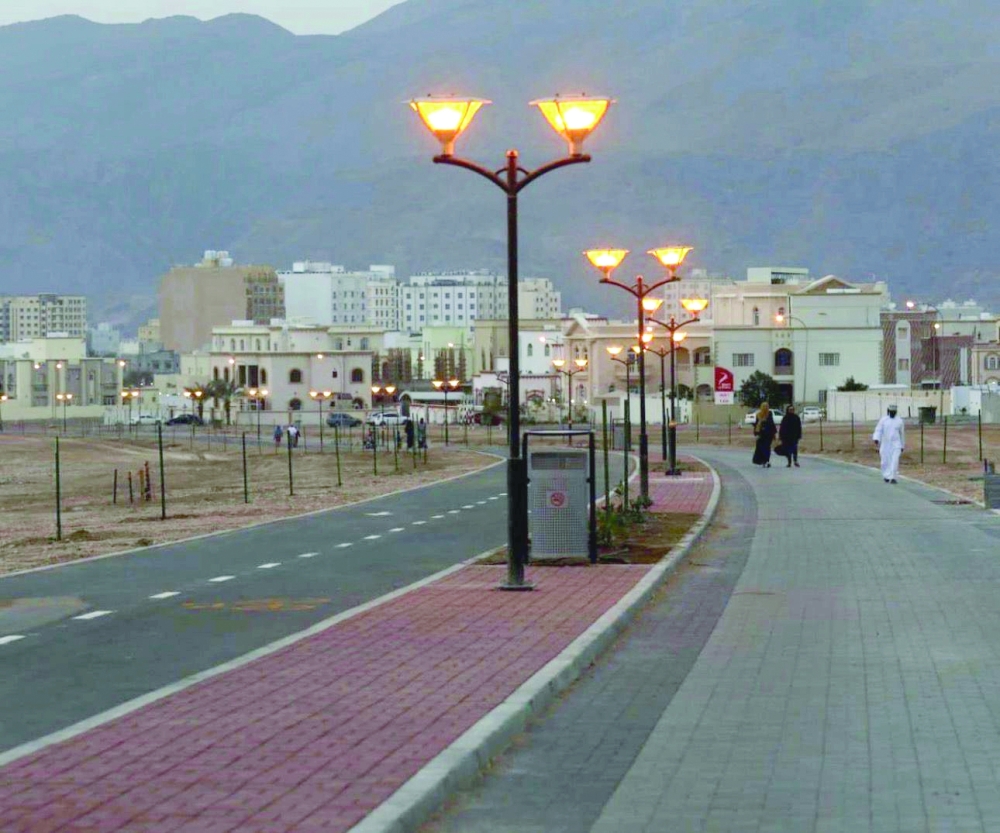
In Muscat, a quiet transformation is reshaping how residents experience public space. Across residential areas and urban corridors, a new generation of open, modern walkways is emerging, reflecting a shift in planning philosophy supported by Muscat Municipality. Unlike the enclosed parks of the past, defined by fences and circular loops, these new spaces stretch outward without boundaries, inviting movement, exploration, and a stronger connection between neighborhoods.
The contrast is striking. Where older parks often felt confined and repetitive, the newer walkways are expansive and linear, extending for kilometers through communities, commercial zones, and landmarks. They are designed not just as recreational paths but as integrated public environments. Visitors can find shaded seating, landscaped greenery, playgrounds, cycling lanes, cafés, and food stalls, all arranged along open routes that feel more dynamic and accessible.
Among the most prominent examples of this evolving approach is the Golden Jubilee Walkway in Mawaleh. Spanning a wide area and linking the areas of Al Mawaleh, Al Hail, and Al Khoudh, the walkway cuts through residential neighborhoods and commercial hubs, connecting key points along Mazoon Street and extending toward major markets and surrounding areas. Its design emphasizes continuity and accessibility, with a 1,972-metre-long cycling track, multiple plazas for rest, shaded seating areas, and dedicated spaces for leisure and gatherings. Large green zones, playgrounds for children, and ample parking further enhance its appeal, making it one of the city’s most frequented destinations, especially during this year's Ramadhan evenings.
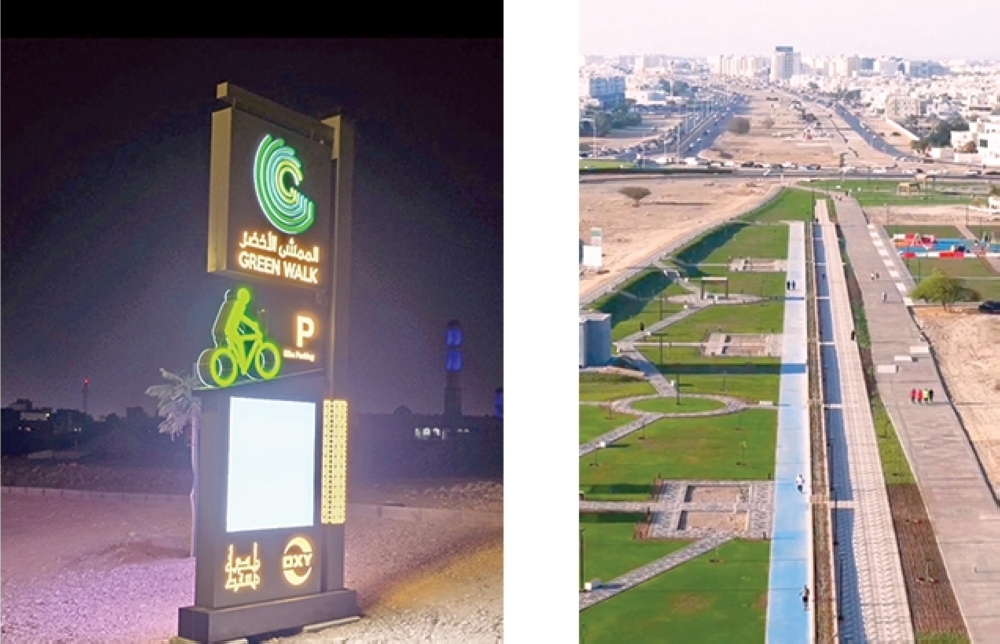
Another notable project is the Green Walk in Maabilah, which stands out for its scale and thoughtful infrastructure. Covering a vast area, it features extended walking and cycling tracks, pedestrian bridges, and tunnels that ensure safe and uninterrupted movement across roads. The space includes multi-use sports courts, skateboarding areas, fitness equipment, and expansive green zones. With cafés, mobile vendors, and rest areas, it has become a multifunctional environment catering to families, fitness enthusiasts, and casual visitors alike.
This growing network of walkways is not limited to large flagship projects. Developments are also underway in areas such as Al Ansab walkway, which is being upgraded to include modern facilities, while the Boushar walkway offers a shorter but scenic route with scooter-friendly paths and views of surrounding hills. In Al Amerat walkway, residents find a quieter alternative, where curved paths follow the natural terrain and provide a calmer atmosphere away from the city’s busier areas, along with dedicated cycling lanes.
Beyond infrastructure, this trend reflects broader health and lifestyle priorities. According to local tour guide specialist Sharifa al Aufi, walking and running are among the most inclusive physical activities, suitable for nearly all age groups. She highlights that engaging in outdoor activity within natural or thoughtfully designed environments can improve mood, reduce stress, and enhance overall well-being, particularly when practiced regularly and at suitable times.
Residents are already experiencing these benefits firsthand. Basil Al Shaihani, a Muscat resident, describes how these walkways have become a regular part of his family’s routine, whether for cardio exercise or simple leisure time together. He notes that these spaces have strengthened not only physical health but also family bonding, offering a shared environment for relaxation and connection.
As Muscat continues to expand its network of walkways, the trend signals more than just urban development. It represents a broader vision of livable, people-centered spaces where accessibility, wellness, and community interaction take precedence. With each new project, the city moves closer to a landscape where movement is not confined, but encouraged, stretching seamlessly across its neighborhoods and into everyday life.
Oman Observer is now on the WhatsApp channel. Click here