








STAFF REPORTER
MUSCAT, MARCH 9
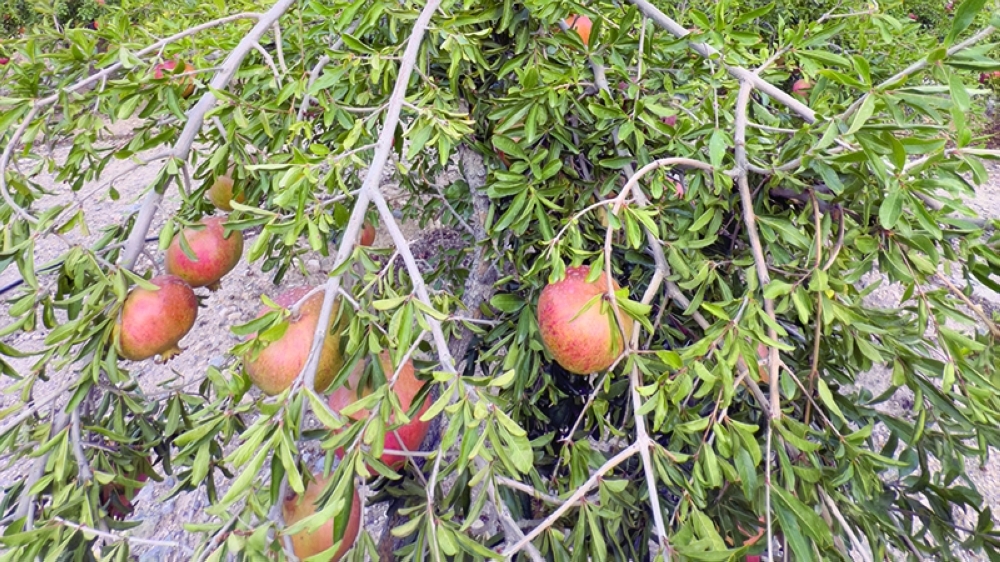
A recent study at Sultan Qaboos University revealed that altitude and local climate play a decisive role in determining the quality of Omani pomegranates.
Conducted by researcher Basim al Kalbani from the College of Agricultural and Marine Sciences, the study explores how environmental conditions influence the characteristics of this prized fruit grown in the mountainous regions of northern Oman.
Despite its predominantly arid climate and high temperatures, Oman is capable of cultivating a remarkable diversity of fruit crops, particularly in the towering Al Hajar Mountains.
Al Kalbani’s PhD research examined the relationship between altitude and pomegranate fruit characteristics by analysing two local cultivars, Helu and Malasi. Field experiments were conducted in three mountain villages at different elevations: Saiq (2,019 metres), Sograh (1,876 metres), and Wakan (1,540 metres). The study aimed to understand the suitability and distribution of pomegranate cultivation across these altitudes while evaluating differences in fruit quality through physical and chemical analyses. It also explored how local climatic conditions influence the phenological stages of growth, morphological traits, and genetic diversity of the cultivars.
The findings show that fruit quality is influenced more strongly by altitude and local climate than by the genetic differences between cultivars. In Wakan, the Malasi cultivar demonstrated superior colour and physical quality, recording higher levels of juice volume, soluble solids, and acidity. In contrast, in Saiq the Helu cultivar achieved higher values in juice volume, soluble solids, and maturity index.
Oman Observer is now on the WhatsApp channel. Click here


