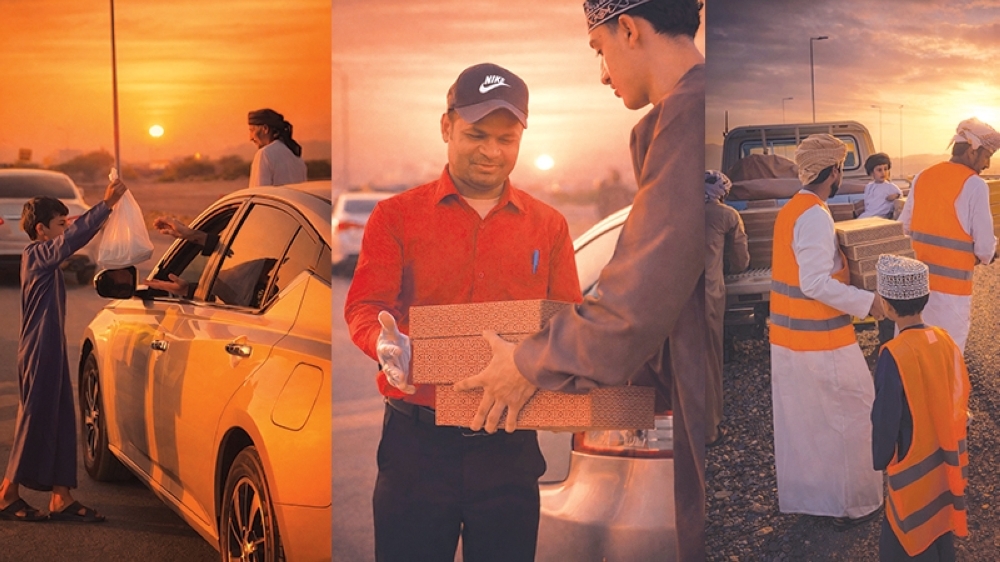





As soon as the traffic lights turn red and vehicles come to a halt, a group of young volunteers steps onto the road. To an observer, the movement appears almost choreographed. They fan out swiftly but calmly between rows of stationary cars as drivers lower their windows with quiet smiles.
A brief greeting follows, sometimes nothing more than a nod or a soft “Ramadhan Kareem”. The volunteers then hand out small food parcels, simple kits prepared for the moment the fast is broken. Inside are the essentials of iftar: dates, a bottle of water or laban and occasionally fruit or juice, foods chosen for practicality and nourishment.
Within seconds the exchange is complete. A prayer of thanks is murmured, a hand raised in gratitude and the volunteers move to the next vehicle before the traffic lights change again.
Across Muscat, this quiet ritual unfolds almost every evening during Ramadhan. At busy intersections, neighbourhood roads and outside mosques preparing for evening prayers, young Omanis gather with boxes of dates and drinks ready for drivers still on the road when the call to prayer signals the end of the day’s fast.
What might appear spontaneous has become one of the most recognisable traditions of Ramadhan in Oman, an informal but deeply rooted expression of charity. Volunteers organise through neighbourhood groups, student associations and local initiatives. In the hours before sunset, homes and community halls turn into small assembly lines where dates are packed, bottles arranged and bags prepared for distribution.
The parcels remain intentionally modest: a few dates, a drink, sometimes fruit. Yet the gesture carries meaning far greater than its contents. In Ramadhan, acts of charity and compassion hold special significance and these roadside exchanges embody that spirit, ensuring even a stranger can break their fast on time.
For many drivers, especially delivery workers and expatriates, the gesture is quietly powerful. A brief prayer is offered, a smile exchanged and as the traffic lights turn green, both sides move on, carrying with them a small moment of shared kindness.
Oman Observer is now on the WhatsApp channel. Click here