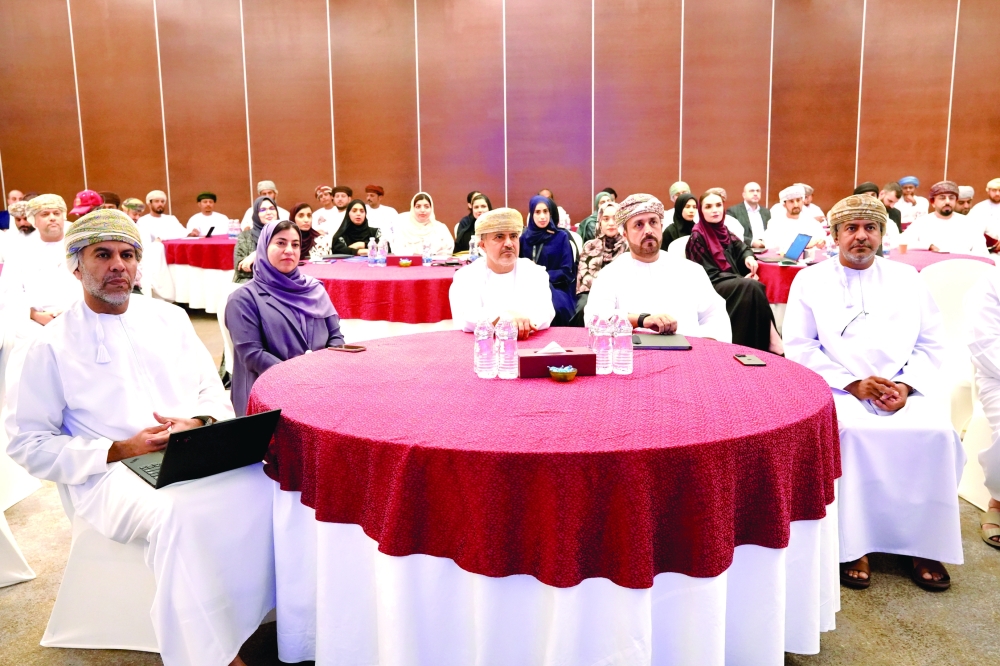





MUSCAT: The Ministry of Transport, Communications and Information Technology (MoTCIT) on Wednesday organised a workshop titled 'Local Content in Ministry Projects – Consultants, Contractors and Key Partners', in the presence of Eng Said bin Hamoud al Maawali, Minister of Transport, Communications and Information Technology, along with other officials.
The workshop aimed to emphasise the importance of local content in transport projects as one of the main pillars for achieving national impact, in addition to clarifying the roles and responsibilities of the various project stakeholders to ensure effective integration in implementation. It also highlighted the role of contractors and consultants as key partners in achieving local content targets, while providing an open dialogue platform to discuss practical challenges and review proposed ideas and development solutions.
Eng Said bin Hamoud al Maawali opened the workshop with a keynote address in which he stressed that enhancing local content in the Ministry’s projects represents a strategic priority that contributes to supporting the national economy, empowering Omani competencies, and maximising the added value of development projects. He also emphasised the importance of integrating efforts among all partners to ensure the achievement of sustainable development targets.
The workshop addressed the concept of local content and its economic and developmental dimensions, in addition to the key pillars for achieving sustainable economic development. These included strengthening the national economy, localising industries related to the transport sector, creating sustainable employment opportunities for citizens and developing human capital to lead the roads sector.
It also highlighted the importance of cooperation between government entities, consultants and contractors by aligning policies with practical realities, and translating local content requirements into clear, measurable technical and contractual provisions, thereby enhancing levels of compliance and improving implementation efficiency.
Oman Observer is now on the WhatsApp channel. Click here