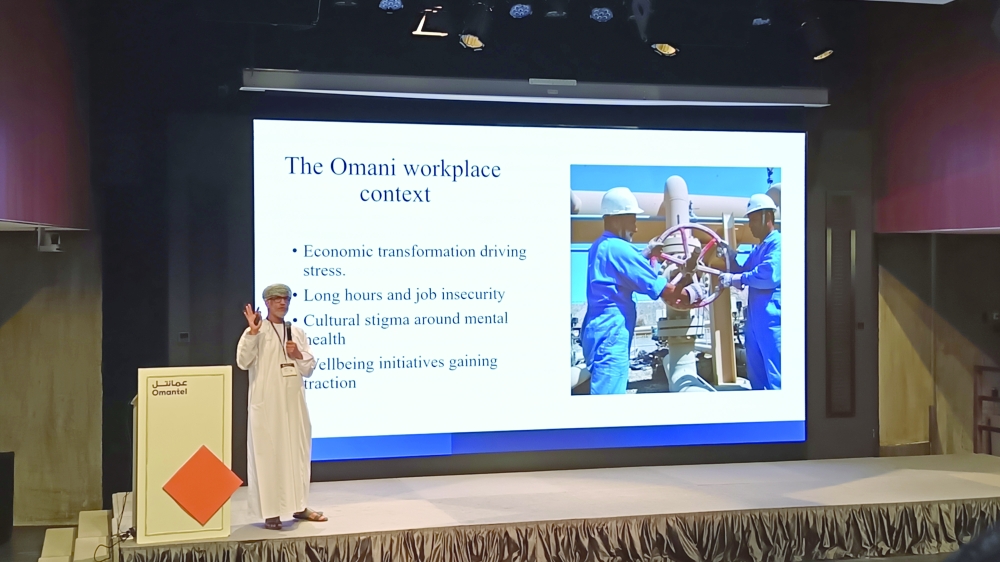
I recently attended a well-being at work event in Muscat where experts from around the globe presented their initiatives in this field. The discussion was fascinating, and I was happy to see programmes applied here in Oman.
Over the past few years, workplace well-being has become a booming industry. By 2026, global spending on employee wellness is expected to exceed $94 billion.
Mindfulness apps, resilience workshops and digital therapy platforms are now available in many organisations. Yet despite this investment, burnout, disengagement and psychological distress continue to rise. This raises the question: why aren’t we seeing better mental health at work?
One explanation lies in the fact that some well-being initiatives focus on the individual while ignoring the real sources of distress. Telling exhausted employees to 'practice self-care' while maintaining excessive workloads, rigid schedules, or unclear expectations is not support; it is contradiction.
Research shows that when people are encouraged to look after themselves without any meaningful change in their working conditions, they are more likely to experience frustration rather than gratitude.
Employees feel blamed for struggling in systems that are structurally stressful. In some studies, workers who were offered well-being tools without organisational change reported feeling more disengaged and even more distressed than those who received no intervention at all.
In Oman, conversations about employee well-being have become more visible in recent years within some government institutions and large private companies.
While awareness has increased, many employees still experience high workloads, performance pressure and limited flexibility. Well-being initiatives are sometimes introduced alongside these pressures, rather than as a response to them, which can lead to skepticism and low engagement.
In a culture that values commitment and endurance, employees may also hesitate to openly use mental health resources unless they feel genuinely supported by leadership.
Another problem is uptake. Many organisations heavily rely on Employee Assistance Programmes or well-being apps, yet usage rates remain low due to stigma, lack of trust and time pressure.
Even when employees do engage, the evidence for effectiveness is limited. Large studies have shown that mindfulness training, resilience workshops and well-being apps often have minimal impact on long-term mental health outcomes.
One reason is selection bias: those who are already coping relatively well are more likely to participate, while those who are struggling most are least able to engage.
So, how can organisations genuinely support their employees?
When I conduct well-being workshops, participants consistently rank work-life balance, flexibility and manageable workloads as top priorities. Experiments with four-day work weeks, flexible scheduling and results-based work environments have shown promising effects not only on well-being but also on productivity and retention. When people are given more control over when and how they work, stress decreases and engagement improves.
Many leaders feel ill-equipped to talk about mental health or respond to distress. Investing in leadership, psychological literacy and people-management skills can significantly reduce turnover and improve morale.
In my opinion, true workplace well-being is not about asking individuals to cope better with unhealthy systems. It is about designing healthier systems where people can thrive.
When organisations commit to meaningful structural change, well-being stops being a slogan and starts becoming a reality.
Dr Hamed Al Sinawi
The writer is a senior consultant psychiatrist at SQU Hospital
Oman Observer is now on the WhatsApp channel. Click here