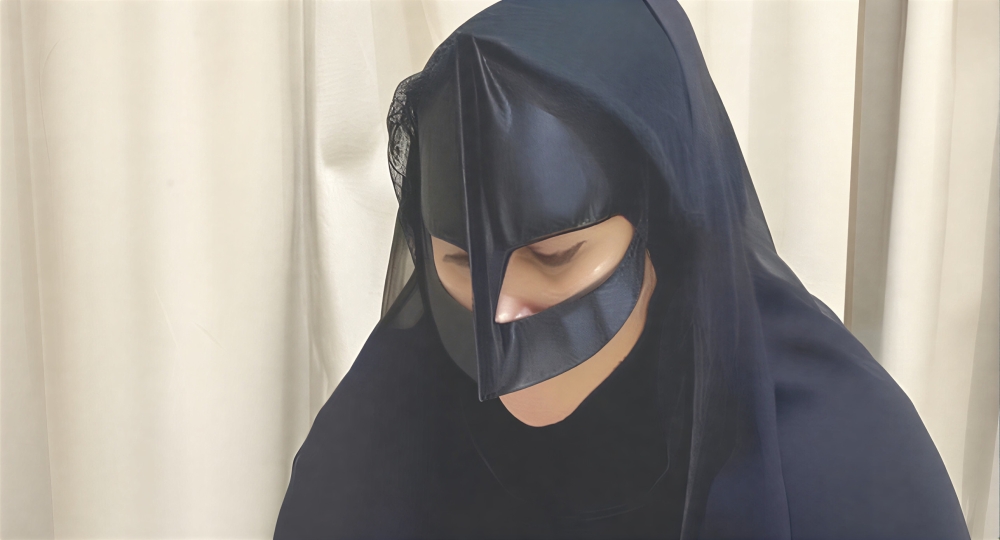





The Omani burqa stands as one of the most enduring symbols of women’s traditional dress in Oman, embodying far more than a simple garment. Rooted deeply in social values of modesty, dignity, and identity, the burqa represents a living heritage shaped by generations of Omani women. Despite the rapid social and cultural transformations witnessed in recent decades, the burqa continues to hold a respected place in the collective memory of Omani society, reflecting a long history of craftsmanship passed down through women’s hands.
For Fatima AlOwaisi, an Omani burqa maker, this tradition is not merely a skill but a continuation of a way of life. Her journey with burqa-making began in the 1990s, inspired by the practices of earlier generations when women sewed their own clothing at home. Like many women of her time, Fatima learned the craft from her mother and elder women, at a time when sewing was an essential domestic skill rather than a commercial activity. The burqa, in particular, was carefully handmade, shaped to suit the wearer, and infused with cultural meaning.
Fatima describes the burqa as a symbol of modesty and honour rather than simply a traditional accessory. Historically, the Omani burqa was closely associated with social customs, particularly in rural and Bedouin communities, where it marked maturity and adherence to cultural norms. Anthropological studies and museum collections indicate that this face covering, which reveals only the eyes, has long been worn across parts of Oman and the Arabian Peninsula, serving both practical and symbolic purposes. In harsh desert environments, it offered protection from sun and wind, while socially it reflected values of privacy and respect.
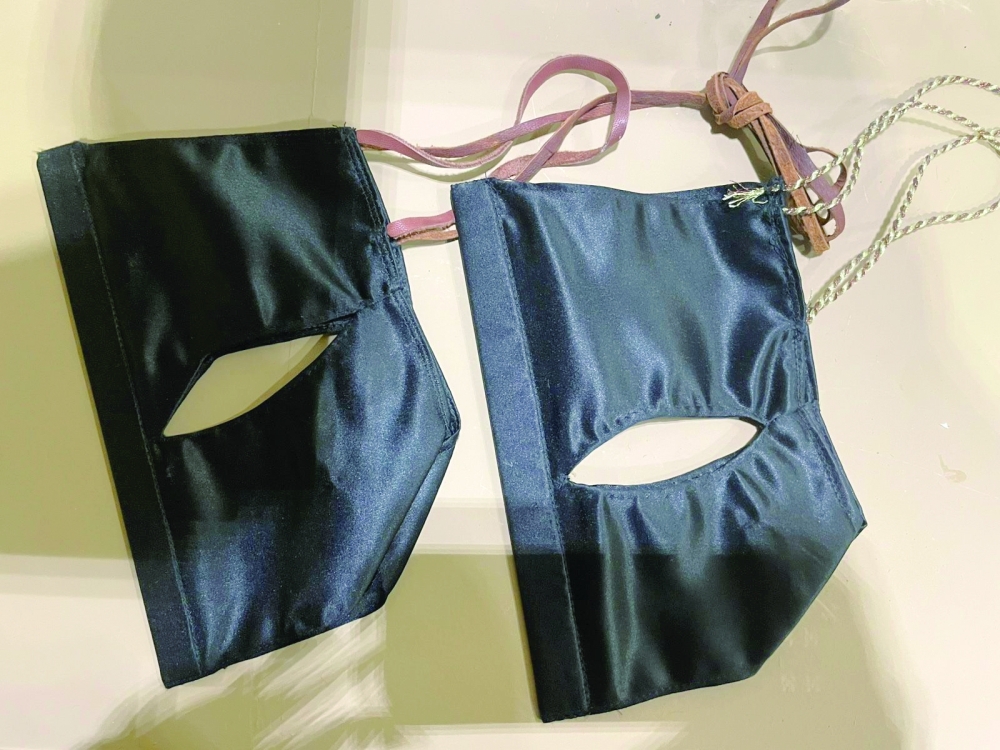
The burqa’s design and materials varied depending on region and availability. Traditional burqas were commonly made from al-nil al-shababi, a distinctive fabric known for its durability and deep colour. Wooden strips crafted from palm fronds or bamboo were placed across the nose to give the burqa its recognizable structure, while leather cords were used to secure it behind the head. All stages of production were done by hand, requiring precision and experience to ensure comfort and balance on the face. According to Fatima, even the smallest miscalculation could affect how the burqa sat or moved when worn.
Over time, materials and methods evolved. Today, burqas are often made using a range of modern fabrics such as taffeta, while still preserving the traditional form and function. The process remains meticulous: selecting the fabric, taking precise measurements, cutting, shaping, reinforcing, and finishing the piece before it is ready to be worn. Although tools have changed, the craftsmanship required remains largely the same, rooted in patience and inherited knowledge.
Regional variation is one of the most striking aspects of the Omani burqa. Across the Sultanate, styles differ in size, shape, and detailing, reflecting Oman’s geographical and cultural diversity. Burqas worn in Dhofar, for example, differ noticeably from those found in the interior or coastal areas. Fatima notes that burqas from Masirah Island hold a special place in her heart, as they are distinguished by their unique form and strong connection to local identity.
In contemporary Oman, the burqa is worn less frequently by younger women, particularly in urban areas, where modern clothing styles have become dominant. Fatima attributes this change not to rejection of tradition, but to shifting lifestyles and convenience. Many young women now prefer to purchase ready-made burqas from tailors rather than sewing them by hand, a reflection of faster-paced lives rather than a lack of appreciation for heritage. Despite this shift, the burqa continues to be worn for cultural events, special occasions, and by women who remain deeply connected to traditional dress.
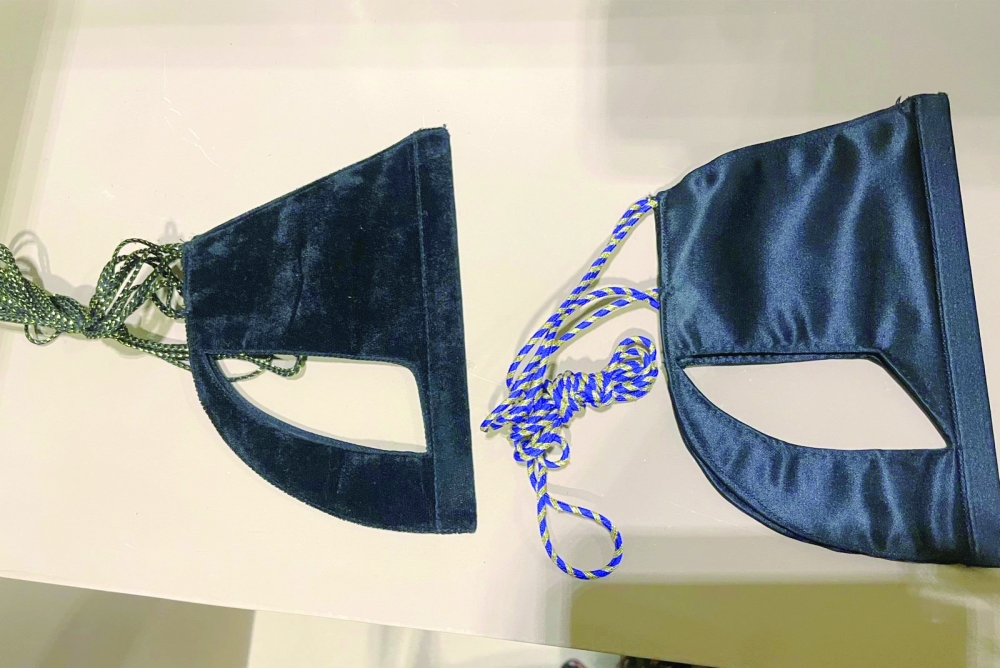
Fatima explains that she has faced no major challenges in continuing her craft, whether in sourcing materials or maintaining demand. This steady interest demonstrates that traditional crafts can still find a place in modern society when supported by cultural awareness and community appreciation. In an effort to creatively preserve the heritage, she has also introduced burqa-inspired keychains, offering a contemporary interpretation of a traditional symbol.
The role of Omani women in safeguarding such traditions remains crucial. Through learning, practicing, and teaching these crafts, women ensure that heritage is not reduced to static displays, but remains a living, evolving practice. Fatima encourages young Omani women to rely on themselves, learn sewing skills, and engage with traditional crafts, emphasizing that burqa-making carries both cultural and practical value.
Ultimately, the Omani burqa is more than a piece of fabric shaped by thread and wood. It is a testament to women’s creativity, resilience, and cultural continuity. As Oman continues to balance modernity with tradition, the burqa stands as a quiet yet powerful reminder that heritage endures not only through preservation, but through practice, adaptation, and the hands of those who choose to carry it forward.
Oman Observer is now on the WhatsApp channel. Click here