Do you need to write an email inquiring about a product or service? AI can do that for you. On the other hand, do you need to write a job application letter and draw up a CV? AI can do that too. What about a text advertising a product or service that your company or department offers?
On the other hand, perhaps you want a poem for someone special. Just ask AI. Struggling to write an essay or report in English for your teacher or university? No problem — AI can create the perfect response for you.
It seems that AI is taking over the need for learning to write in any meaningful way. Yes, texting is enormously popular, especially among the young, but these broken fragments of text, devoid of punctuation and littered with abbreviations, casual spellings and emojis, hardly count as coherent, structured writing.
We have seen this pattern of change before. Calculators and cash registers took away the skill of mental arithmetic. My grandmother, many years ago, ran a green grocer’s. With little formal education, she was able to add up rapidly the total cost of purchases of carrots, potatoes and onions for her customers. Fast forward to the present day. How many checkout staff in supermarkets, or any of us for that matter, could perform complex addition in their heads?
Similarly, navigation systems took away the skill of map reading. Google and various apps are replacing our own built-in memory banks — not to mention our reliance on spelling and grammar checks. Therefore, the list goes on.
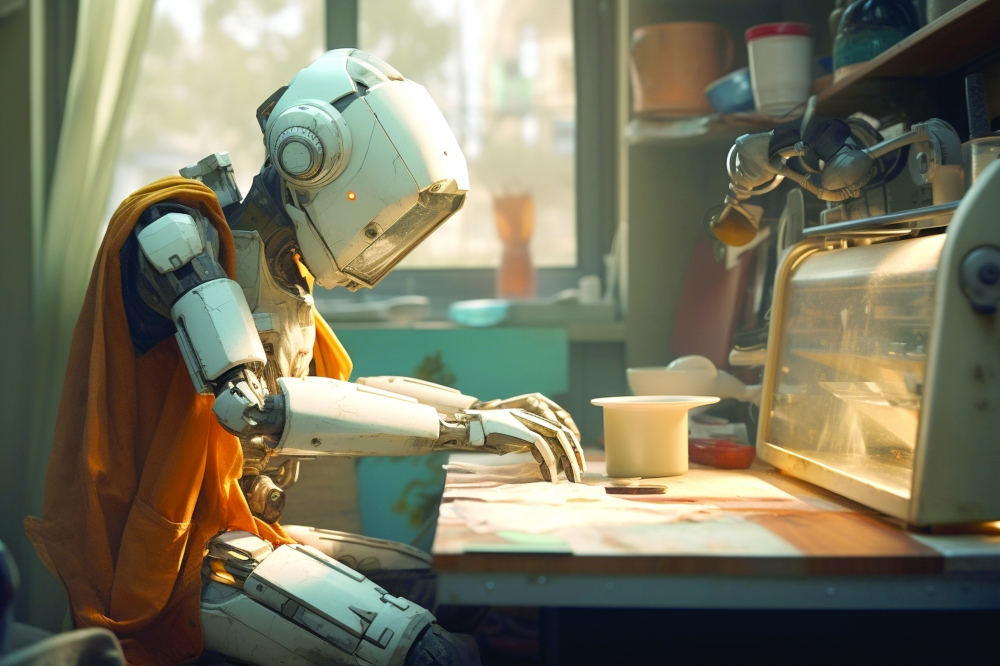
I think we need to worry about this trend for a number of reasons. Most importantly, writing is closely related to thinking. We think before we write and as we write we continue to think. Alternatively, to put it more simply, writing is thinking.
In order to compose, even a simple text such as a business letter, we must employ a variety of thinking skills. We must think about the topic, the person we are writing to, the style we must adopt (friendly or formal), the organisation of the letter, the tone of message we want to convey, etc. Essays, articles, reports and projects are even more challenging as thinking and writing tasks. The more complex the writing task, the more we draw on thinking skills. If a machine takes away our need to write, it also bypasses these thinking skills. In essence, we are outsourcing our brains.
There is also the question of plagiarism. Do we really want students to think that there is an easy answer to everything by, in this case, taking the work that someone else has composed? Nevertheless, you cry, taking material from AI is not plagiarism! Surely, the information belongs to everyone. However, this is not true. AI gathers (or steals) huge quantities of information from millions of sources — texts created by countless authors who are all uncredited.
If we lose the skill of writing, does it really matter? We have lost many skills throughout the development of the modern world. We no longer know how to craft tools from rocks or animal bones, or how to skin animals or spin cloth, for example. However, the skill of writing is of a different order. An ancient skill has survived, in various forms, until the modern day and is one of the pillars of civilisation.
There are already warning signs of where this ‘de-skilling’ is leading. A number of studies show that the average IQ of students in developed countries has been falling since the 1970s — a truly shocking statistic. There are a number of possible causes for this decline. IQ is related, among other things, to literacy. Research also shows a shrinking of the vocabulary base of modern students. The present generation of young people recognise and use fewer words than previous generations.
Do we really want to encourage the slow decline of the thinking powers of the young and their literacy — a reversal of the evolutionary process? We all need to think carefully about how AI is being used in the workplace and most importantly in our schools before the precious skill of writing is lost.
Oman Observer is now on the WhatsApp channel. Click here