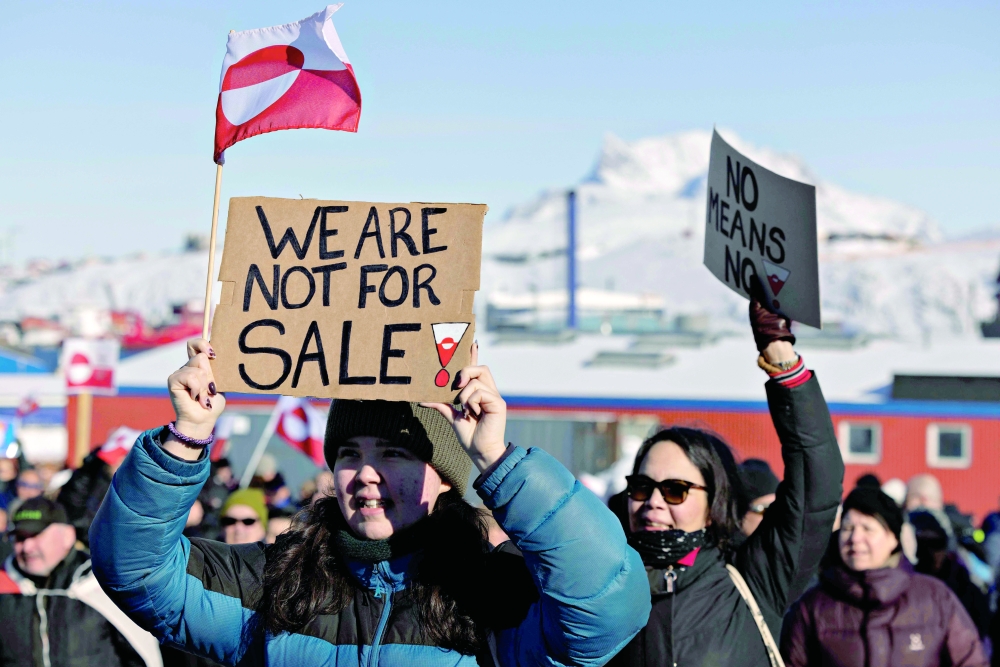
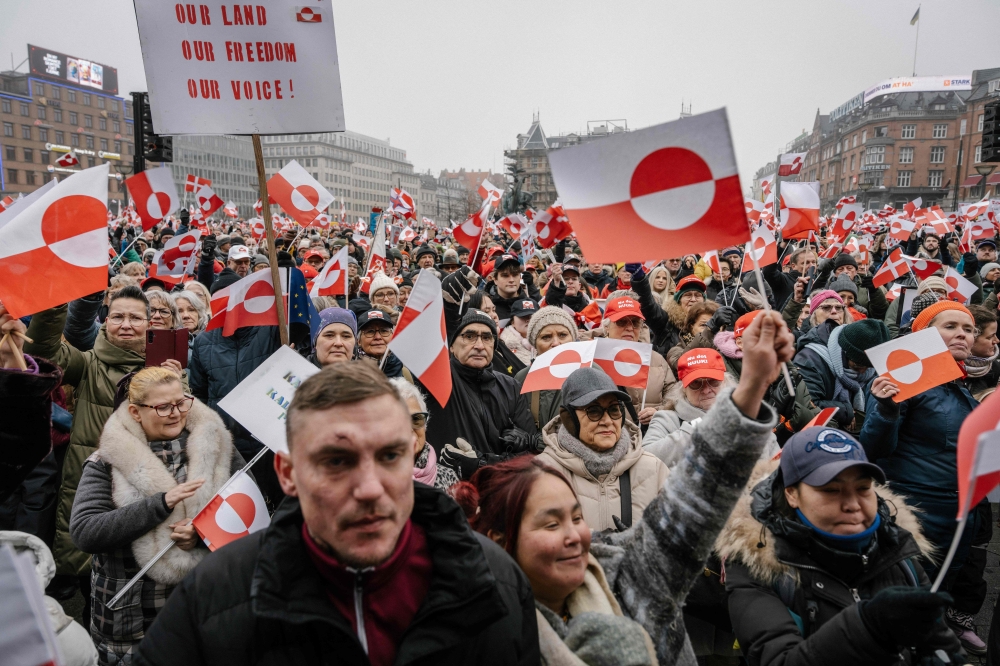
The recent push by the United States to assert control over Greenland, a vast Arctic territory rich in rare minerals and strategic position, has reignited old anxieties about colonial extraction and resource-driven geopolitics. Greenland, an autonomous territory of the Kingdom of Denmark, was colonised in the early 1700s and continues to be tied to the European nation. Yet its Indigenous Inuit population is making one thing absolutely clear: control of their future is not up for negotiation. In the face of aggressive rhetoric from Washington, their stance exposes deeper global patterns of resource control dressed up as security threats.
President Donald Trump has repeated that the United States will pursue control of Greenland, even hinting at force. “We are going to do something on Greenland whether they like it or not,” Trump said in public remarks, framing the island’s fate as a matter of US strategic imperative. “We don’t want Russia or China going to Greenland, which if we don’t take Greenland, you can have Russia or China as your next door neighbour. That’s not going to happen,” Trump added, tying Greenland’s future to great-power rivalry rather than to Greenlanders themselves.
For its part, Greenland has made its own position unmistakably clear. “We don't want to be Americans, we don't want to be Danish, we want to be Greenlanders,” the leaders of five parties in Greenland’s parliament said in a joint statement. “The future of Greenland must be decided by Greenlanders,” they added. “No other country can meddle in this. We must decide our country’s future ourselves — without pressure to make a hasty decision, without procrastination, and without interference from other countries.” These are not peripheral objections but assertions of sovereign identity and democratic self-determination.
The irony of this moment is stark. A powerful state purports to act to secure a territory against rival powers when, in fact, it is advancing tactics that resemble the very colonial practices that Greenlanders are seeking to move beyond. Instead of supporting pathways towards true independence, the United States threatens coercion, referencing its own security concerns while treating other people’s land as if it were up for grabs.
This is not the first time resource wealth has been used to justify coercive foreign policy. The modern record is filled with examples where powerful nations have targeted regions with valuable natural endowments under the excuse of national security, democracy promotion or humanitarian intervention. Venezuela’s oil reserves have been a persistent factor in Washington’s fraught relationship with Caracas. Iraq’s oil fields were a known strategic prize even before the 2003 invasion. In the contemporary context of Middle East politics, the genocide in Gaza is often viewed through lenses that include territorial control and resource leverage. The pattern is consistent: When natural wealth is at stake, powerful nations deploy their might with disproportionate force.

Beyond the instrumental value of minerals and location, there is a profound moral question at stake: whose voices matter in decisions about land and future? For centuries, Indigenous communities around the world have seen their territories exploited by external powers in pursuit of natural wealth. Greenland, whose population is predominantly Inuit and whose cultural identity is distinct from both Denmark and the United States, has its own history of external governance. Its people long sought greater autonomy from Denmark, culminating in expanded self-government in the 21st century. But true independence is difficult when economic and defence pressures persist, and when geopolitical giants see your land as their next strategic prize.
The response from Greenland’s political leaders underscores this point. Their insistence that Greenlanders decide their own future is not a slogan; it is a rejection of imposed destinies. It speaks to a universal principle: indigenous peoples and smaller nations must be masters of their own political and economic paths. External interest in their resources from the West should never trump that fundamental right.
Washington’s approach to Greenland also threatens to undermine long-standing alliances. Greenland is part of the Kingdom of Denmark, a Nato ally. Any US attempt to assert control against the will of Denmark and Greenland could fracture the transatlantic alliance. European leaders have expressed concern that such actions would have profound repercussions for collective security cooperation in the North Atlantic and beyond.
Ultimately, Greenland’s mineral wealth ought to be a source of empowerment and opportunity for its people, not leverage for external domination. The international community should support equitable and democratic pathways for Greenland’s development and sovereignty. That means respecting the will of Greenlanders, not threatening them with unilateral action disguised as national security.
Oman Observer is now on the WhatsApp channel. Click here