




MUSCAT, JAN 4
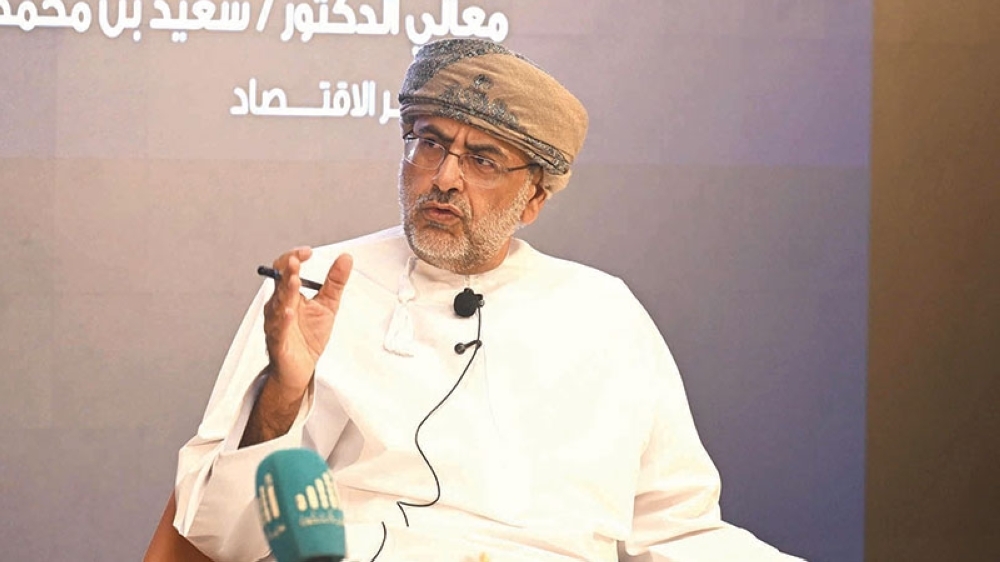
The completion rate for projects and programmes stipulated for implementation during the Tenth Five-Year Plan (2021–2025) has surpassed the 97% mark. This commendable delivery rate highlights effective planning and execution, while remaining aligned with Oman Vision 2040 and its long-term development goals, according to Dr Said bin Mohammed al Saqri, Minister of Economy.
Speaking during the recent 2026 Oman State General Budget briefing, he stressed that the continuation of some projects into the next phase is expected and does not affect future projections. “It is natural for some projects to be completed while others carry over into the upcoming Five-Year Plan. This continuity will not affect expectations for the plan’s performance or its overall outlook”, he noted.
Dr Al Saqri highlighted the steady momentum maintained throughout the Tenth Five-Year Plan. He said: “The completion rate of development projects has been strong and the level of project approvals — both in terms of the development budget and development spending — has also been positive. At the start of the Tenth Five-Year Plan, approved development projects stood at around RO 6 billion. Today, approved projects have reached approximately RO 11 billion. This shows that implementation has never slowed; projects have continued at a steady pace. Naturally, many projects have been completed, while others will carry over into the Eleventh Five-Year Plan”.
Commenting on the review of the Tenth Five-Year Plan, Dr Nasser bin Rashid al Maawali, Under-Secretary of the Ministry of Economy, said that the plan was evaluated by an independent international body to ensure objectivity and transparency.
“The plan was assessed by the United Nations Economic and Social Commission for Western Asia (ESCWA). The purpose of this evaluation was to measure the progress achieved, identify key challenges and draw lessons learned from the Tenth Five-Year Plan that can be applied to the Eleventh Five-Year Plan”.
He added: “At the start of the Tenth Five-Year Plan, public debt stood at around 70% of GDP. Today, it has declined to approximately 34% of GDP. Inflation was close to 4% at the beginning of the plan, whereas it is now below 2%. These figures clearly show that the Tenth Five-Year Plan has been highly successful in addressing many economic challenges. In terms of foreign investment, it stood at RO 14 billion at the start of the plan and has now increased to around RO 30.2 billion”.
Highlighting the performance of Muscat Stock Exchange (MSX) as a key indicator of economic recovery, he said that the Exchange reflected the tangible impact of the Tenth Five-Year Plan. “At the beginning of the Tenth Five-Year Plan, trading value on Muscat Stock Exchange stood at around RO 442 million. Today, trading value has exceeded RO 3.5 billion. Muscat Stock Exchange is regarded as a mirror of the economy and the fact that the market has now crossed the 5,000-point level — a milestone not reached in nearly eight years — clearly demonstrates the positive transformation achieved. Overall, the Tenth Five-Year Plan has been successful in addressing and overcoming many economic challenges”, he added.
Oman Observer is now on the WhatsApp channel. Click here