




Venezuelan President Nicolás Maduro arrived in New York on Saturday to face drug charges, hours after President Donald Trump shocked the nation and the world when he announced that the United States had captured the Venezuelan president and intended to “run the country.”
The action came after a monthslong campaign by Trump’s administration to oust the authoritarian leader, and raised questions about the legality of what happened in the South American country.
Here’s what we know:
What happened?
The United States carried out “a large scale strike against Venezuela,” Trump said on social media. Maduro and his wife, Cilia Flores, were captured during the operation, Trump said.
Gen. Dan Caine, chair of the Joint Chiefs of Staff, said during a news conference Saturday that Trump gave the order to capture Maduro late Friday. A vast array of U.S. forces then began their mission, which lasted into early Saturday, Caine said.
The operation involved 150 aircraft launching across the hemisphere, he said, and working to dismantle Venezuelan air defenses so that military helicopters could deliver troops into Caracas, the country’s capital. The entire mission took about 2 hours, 20 minutes, the general said.
Trump said Saturday at the news conference that U.S. forces encountered significant resistance. Caine said that Maduro and Flores “gave up” and were taken into custody.
Maduro and Flores were transferred to the United States via the U.S. Navy base at Guantánamo Bay, Cuba, where the FBI had a government plane waiting to bring them to New York, according to a U.S. official familiar with the operation.
The Venezuelan government accused the United States earlier Saturday of carrying out military attacks in Caracas and other parts of the country after large explosions were reported at a military base in the city.
Did Trump have the authority to capture Maduro?
There are questions about the legality of the strikes. Secretary of State Marco Rubio said during the news conference Saturday that it would not have been possible to let U.S. lawmakers know in advance. Trump and Rubio said several times that the operation was a law enforcement operation, rather than the military action over which Congress has a greater purview.
The president brushed off concerns about the constitutionality of his administration’s actions during an interview earlier on Fox & Friends Weekend.
Sidestepping criticism of the raid and whether there was any legal justification for his administration’s actions, Trump said that Democrats who criticize him should commend the effort.
“They should say, ‘Great job,’” he said. “They shouldn’t say, ‘Oh, gee, maybe it’s not constitutional.’”
Rep. Jim Himes of Connecticut, the top Democrat on the House Intelligence Committee, said the administration “must immediately brief Congress on its plan to ensure stability in the region and its legal justification for this decision.” His remarks came before Trump said that the United States intended to run Venezuela.
The United Nations Security Council will convene an emergency meeting Monday to discuss U.S. strikes in Venezuela. Russia, China and Colombia requested the meeting after Venezuela’s mission to the U.N. wrote a letter to the council president imploring it condemn and stop U.S. strikes.
Was anybody hurt or killed?
At least 40 people were killed in the attack, including military personnel and civilians, according to a senior Venezuelan official who spoke on condition of anonymity to describe preliminary reports.
Trump, speaking on Fox News on Saturday, said that no U.S. troops had been killed, but suggested that some service members had been injured.
Who is in charge of Venezuela now?
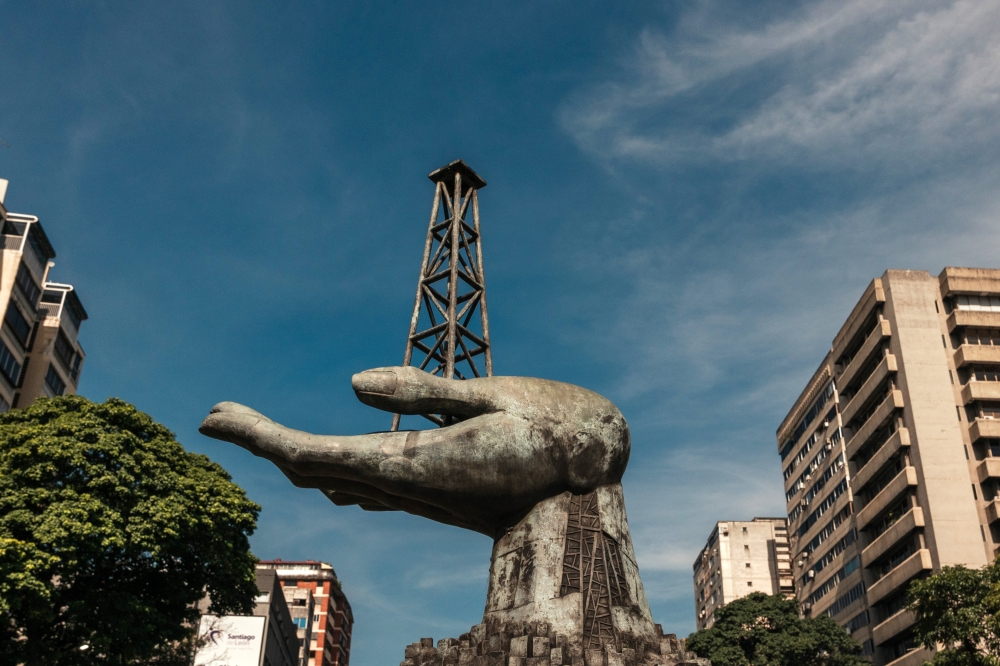
Trump said that the United States was going to “run the country” until a transition could take place. He gave few details of how that might work in practice, though, and his remarks mostly focused on how U.S. interests would extract and sell oil from the country.
According to the Venezuelan Constitution, power should pass to the vice president, Delcy Rodríguez. Rodríguez was sworn in as interim president in a secret ceremony Saturday, according to people close to the government.
Trump said at the news conference that Rubio had spoken to Rodríguez and she is “essentially willing to do what we think is necessary to make Venezuela great again.”
But in a live address to Venezuelans on Saturday, Rodríguez undermined Trump’s comments and forcefully denounced the United States.
“There is only one president in this country, and his name is Nicolás Maduro Moros,” Rodríguez said.
She added that Venezuela was open to having a respectful relationship with the Trump administration, but only within the framework of international and Venezuelan law.
What happens next?
Maduro and Flores landed in New York on Saturday afternoon to face drug charges, U.S. officials said. By 7 p.m., Maduro had been brought to Manhattan by helicopter, according to a law enforcement official briefed on the matter.
Maduro was then set to be driven to the U.S. Drug Enforcement Administration’s New York City headquarters, according to a law enforcement source briefed on the security plan. From there, Maduro will be brought to the Metropolitan Detention Center in Brooklyn, where he is expected to be held.
A photo of Maduro in U.S. custody, released by Trump, shows him in handcuffs, with a blacked-out mask and headphones.
Attorney General Pam Bondi said on social media that the two “will soon face the full wrath of American justice.”
The attorney general posted an unsealed indictment, which appears similar to the 2020 indictment of Maduro, that charges him with narco-terrorism and cocaine importation conspiracies. The charges also include possession of machine guns. When combined with drug trafficking charges, those gun charges carry strong prison sentences upon conviction.
A 2020 indictment against Maduro accused him of overseeing a violent drug organization known as Cartel de los Soles. U.S. intelligence agencies had assessed that Maduro was actually at odds with one group, Tren de Aragua, and analysts said that the Cartel de Los Soles did not exist as a concrete organization. The term has been used to refer to the involvement of high-ranking military officers in the drug trade, though no evidence has been disclosed of Maduro directing the effort.
This article originally appeared in The New York Times.
Oman Observer is now on the WhatsApp channel. Click here