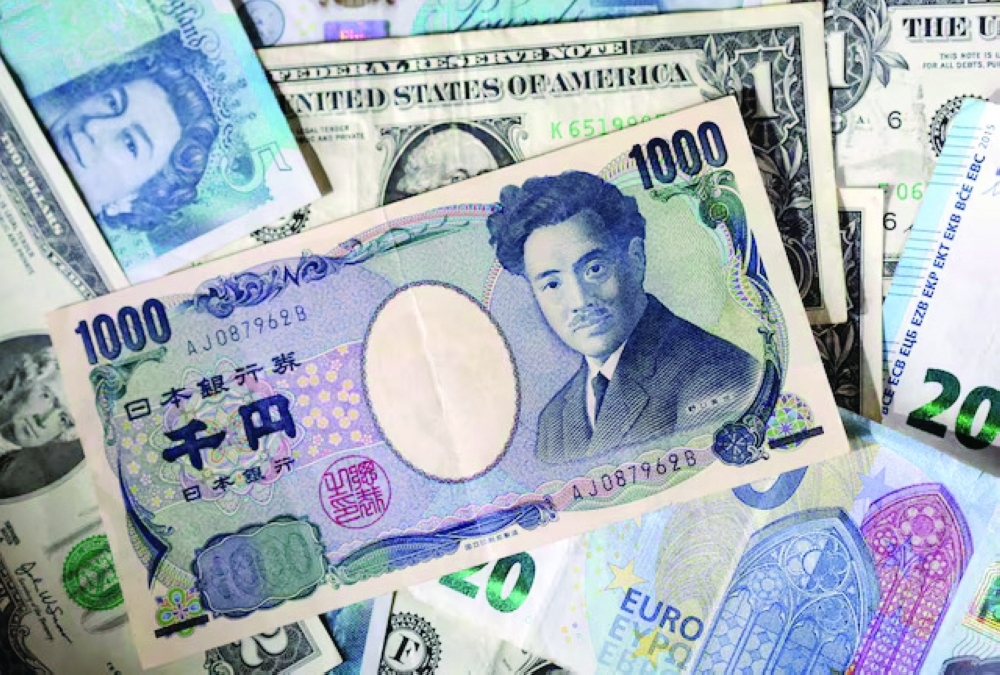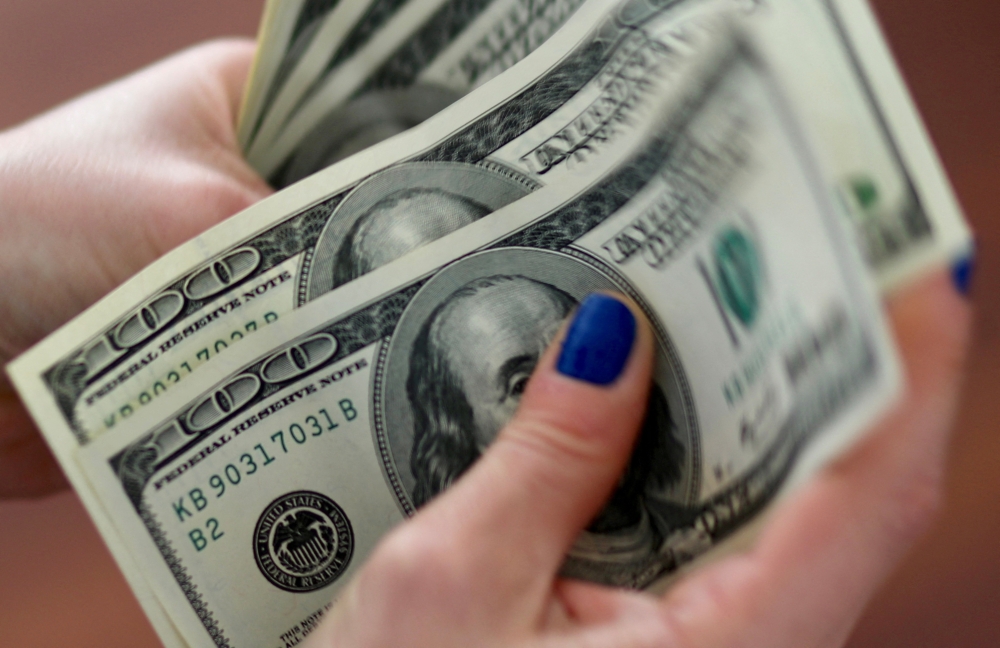





SINGAPORE/LONDON: The U.S. dollar was on the back foot on Wednesday and set for its biggest yearly fall since 2017, possibly with more to come, as investors wagered the Federal Reserve would have room to cut rates further next year even as most of its peers look finished with easing.
Tuesday's solid U.S. GDP reading failed to move the dial on the rate outlook, leaving investors pricing in roughly two more Fed cuts in 2026.
"We expect the FOMC to compromise on two more 25 bp cuts to 3-3.25% but see the risks as tilted lower," said Goldman Sachs Chief U.S. Economist David Mericle, citing slowing inflation as a reason for the forecast.
The euro and pound each nudged up to fresh three-month highs on Wednesday, though were last broadly steady on the day at $1.180 and $1.3522, respectively.
Against a basket of currencies, the dollar index fell to a 2-1/2-month low of 97.767. It was on track to lose 9.8% for the year, which would mark its steepest annual drop since 2017. Any further weakness in the last week of the year would take its fall to its greatest since 2003.
The dollar has had a tumultuous year, whipsawed by President Donald Trump's chaotic tariffs that sparked a crisis of confidence in U.S. assets earlier this year, while his growing influence over the Fed has also raised concerns about its independence.
In contrast, the euro is up just over 14% for the year thus far, putting it on track for its best performance since 2003.
The European Central Bank stood pat on rates last week and revised upwards some of its growth and inflation projections, in a move that likely closes the door to further easing in the near term.
Traders have since responded by pricing in a slim chance of tighter policy next year, mirroring expectations for Australia and New Zealand, where the next moves are seen as being hikes.
That has in turn lifted the two Antipodean currencies, with the Australian dollar, up 8.4% to date, scaling a three-month peak of $0.6710 on Wednesday, and the New Zealand dollar similarly touched a 2-1/2-month high of $0.58475.
Sterling has gained more than 8% for the year. Investors are betting the Bank of England will deliver at least one rate cut in the first half of 2026, and place a roughly 50% chance on a second before the year-end.
However, most currencies have lost significant ground versus precious metals such as gold, which touched a fresh record high on Wednesday.
Currencies of smaller European countries, often with low debt, have been among the best performers this year.
The dollar has shed 12% on the Norwegian crown, 13% on the Swiss franc -- to last trade at 0.7865 francs - and 17% on the Swedish crown, hitting its lowest since early 2022 on Wednesday at 9.167 crowns.
TRADERS ON YEN INTERVENTION ALERT
For now, the main focus for the foreign exchange market remains on the Japanese yen, with traders alert to the possibility of an intervention from Japanese authorities to stem the currency's slide.
Finance Minister Satsuki Katayama said on Tuesday that Japan has a free hand in dealing with excessive yen moves, issuing the strongest warning to date on Tokyo's readiness to intervene.
Her remarks arrested the yen's decline, with the dollar last down 0.3% on the Japanese currency at 155.83 yen on Wednesday, having fallen 0.5% in the previous session.
While the Bank of Japan delivered a long-anticipated rate hike last Friday, the move had been well-telegraphed and comments from Governor Kazuo Ueda disappointed some in the market who had been betting on a more hawkish tone, leaving the yen sliding in the aftermath.
That has left investors vigilant to official yen-buying from Tokyo, particularly as trading volumes thin towards the year-end, which analysts say would make an opportune time for authorities to strike.
Oman Observer is now on the WhatsApp channel. Click here