





SUHAR, Dec 6
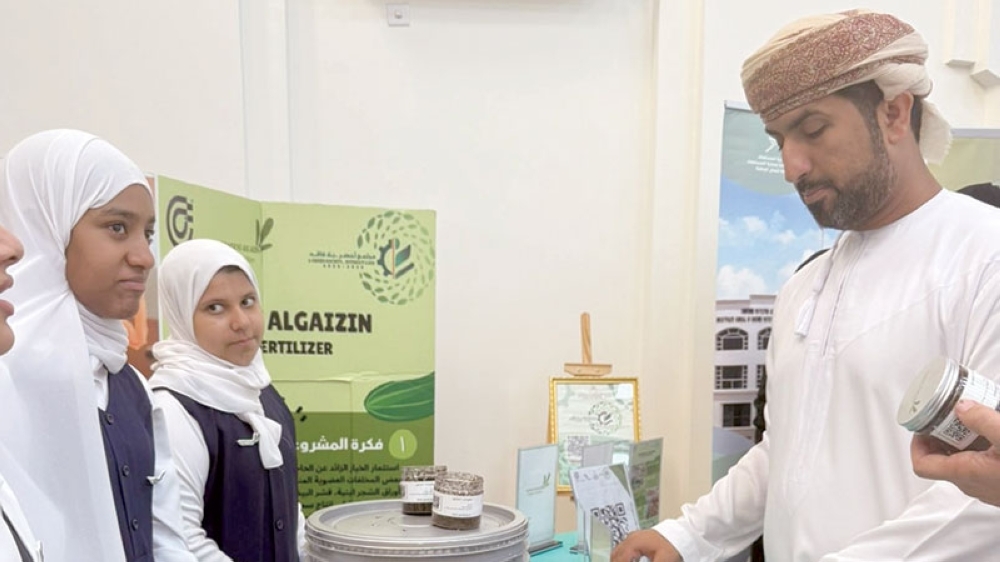
In a significant step toward environmental sustainability, students from Al Ghizayn Basic Education School in the Wilayat of Al Khabourah have developed an innovative project that converts discarded cucumbers and other food scraps into natural fertiliser. The initiative, part of the community programme ‘A Green Society Without Waste,’ demonstrates how young Omani students are crafting practical solutions to local environmental challenges.
At the heart of the project is the Sustainability Factory, a student-designed model that transforms organic waste into high-quality compost. Rather than allowing food remnants to accumulate in landfills, the team engineered a mechanism that speeds up decomposition, producing nutrient-rich fertiliser for school gardens, household use, and small-scale agriculture.
Project supervisor Rahma al Ajmi said the initiative began with a simple question: “How can we turn everyday waste into something beneficial?” She noted that students researched global models, applied modern sustainability concepts, and developed a prototype supported by a preliminary feasibility study to explore production potential and community impact. The idea, she said, could eventually grow into a small local enterprise.
Co-supervisor Jamila al Quraini highlighted the project’s educational value, explaining that it exposed students to environmental science, engineering design, and civic responsibility. She added that the Sustainability Factory gained strong backing from families, volunteers, and school partners — making it a truly community-driven achievement.
Parents also played a key role. Noura al Hosni, one of the participating parents, expressed pride in her children’s involvement. “This initiative taught our children that environmental protection begins at home,” she said. “They now understand the importance of reducing waste, recycling, and choosing natural products over chemicals.”
The project serves as a model for how schools across Oman are integrating sustainability into education, aligned with the nation’s vision for a greener future. With its blend of innovation, scientific thinking, and community engagement, the Sustainability Factory showcases how knowledge and economic awareness can work hand-in-hand — proving that environmental solutions can emerge from classrooms and benefit both society and the environment.
Oman Observer is now on the WhatsApp channel. Click here