




MUSCAT, DEC 4
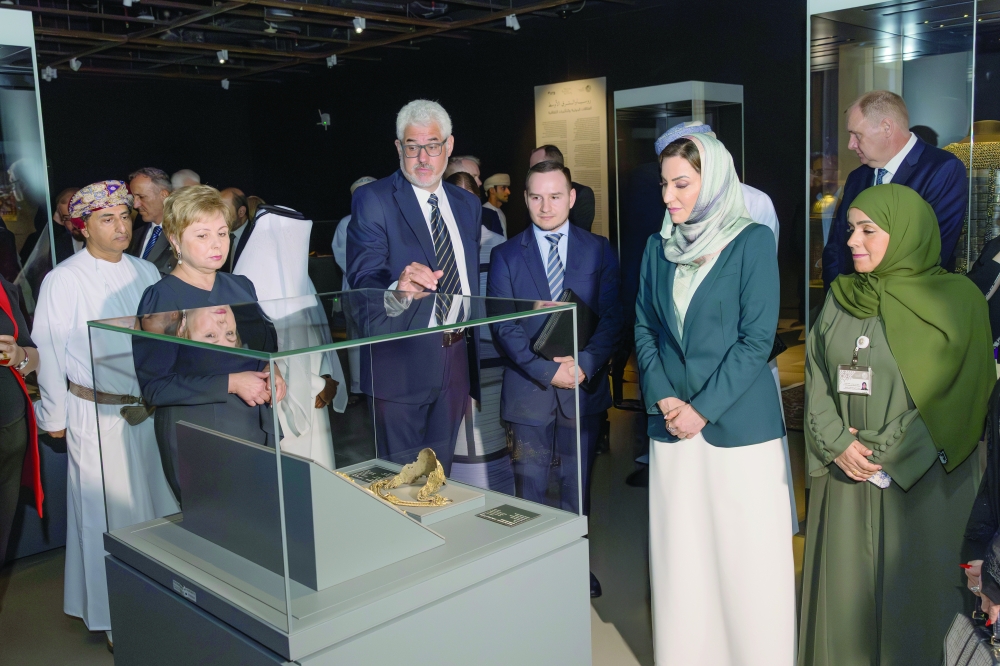
The National Museum opened the exhibition “Russia and the Middle East: International Relations and Cultural Influences” on Wednesday under the auspices of HH Sayyidah Dr Mona bint Fahd al Said, Assistant Vice-Chancellor for International Cooperation at SQU and Vice-Chairman of the Board of Trustees of the National Museum. The event marks a step in cultural cooperation and celebrates the longstanding connections between Russia and Oman.
The exhibition presents more than eighty remarkable objects from the Moscow Kremlin Museums, many of which are being shown outside Russia for the first time. The pieces include ceremonial weapons, decorative armour, horse adornments, jewellery and artworks that reflect how Eastern traditions influenced the appearance and craftsmanship of the Russian royal court during the 16th and 17th centuries. Visitors can also see historical items linked to the use of frankincense, which for centuries was imported to Russia from Oman. The display will remain open to the public until April 3, 2026.
During the ceremony, Oleg Vladimirovich Levin, Ambassador of Russia to Oman, praised the event as an important moment in cultural exchange. He described the exhibition as “a meaningful step that highlights the shared interest of both sides in preserving heritage and encouraging cultural understanding,” adding that culture serves as a lasting bridge that brings people closer.
Dr Elena Gagarina, Director-General of the Moscow Kremlin Museums, expressed her appreciation for the continued cooperation between the two institutions. She explained that the two museums have enjoyed “very good relations for a number of years,” leading to an agreement to exchange exhibitions. She added that the exhibition held in Moscow last year, The Splendour of Silver: Treasures from the Omani Court, was a great success with more than thirty thousand visitors. Speaking about the current exhibition, she noted that many of the objects “are being shown outside the Russian Federation for the first time,” and expressed her hope that it will leave visitors with “an unforgettable impression” and help expand cultural dialogue between the two countries.
From the attendees, Dr Hamed bin Hashim al Dhahab, Chairman of the Oman-Russia Business Council, shared reflections on the value of the exhibition. He explained that such events strengthen understanding beyond economic ties, saying that exhibitions like this “facilitate culture, heritage and the relationship between the two countries.” He also spoke about the long history of frankincense moving from Oman to Russia and Europe, noting that “frankincense was exported from Oman to Russia a long time ago.” He expressed admiration for the rare objects on display, saying, “These pieces are very precious. They come directly from the Kremlin... Even after living five years in Russia, I had never seen them.”
The exhibition offers visitors a chance to explore how Russian and Middle Eastern cultures interacted through trade, artistic influences and shared traditions over centuries. With its unique artefacts and insights, the exhibition stands as a meaningful reminder of the role culture plays in connecting people across time and geography.
Oman Observer is now on the WhatsApp channel. Click here