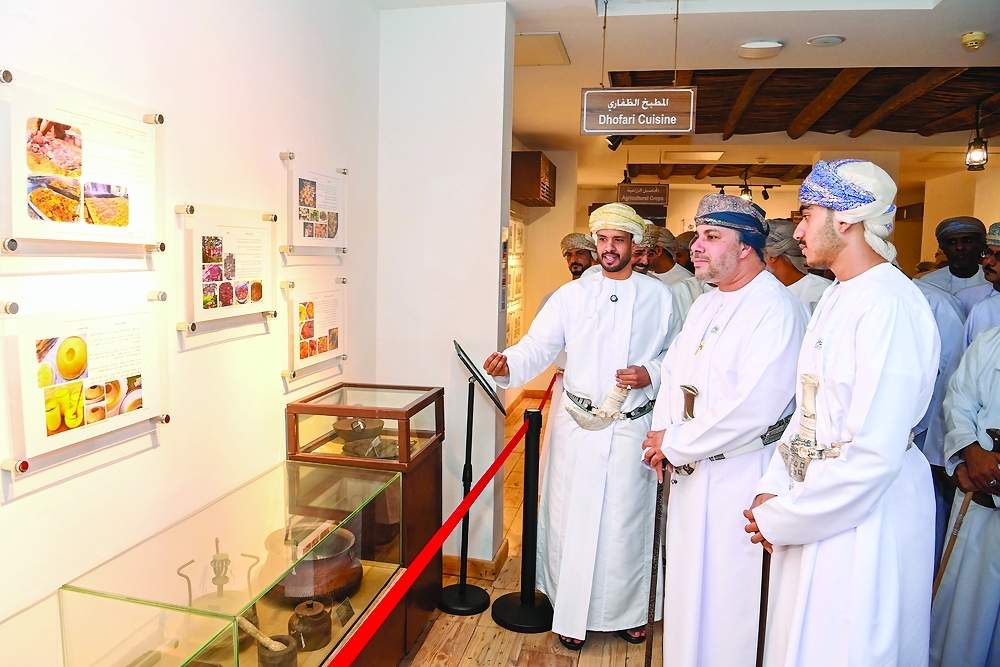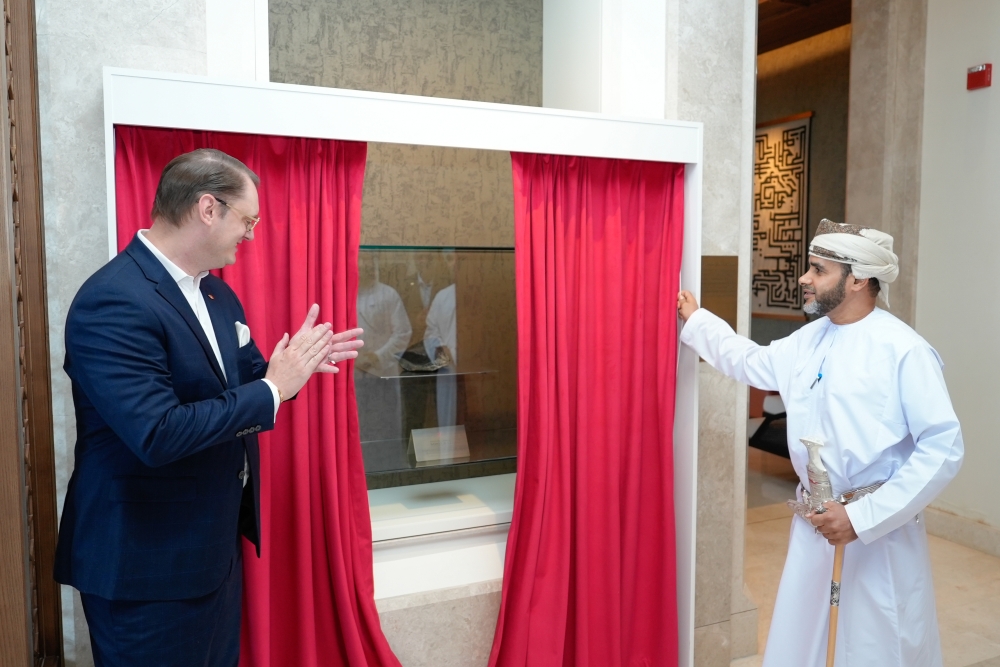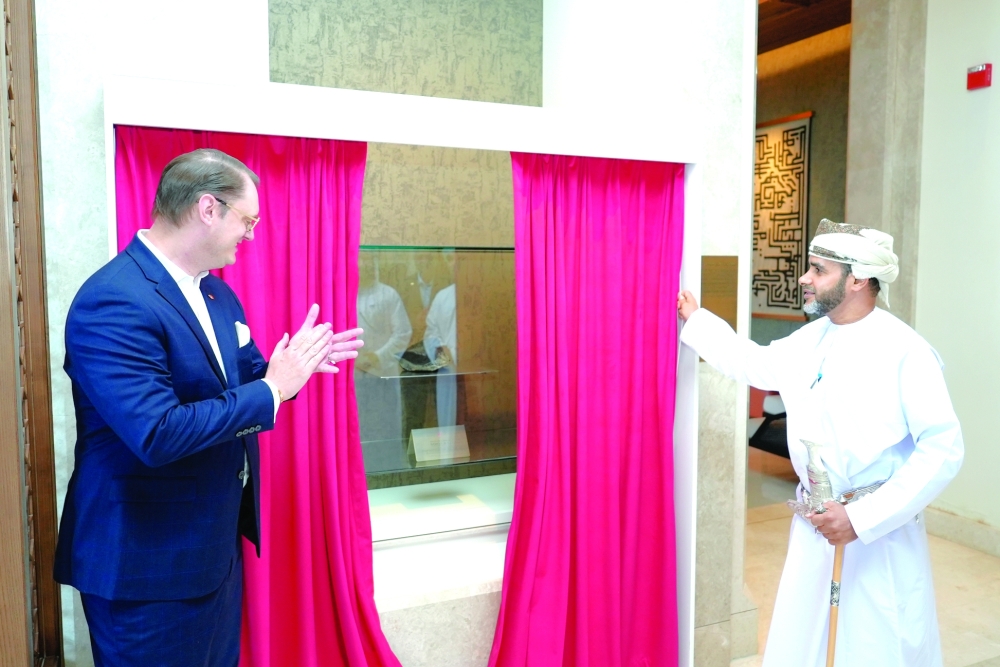





This is part of its efforts to utilize geological heritage and enhance the tourism and cultural experience in the Sultanate of Oman.
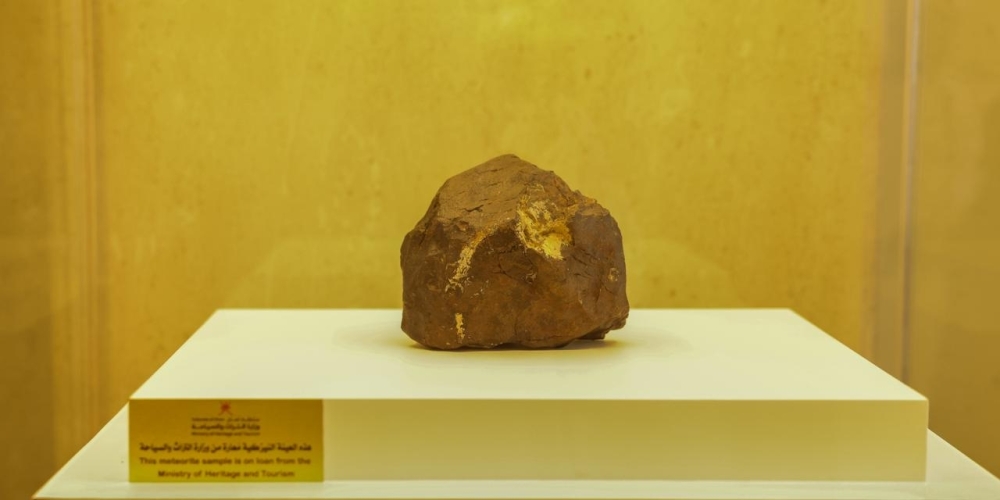
The corner features a collection of rare meteorite samples from the Jiddat al Harasis meteorites, allowing hotel visitors the opportunity to view them up close and learn about their history and scientific value, as well as the Sultanate of Oman's efforts to preserve them as an important cultural heritage.
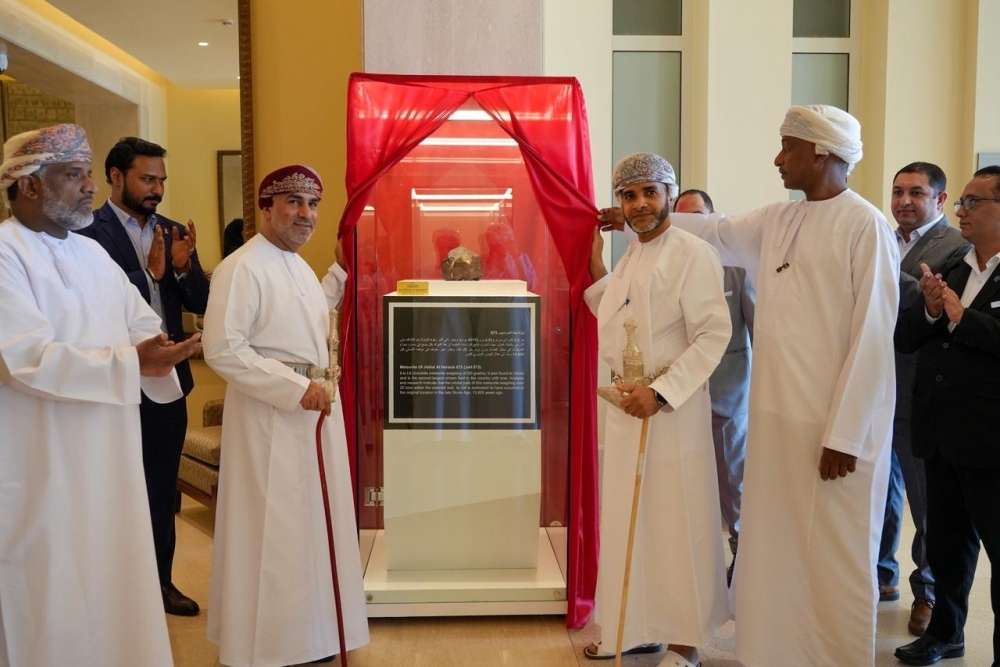
The meteorite's path extends approximately 52 kilometers, and the number of meteorites collected amounts to more than 700, with a total weight of approximately 4,600 kilograms.
Documented scientific studies indicate that this fall in its original location dates back more than 12,600 years.
Scientific studies indicate that this meteorite continued to travel in the asteroid belt in space, weighing more than 20 tons. Its fall in its original location is estimated to have occurred 15,600 years ago, during the Paleolithic period. 3,638 pieces from this fall have been documented, with a total weight of 620.9 kilograms, with a longitudinal scattering path extending 25.8 kilometers.
The display of these meteorites aims to introduce hotel visitors, both inside and outside the Sultanate of Oman, to the importance of meteorites, their scientific and historical value, and the legal frameworks and legislation regulating them in accordance with the Cultural Heritage Law.
These meteorites are among the most prominent evidence of the formation of the solar system.
The exhibition also highlights the Sultanate of Oman's efforts in collecting, preserving, and studying meteorite samples.
The exhibition is expected to be a qualitative addition to the cultural and tourism landscape, especially given the Crowne Plaza Duqm's strategic location
Oman Observer is now on the WhatsApp channel. Click here