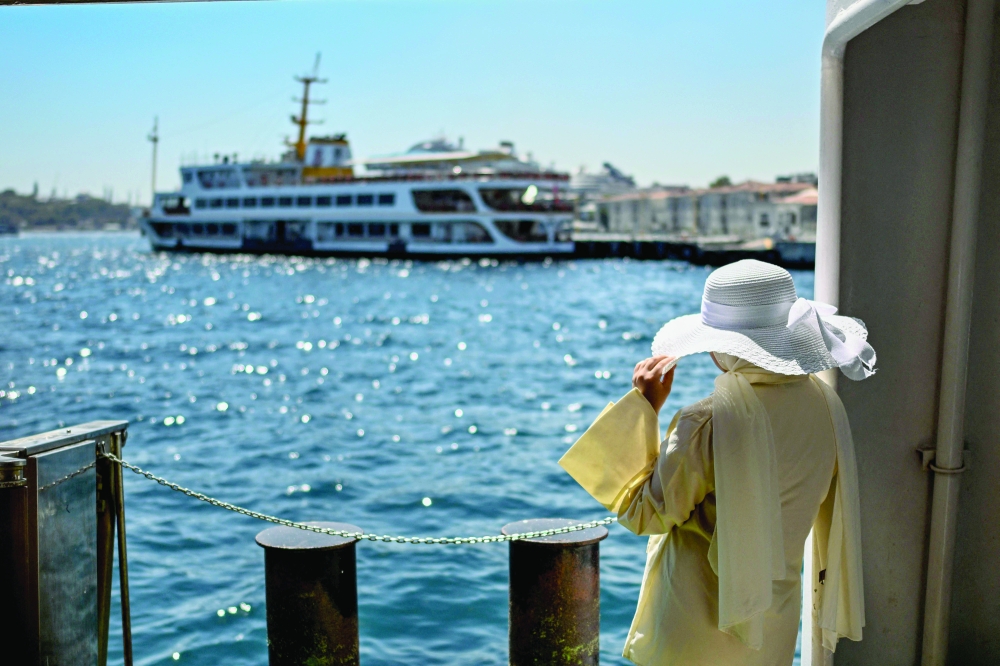
“Your husband probably told you to wear an abaya to the office, right?” a former colleague once suggested as we waited by the elevator. I glanced down at the shiny black robe I wore at the time, stitched by my mother-in-law’s tailor, a patient Pakistani man who called me Badur and owned a small shop on a narrow, crowded street in downtown Dubai.
But the truth is that no one, neither my mother in law nor my husband, has ever forced me to wear this beautiful garment and they still do not. Instead, formal places like the ministry, located in its grand five-star hotel-like building, always felt fitting for dressing modestly in a uniform of sorts that communicates professionalism and cultural belonging, especially in a setting where we made serious efforts shaping the future of young Omani girls and boys.
To me, wearing a modest dress like the abaya has always been and remains an unwritten cultural code. A genuine gesture of respect while connecting one to history, religion, and the nation’s strong shared cultural narrative.
Today, I still wear an abaya to the office, albeit mostly colourful ones like many of my younger colleagues, who wear black only “to reflect a certain mood,” as one of them once remarked while we waited for the elevator. She was dressed in a stunning maroon satin-finish crepe abaya, paired with a matching inner dress and sneakers.
There is my own cultural component to wearing a traditional dress to work as my Dutch parents raised me to be open-minded and to adapt to different settings, even in how I dress, embodying “When in Rome, do as the Romans do.” However, I have always been painfully aware that the abaya and the veil are often misinterpreted by outsiders, particularly in the West, where the veil especially has become a symbol of the ongoing divide between Western notions of what some people there perceive as “freedom” versus Islamic principles of modesty.
This tension became painfully clear again recently as I sorted through my late father’s belongings, an intellectual’s archive of scribbled notes, memoirs, and diaries, and came across unsettling messages from two of his Dutch friends. In them, they questioned the outfit I wear to work and even cast doubt on my rights as a woman living in a place like Oman. They simply overlooked the well-established frameworks that support gender equality in this great nation, where men and women are the two wings of the same bird, each equally essential, and where the role of strong women is celebrated today on Omani Women’s Day. My daughter even recently asked me why there is no Oman Men’s Day, since they are equal.
Most, if not all, of the Omani women I know wear traditional dress as a personal choice and as an expression of cultural, religious identity, and style. As one of my husband’s nieces once said, “I wear it because I choose to, not because I am told to.” She belongs to a generation of Omani women who wear the veil or abaya, for example, in certain public spaces, while opting for a more casual attire among trusted family and social circles or even at work, especially in the private sector. This fluidity in what to wear, when and where, reflects an intuitive understanding of context and a flexible form of self-expression.
Such assumptions expressed by my father’s two friends are sadly not new, nor is having my own experiences in Oman dismissed by some in Europe. When the former Queen of the Netherlands visited Oman many years ago, I greeted her wearing a red jalabiya; a quiet statement that reflected Omani traditions rather than Dutch customs. Her visit also gave me the opportunity to write for a popular Dutch newspaper, challenging stereotypes about women in this part of the world, especially after false claims by another Dutch paper that she was ‘forced’ to wear a veil at the Grand Mosque, when in fact she wore it out of respect.
The tone of those messages sent to my father by two of his friends about my outfit and role as a woman clashed with everything my parents had taught me. I can only hope he challenged the stereotypes held by these outsiders who reduce rich cultures to simplistic views and favour flattened narratives that ignore everyday realities.
Bregje van Baaren
Bregje is a freelance contributing writer.
Oman Observer is now on the WhatsApp channel. Click here