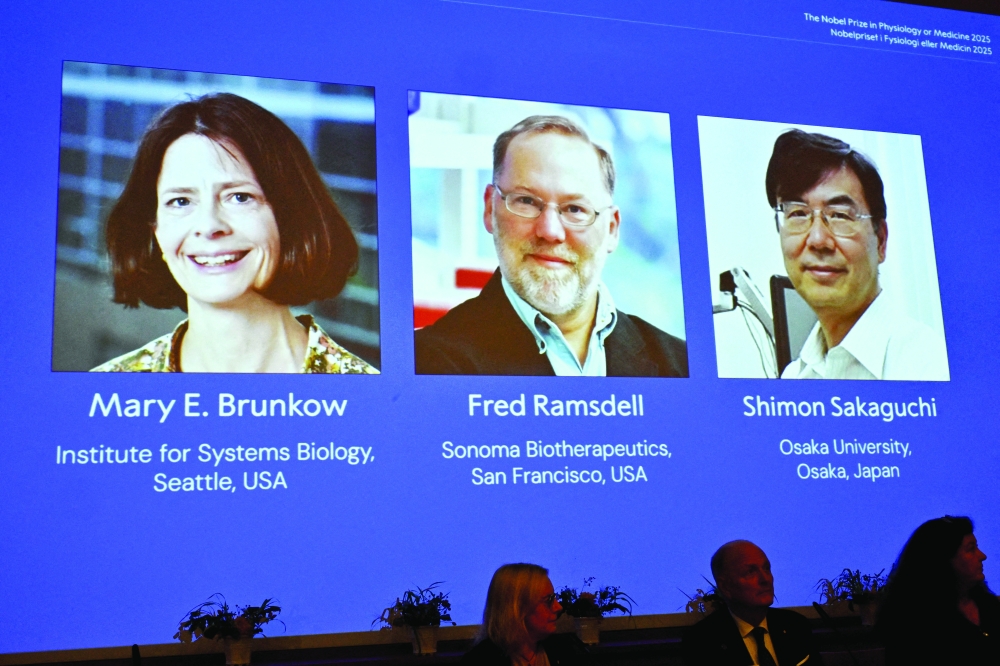





STOCKHOLM: American scientists Mary Brunkow and Fred Ramsdell and Shimon Sakaguchi from Japan won the 2025 Nobel Prize in Physiology or Medicine on Monday for work shedding light on how the immune system spares healthy cells, creating openings for possible new autoimmune disease and cancer treatments. Their discoveries relate to peripheral immune tolerance, or "how we keep our immune system under control so we can fight all imaginable microbes and still avoid autoimmune disease", said Marie Wahren-Herlenius, a rheumatology professor at the Karolinska Institute.
Sakaguchi expressed surprise at a press conference in Osaka, western Japan, because he felt any major recognition would have depended on more development advances. "I used to think that some sort of reward may be forthcoming if what we have been doing will advance a little further and it will become more beneficial to people in clinical settings,” he said in a calm voice, cracking a smile now and then.
The press conference was interrupted for Sakaguchi to take a congratulatory phone call from Japanese Prime Minister Shigeru Ishiba, who asked him how effective immunotherapy could be for cancer treatment in the future. "I believe the time will come when cancer is no longer a scary disease, but a curable one," said Sakaguchi.
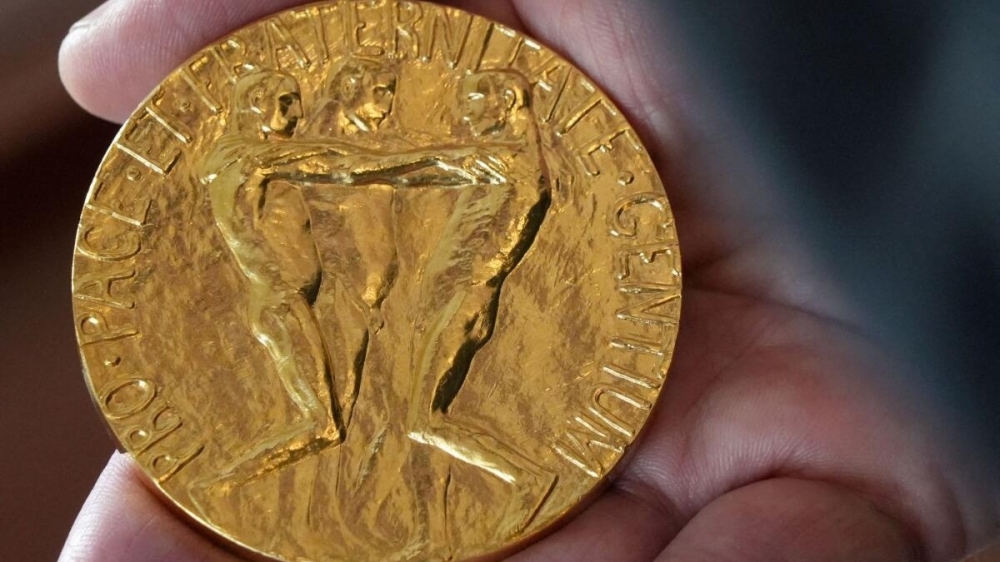
The winners for medicine are selected by the Nobel Assembly of Sweden's Karolinska Institute medical university and receive a prize sum of 11 million Swedish crowns ($1.2 million), as well as a gold medal presented by Sweden's king. The institute said all three laureates brought to the fore so-called regulatory T cells, which act as the immune system's security guards that keep immune cells from attacking our own body. Brunkow is senior programme manager at the Institute for Systems Biology in Seattle, while Ramsdell is scientific adviser at Sonoma Biotherapeutics in San Francisco. Sakaguchi is a professor at Osaka University in Japan.
Jeffrey Bluestone, a decades-long friend of Ramsdell and a co-founder with him of Sonoma Biotherapeutics, told Reuters that his associate's extraordinary contribution was finding a gene, initially in mice, that controlled the development of a small group of regulatory T cells. "Those cells were the master regulators of the tolerance of the immune system," said Bluestone. Ramsdell could not be reached by Reuters - or by Bluestone, who suggested he may be on a hiking trip in an area without cell phone reception.
After announcing the winners, the Karolinska Institute's Thomas Perlmann said specific therapies had yet to win market clearance but more than 200 trials on humans involving regulatory T cells were ongoing. Among companies in the early race, Ramsdell's Sonoma Biotherapeutics is partly funded and supported by US drugmaker Regeneron to work on therapies against diseases including inflammatory bowel disease. Also targeting that condition, Quell Therapeutics has partnered with AstraZeneca. Other biotech firms exploring the approach include Bayer's BlueRock.
The Nobel Prizes were established through the will of Alfred Nobel, the Swedish inventor of dynamite and a wealthy businessman. They have been awarded since 1901 for outstanding contributions in science, literature, and peace, with interruptions mainly during the World Wars. — Reuters
Oman Observer is now on the WhatsApp channel. Click here