




BEIJING: The International Coordinating Council of Unesco’s Man and the Biosphere Programme (ICC-MAB) announced, at its 37th session held in Lin’an, Hangzhou, China, the inscription of the Al Jabal al Akhdhar Landscape and Al Sereen Nature Reserves as two new reserves on the World Network of Man and Biosphere Reserves (WNBR).
The step was the output of cooperation between the Environment Authority (EA) and Oman National Commission for Education, Culture and Sciences (ONCECS), within the framework of promoting integration between environmental protection and community development and supporting the Sultanate of Oman’s efforts to implement Oman Vision 2040.
The announcement is the first of its kind for the Sultanate of Oman, marking its official entry as a biosphere reserve, which currently comprises 759 reserves in 136 countries. These reserves serve as living laboratories for sustainable development and models of coexistence between humans and nature.
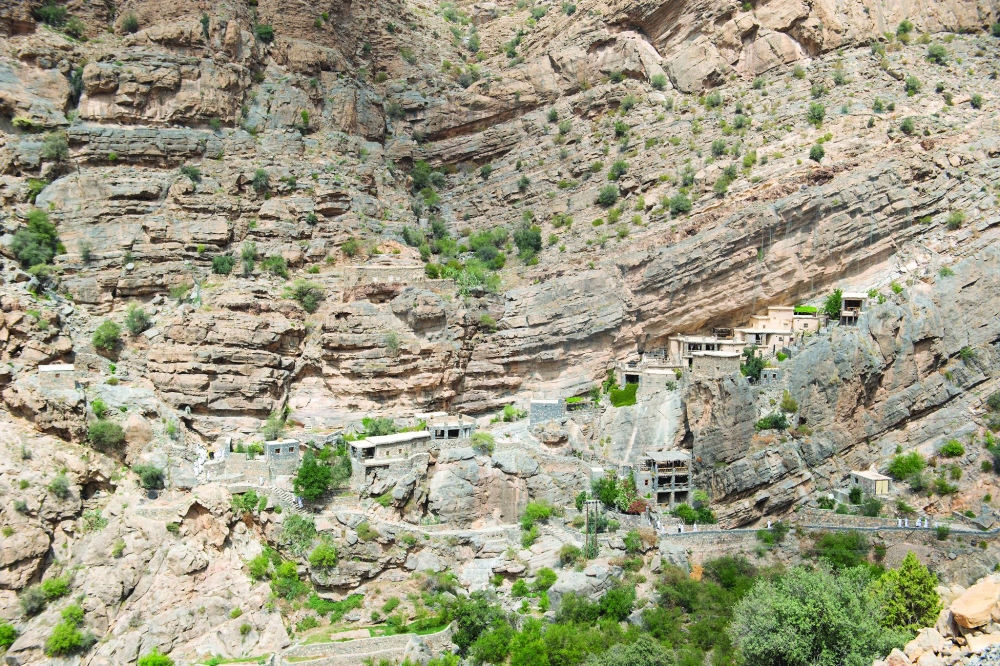
Al Jabal al Akhdhar Reserve spans a vast area of approximately 4,500 hectares in the Western Al Hajar Mountains. It is home to diverse animal and plant species, most notably the Tapiscia and wild olive (Atam), both rare trees of high genetic importance. It is also home to the threatened Arabian ibex and Arabian wolf. This is in addition to more than 71 bird species, including the Egyptian vulture and the golden eagle.
Al Sireen Reserve is located in the Eastern Al Hajar Mountains, 45 km southwest of Muscat, on an area of 103,888 hectares.
The reserve boasts a unique ecological diversity, including towering mountains, springs and valleys. It is classified as a Category II protected area by the International Union for Conservation of Nature (IUCN). It is home to more than 400 plant species, including 10 endemic and 4 endangered species, in addition to a rich animal diversity, including the Arabian gazelle, red and blue foxes, reptiles and birds.
The reserve has exceptional cultural and historical value, containing ancient rock carvings dating back to the pre-Islamic ages, documenting the lives of early humans in the region. Approximately 2,533 people live in the buffer and transitional zone, whose residents rely on sustainable grazing, beekeeping and ecotourism as their primary sources of income.
The designation of these two reserves within the Man and Biosphere Reserve Programme carries great importance for achieving the objectives of the Convention on Biological Diversity and the objectives of the Kunming-Montreal Global Biodiversity Framework (KMGBF). It represents international recognition of the natural and cultural richness, a call for collective action for a more sustainable future, and a consolidation of the Sultanate of Oman’s regional position in environmental conservation, in addition to opening new horizons for international cooperation, scientific research and responsible ecotourism. — ONA
Oman Observer is now on the WhatsApp channel. Click here