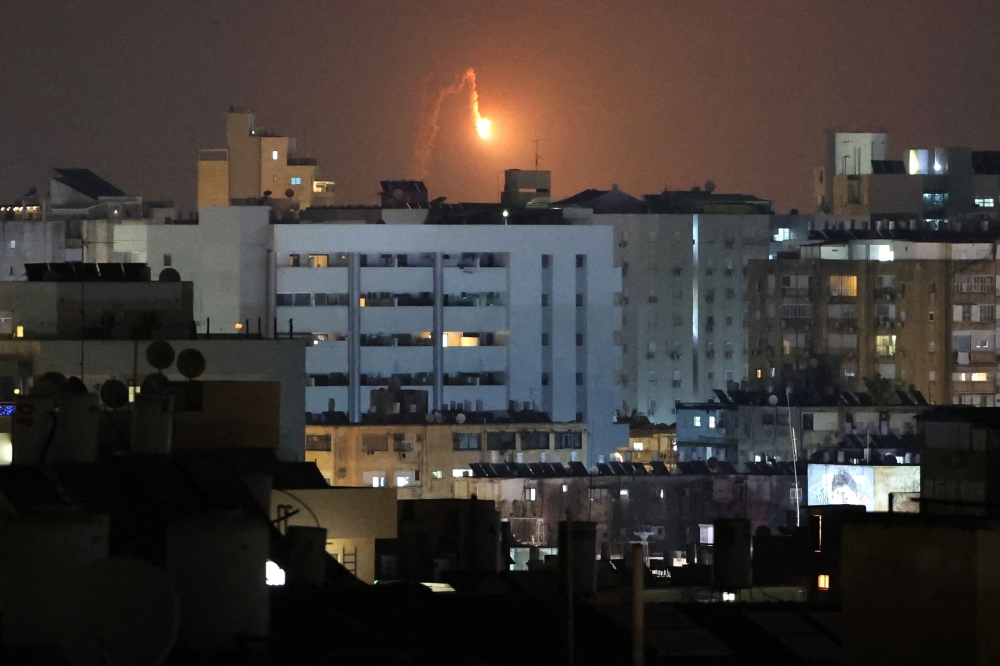
President Donald Trump said on Tuesday that he found out about Israel’s air strike in Qatar from the US military, rather than Prime Minister Benjamin Netanyahu, whom he often describes as both a friend and his strongest ally in the Middle East.
It was a familiar surprise. In June, Israel launched a 12-day war with Iran with minimal notice, initially drawing a rebuke from Washington until Trump decided to join in on what he saw as a winning campaign.
Netanyahu has made use of his relationship with Trump to exercise bold attacks like the one on Hamas leadership on Tuesday, often using American weapons with little or no notice to Washington. And each time, he has learned that Trump and his administration will grumble about it as they did on Tuesday, but ultimately decide to let it pass unpunished.
On Tuesday afternoon, Trump emphasised that the Israelis had left the United States in the dark again. “I was very unhappy about it — very unhappy about every aspect,” he said. “We’ve got to get the hostages back. But I was very unhappy about the way that went down.”
He said he would release a full statement about how he learned about the attack.
In a social media post earlier in the day, he tried to distance himself from the attack, while both chastising and praising Netanyahu for carrying it out.
“This was a decision made by Prime Minister Netanyahu; it was not a decision made by me,” Trump wrote. “Unilaterally bombing inside Qatar, a Sovereign Nation and close Ally of the United States, that is working very hard and bravely taking risks with us to broker Peace, does not advance Israel or America’s goals.”
He added: “However, eliminating Hamas, who have profited off the misery of those living in Gaza, is a worthy goal.”
Hamas said the Israeli strike had failed to kill senior officials in the group, without specifying whether they had sustained injuries.
Trump said he felt “very badly about the location of the attack,” in Qatar, a US ally that has been a critical mediator in peace negotiations between Israel and Hamas.
He said that the United States had tried to notify Qatar of the strikes but that it was “too late to stop the attack.” Still, he said, he assured Shaikh Mohammed bin Abdulrahman al Thani, Prime Minister of Qatar, “that such a thing will not happen again on their soil.”
The episode underscored the haphazard approach Trump has taken on the war in the Gaza Strip, one of the many conflicts around the world that he has endeavoured to end. After Trump won the election, he told Netanyahu that he wanted the war in Gaza to end before he returned to the White House. But since taking office, Trump’s strategy has been far less demanding, marked by missed deadlines, vague threats and contradictory statements about how Israel should achieve its goals of eliminating the threat of Hamas.
The dynamic, foreign policy experts say, has given Netanyahu largely a free hand to continue carrying out a war that has drawn global outrage, claims of genocide and a catastrophic humanitarian disaster.
“There really hasn’t been a strategy that I can discern other than ‘whatever Israel wants, whatever Netanyahu wants,’” said Khaled Elgindy, visiting scholar at Georgetown University’s Center for Contemporary Arab Studies.
The president’s press secretary, Karoline Leavitt, dodged questions about whether Trump was upset with Netanyahu, or whether there would be any consequences for the strikes. Asked whether Trump would issue a directive to Israel on future strikes, Leavitt said the president believed the strike was “an opportunity for peace.”
Trump said on social media that during his conversation with Netanyahu, “the Prime Minister told me that he wants to make Peace.”
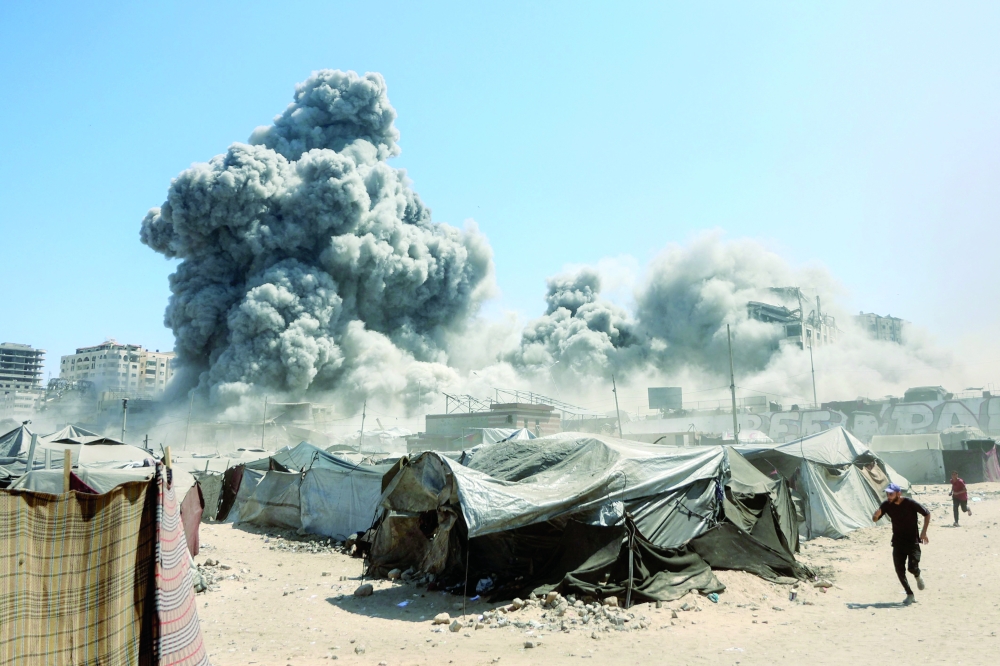
But the attack came as Hamas officials were meeting to discuss a ceasefire proposal backed by Trump, which he had urged them to take in a third “final warning”. And it came on a day that the Israeli military ordered the total evacuation of Gaza City in preparation for a full-scale invasion of an area where hundreds of thousands have fled to from other war-torn cities.
Some experts expressed scepticism that the United States had no prior warning about the attack, considering the country also has a military presence in Qatar.
Steven A Cook, senior fellow for Middle East and Africa Studies at the Council on Foreign Relations, said he believed “the strong possibility that there was a lot more coordination here than the White House currently wants us to know,” or that Israel gave the United States “plausible deniability.”
John E Herbst, a former diplomat in the region and current senior director of the Atlantic Council’s Eurasia Center, said Trump’s response to the crisis was emblematic of how he has approached every turn of the war since taking office. — The New York Times
Oman Observer is now on the WhatsApp channel. Click here