


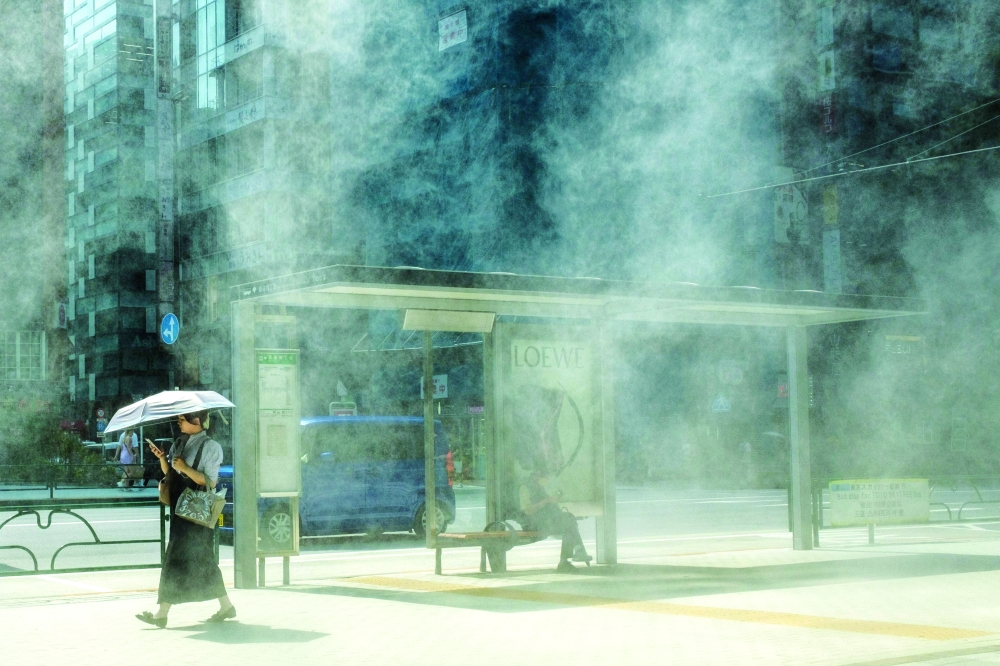





TOKYO: Japan and South Korea sweltered this year through the hottest summers since records began, their weather agencies said. Temperatures the world over have soared in recent years as climate change creates ever more erratic weather patterns. Japan's average temperature between June and August "was 2.36°C above the standard value, which marked the hottest summer since records began in 1898", according to the Japan Meteorological Agency (JMA).
The agency did not disclose what the new mark was, but said it was the third consecutive summer of record high temperatures.
During that same period in South Korea, the average temperature was 25.7°C, "the highest since data collection began in 1973", the Korea Meteorological Administration said in a press release. The previous record over the same period was 25.6°C, set just last year. In Japan the scorching heat left some 84,521 people hospitalised nationwide from May 1 to August 24 this year, up slightly from 83,414 during the same period last year, according to the Fire and Disaster Management Agency.
In Tokyo, avid runner Masao Nakano, 80, said that he pines for the old days when he could just "step outside, sprinkle water in the street and feel the cool air". Nakano says he survived the sizzling summer by working out at a gym and jogging to prepare for a marathon. "This is crazy. It's all man-made, right? All the air-cons and power generation", he said. Miyu Fujita, a 22-year old businesswoman in the city, said she had mostly socialised indoors this summer to escape the oppressive temperatures and was also worried about children forced inside.
Japan's beloved cherry trees are blooming earlier due to the warmer climate, or sometimes not fully blossoming because autumns and winters are not cold enough to trigger flowering, experts say. The famous snowcap of Mount Fuji was absent for the longest recorded period last year, not appearing until early November, compared with the average of early October. In South Korea, the country is grappling with a prolonged drought that has hit the eastern coastal city of Gangneung.
A state of national disaster has been declared in the city of 200,000 after weeks without rain — with water levels at the Obong reservoir, the city's main source of piped water, falling below 15 per cent. The dry spell has forced authorities to implement water restrictions, including shutting off 75 per cent of household meters. Kim Hae-dong, professor of meteorological studies at Keimyung University, said that the hot weather streak was linked to "the weakening of Arctic cold air due to global warming".
"Because it is expected to continue weakening with global warming in place, we forecast similar weather patterns to repeat next year," he said. Heatwaves are becoming more intense and frequent worldwide because of human-caused climate change, scientists say. But the speed of temperature increases across the world is not uniform. — AFP
Oman Observer is now on the WhatsApp channel. Click here


