


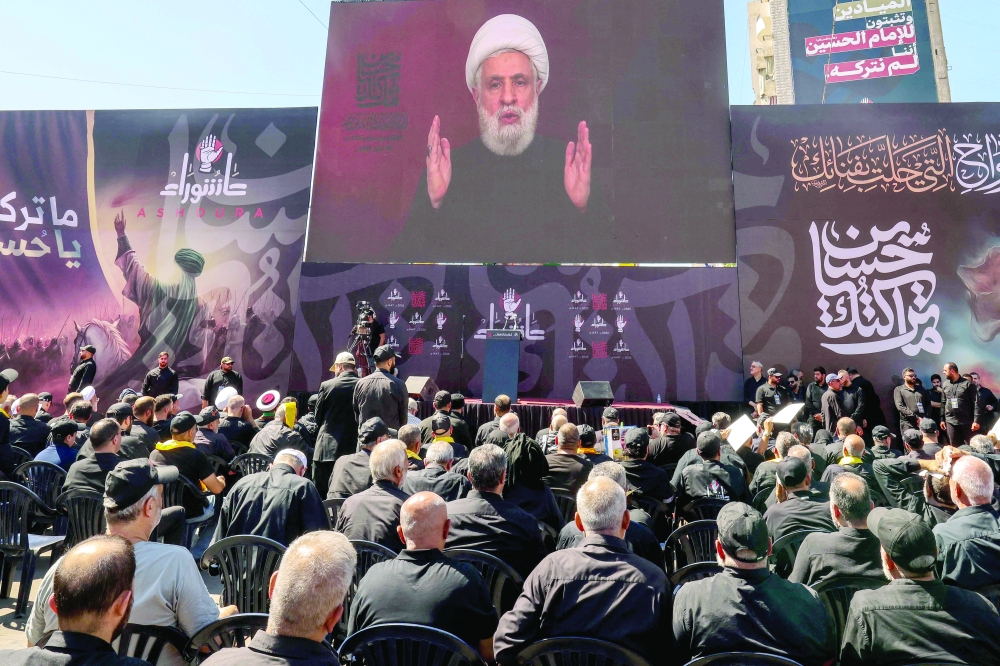





BEIRUT: Hezbollah leader Naim Qassem said on Sunday that his group would not surrender or lay down its weapons in response to Israeli threats, despite pressure on the Lebanese militants to disarm. His speech came ahead of a visit expected on Monday by US envoy Thomas Barrack during which Lebanese authorities are due to respond to a request to disarm Hezbollah by year's end, according to a Lebanese official who spoke on condition of anonymity. "This (Israeli) threat will not make us accept surrender," Qassem said in a televised speech to thousands of his supporters in Beirut's southern suburbs, a Hezbollah stronghold.
Qassem, who succeeded longtime leader Hassan Nasrallah after an Israeli strike killed him in September, said the group's fighters would not abandon their arms and asserted that Israel's "aggression" must first stop. Israel has continued to strike Lebanon despite the November ceasefire, saying it is targeting Hezbollah sites and operatives and accusing Beirut of not doing enough to disarm the group. Lebanese authorities say they have been dismantling Hezbollah's military infrastructure in the south, near the Israeli border. — AFP
Oman Observer is now on the WhatsApp channel. Click here


