Jonathan Swan
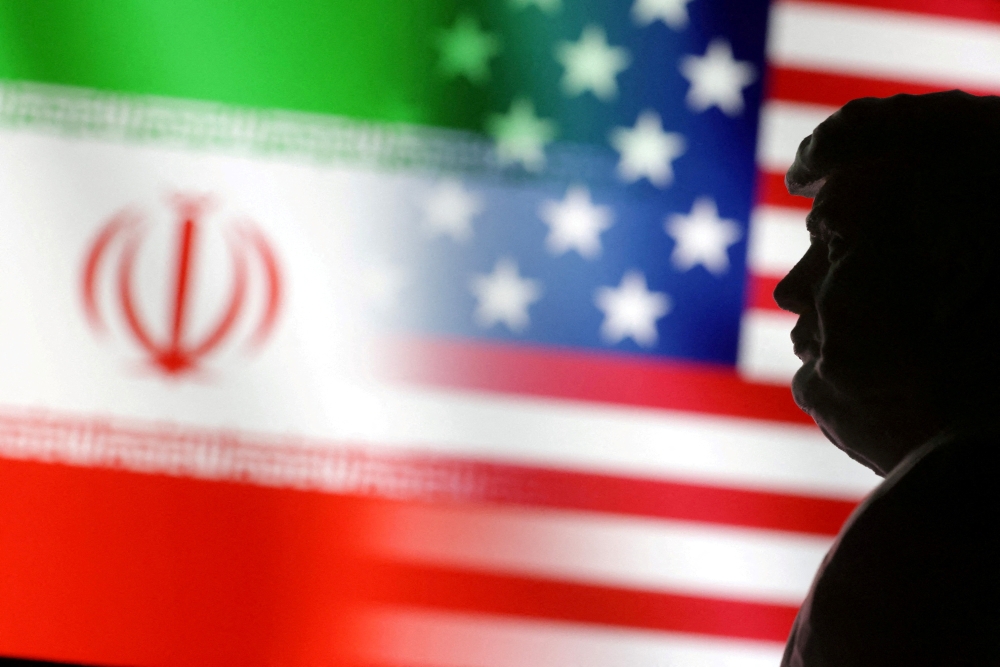
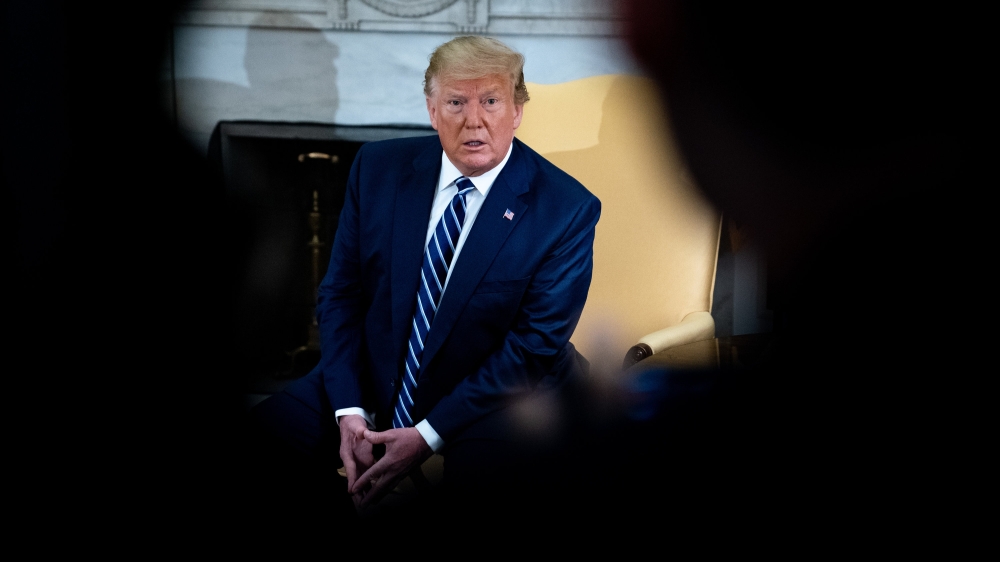
President Trump is weighing a critical decision in the four-day-old war between Israel and Iran: whether to enter the fray by helping Israel destroy the deeply buried nuclear enrichment facility at Fordo, which only America’s biggest “bunker buster,” dropped by American B-2 bombers, can reach.
If he decides to go ahead, the US will become a direct participant in a new conflict in the Middle East, taking on Iran in exactly the kind of war Trump has sworn, in two campaigns, he would avoid. Iranian officials have already warned that US participation in an attack on its facilities will imperil any remaining chance of the nuclear disarmament deal that Trump insists he is still interested in pursuing.
Trump had at one point encouraged his Middle East envoy, Steve Witkoff and possibly Vice President JD Vance, to offer to meet the Iranians, according to a US official. But on Monday Trump posted on social media that “everyone should immediately evacuate Tehran,” hardly a sign of diplomatic progress.
But if that diplomatic effort fizzles, or the Iranians remain unwilling to give in to Trump’s central demand that they must ultimately end all uranium enrichment on Iranian soil, the president will still have the option of ordering that Fordo and other nuclear facilities be destroyed.
There is only one weapon for the job, experts contend. It is called the Massive Ordnance Penetrator, or the GBU-57 and it weighs so much — 30,000 pounds — that it can be lifted only by a B-2 bomber. Israel does not own either the weapon or the bomber needed to get it aloft and over target.
If Trump holds back, it could well mean that Israel’s main objective in the war is never completed.
“Fordo has always been the crux of this thing,” said Brett McGurk, who worked on Middle East issues for four successive American presidents, from George W Bush to Joseph R Biden Jr. “If this ends with Fordo still enriching, then it’s not a strategic gain.” That has been true for a long time and over the past two years the US military has refined the operation, under close White House scrutiny. The exercises led to the conclusion that one bomb would not solve the problem; any attack on Fordo would have to come in waves, with B-2s releasing one bomb after another down the same hole. And the operation would have to be executed by an American pilot and crew.
This was all in the world of war planning until the opening salvos on Friday morning in Tehran, when Netanyahu ordered the strikes, declaring that Israel had discovered an “imminent” threat that required “pre-emptive action.” New intelligence, he suggested without describing the details, indicated that Iran was on the cusp of turning its fuel stockpile into weapons.
US intelligence officials who have followed the Iranian programme for years agree that Iranian scientists and nuclear specialists have been working to shorten the time it would take to manufacture a nuclear bomb, but they saw no huge breakthroughs.
Yet they agree with McGurk and other experts on one point: If the Fordo facility survives the conflict, Iran will retain the key equipment it needs to stay on a pathway to the bomb, even if it would first have to rebuild much of the nuclear infrastructure that Israel has left in ruins over four days of precision bombing.
There may be other alternatives to bombing it, though they are hardly a sure thing. If the power to Fordo gets cut, by saboteurs or bombing, it could damage or destroy the centrifuges that spin at supersonic speeds. Rafael Grossi, the director general of the International Atomic Energy Agency, said on Monday that this might have happened at the country’s other major uranium enrichment centre, Natanz. Israel took out the power supplies to the plant on Friday and Grossi said that the disruption probably sent them spinning out of control.
Trump rarely talks about Fordo by name, but he has occasionally alluded to the GBU-57, sometimes telling aides that he ordered its development. That is not correct: The US began designing the weapon in 2004, during the George W Bush administration, specifically to collapse the mountains protecting some of the deepest nuclear facilities in Iran and North Korea. It was, however, tested during Trump’s first term and added to the arsenal.
Netanyahu has pressed for the United States to make its bunker busters available since the Bush administration, so far to no avail.
Now the pressure is on. The Israeli former defence minister Yoav Gallant said on Monday that “the job has to be done, by Israel, by the US.” He said that Trump had “the option to change the Middle East and influence the world.” In the Pentagon, opinion is divided for other reasons. Elbridge A Colby, the Under-Secretary of defence for policy, the Pentagon’s No 3 post, has long argued that every military asset devoted to the wars of the Middle East is one diverted from the Pacific and the containment of China. For now, Trump can afford to keep one foot in both camps. By making one more run at coercive diplomacy, he can make the case to the MAGA faithful that he is using the threat of the Massive Ordnance Penetrator to bring the conflict to a peaceful end. And he can tell the Iranians that they are going to cease enriching uranium one way or the other, either by diplomatic agreement or because a GBU-57 imploded the mountain.
But if the combination of persuasion and coercion fails, he will have to decide whether this is Israel’s war or America’s. — The New York Times
Oman Observer is now on the WhatsApp channel. Click here