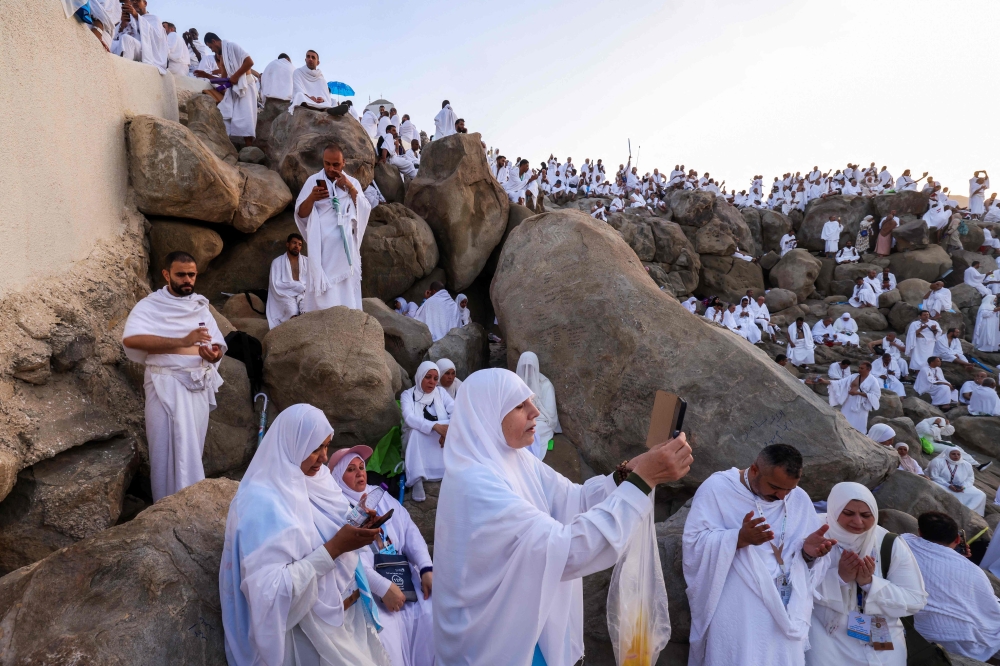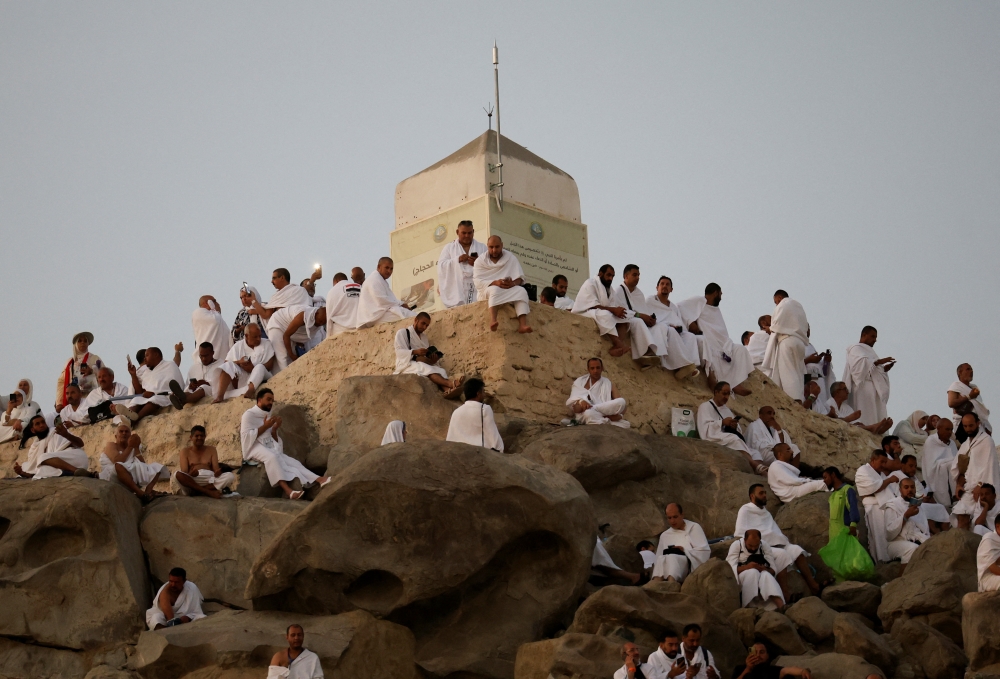





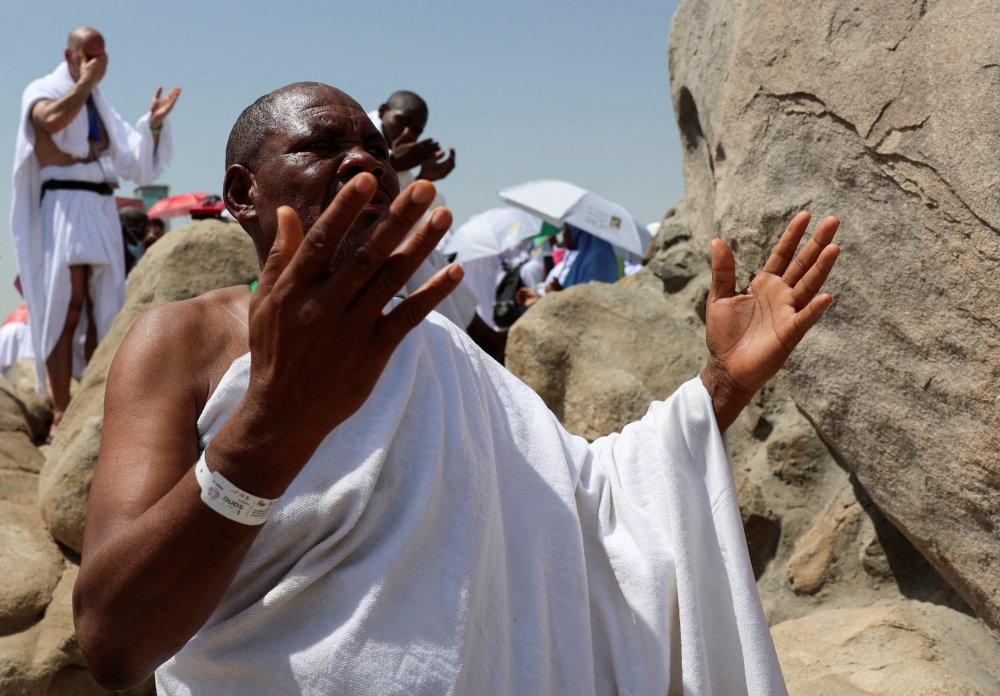
MOUNT ARAFAT: Muslim pilgrims prayed atop Mount Arafat on Thursday during the high point of the annual Haj pilgrimage, as Saudi officials called on participants to refrain from being outside during the hottest hours of the day.
Thousands of pilgrims were beginning to gather before dawn around the hill and the surrounding plain where the Prophet Mohammed is believed to have given his last sermon.
While some arrived early to take advantage of the relatively cool morning, many pilgrims will remain for hours of prayers and Koran recitals until the evening in the most arduous portion of the Haj.
After sunset, they were to head to Muzdalifah, halfway between Arafat and the sprawling tent city of Mina, where they would gather pebbles so they can perform the symbolic "stoning of the devil".
"This is something that I used to see every year on the TV screen during Haj and I always thought: 'I wish I could be here'," said 33-year-old Ali from Pakistan, one of 1.5 million pilgrims who had arrived in Saudi Arabia for the pilgrimage.
"I've been trying to get here... for the past 3 years," he added as he gazed at the mount. "I feel very blessed." Hundreds of pilgrims dressed in white dotted the mount itself, with many more at its foot praying or taking pictures.
Earlier this week, Saudi authorities called on pilgrims to stay inside their tents between 10:00 am and 4:00 pm on Thursday, when the desert sun is at its harshest.
Temperatures this year have already exceeded 40 degrees Celsius (104 Fahrenheit) as one of the world's largest annual religious gatherings, bringing together devotees from around the globe, kicked off earlier this week Officials have beefed up heat mitigation efforts aiming to avoid a repeat of last year's Haj, which saw 1,301 pilgrims die as temperatures reached 51.8C.
"I came here early to (avoid) the sun and later I will pray inside my tent," said 54-year-old Adel Ismail, from Syria.
With temperatures exceeding 40 degrees Celsius (104 degrees Fahrenheit), robed pilgrims slowly circled the Kaaba, the black cube at the heart of Mecca's Grand Mosque which is Islam's holiest site.
Others arrived en masse in the sprawling tent city of Mina on Mecca's outskirts, where they will stay overnight before the Haj 's high-point Thursday — prayers on Mount Arafat, where the Prophet Mohammed is believed to have delivered his final sermon.
"You feel like you're not in this world," Khitam, a 63-year-old pilgrim, said by phone, saying that "before Haj, I used to watch the Grand Mosque on TV all day." Before entering Mecca, pilgrims must first enter a state of purity, called ihram, which requires special dress and behaviour.
Men don a seamless shroud-like white garment that emphasises unity among believers, regardless of their social status or nationality.
Women, in turn, wear loose dresses exposing just their faces and hands.
Authorities said over 1.5 million pilgrims had arrived in Saudi Arabia for the Haj, one of the five pillars of Islam that must be performed at least once by all Muslims with the means.
Officials have ratcheted up heat protection measures such as extra shade to avoid a repeat of last year, when 1,301 people died as temperatures hit 51.8C.
"Last year, the heat was extremely intense, and people were lying on the streets, on the middle of the road and next to the walls," Alaa Refai, a pilgrim from Iraq, said, adding that he saw several dead people during the previous Haj.
"This year the roads are empty," he added.
ARTIFICIAL INTELLIGENCE
Following last year's lethal heatwave, authorities have mobilised more than 40 government agencies and 250,000 officials to improve protection.
Shaded areas have been enlarged by 50,000 square metres (12 acres), thousands of additional medics will be on standby and more than 400 cooling units will be deployed, Haj Minister Tawfiq al Rabiah said.
Artificial intelligence technology will help process the deluge of data, including video from a new fleet of drones, to better manage the massive crowds.
"The scene in Mina this year was completely different. We noticed that most pilgrims kept to their... tents instead of exposing themselves to the sun," Ibrahim bin Saleh al Mazni, from the Al Furqan group for Haj tours, said from Mina.
"This reflects the success of the awareness campaign" of authorities he added, which have been striving to dissuade pilgrims from staying in the sun — with many faithful believing hardship was essential to Haj.
Earlier this week, Saudi authorities called on pilgrims to stay inside their tents between 10:00 am and 4:00 pm on Thursday during the Haj's climax at Mount Arafat, when the desert sun is at its harshest.
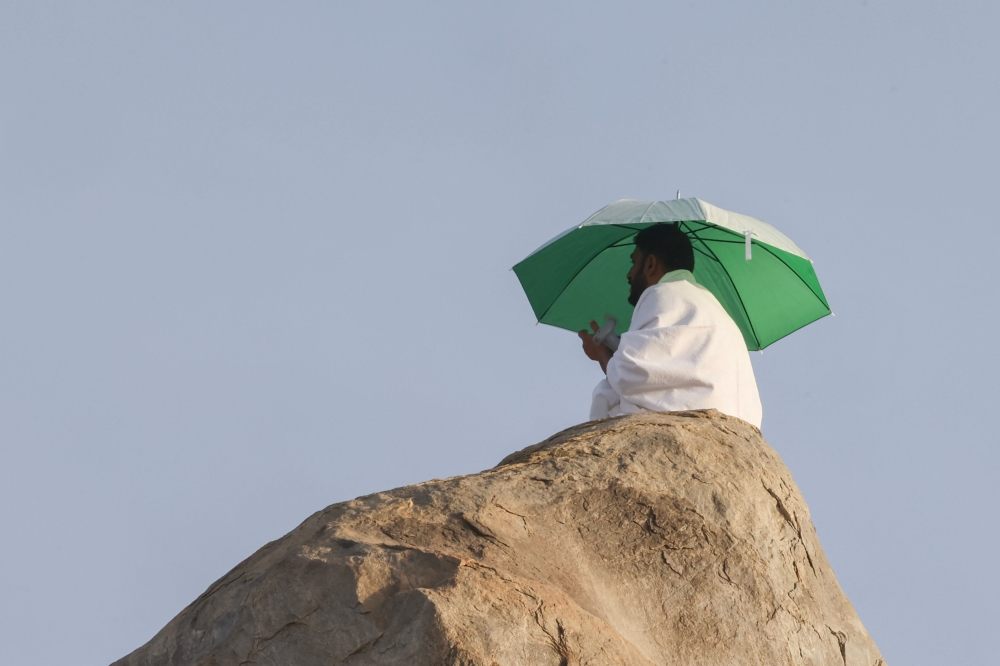
There, pilgrims assemble on the high hill and its surrounding plain for hours of prayer and Koran recital, staying there until the evening.
There is little to no shade on Mount Arafat, leaving pilgrims directly exposed to the blistering desert sun for hours.
Authorities said most of the deaths last year were among unregistered pilgrims who lacked access to air-conditioned tents and buses.
This year, they have cracked down on the unregistered, using frequent raids, drone surveillance and a barrage of text alerts.
A billboard reading "No Haj without permit" greeted pilgrims as they arrived in Mecca.
Haj permits are allocated to countries on a quota basis and distributed to individuals by lottery.
But even for those who can obtain them, the steep costs prompt many to attempt the Haj without a permit, even though they risk arrest and deportation if caught.
Large crowds at the Haj have proved hazardous in the past, most notably in 2015 when a stampede during the "stoning the devil" ritual in Mina killed up to 2,300 people in the deadliest Haj disaster.
Saudi Arabia earns billions of dollars a year from the Haj, and the lesser pilgrimage known as umrah, undertaken at other times of the year. — AFP
Oman Observer is now on the WhatsApp channel. Click here