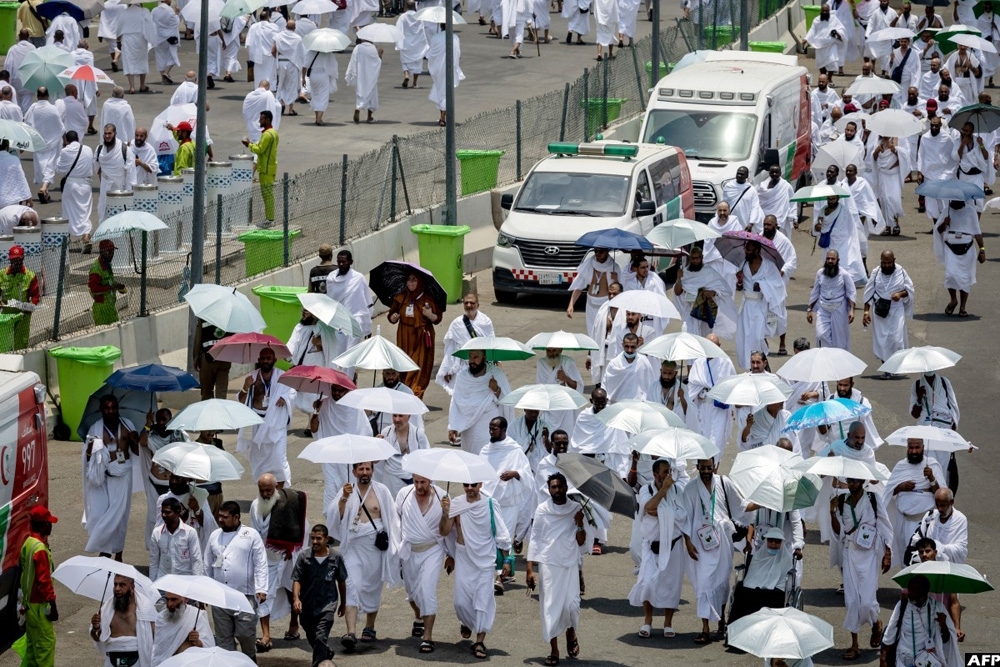





The hajj is an annual pilgrimage that millions of Muslims make to Mecca with the intention of performing religious rites as taught by the Prophet Mohammad to his followers 14 centuries ago.
The fifth pillar of Islam, the hajj is mandatory once in a lifetime for every able-bodied Muslim who can afford it and is the most significant manifestation of Islamic faith and unity.
The hajj begins in the 12th month of the Islamic year, which is lunar, not solar, meaning the hajj and the fasting month of Ramadan fall at different times of the solar calendar each year.
A quota system for visitors to Mecca was introduced in 1987, agreed by member countries of the Organisation of Islamic Cooperation, to limit the number allowed by each country to 0.1% of its population.
Stampedes, tent fires and other accidents have caused hundreds of deaths over the past 30 years, forcing the Saudi government to build new infrastructure.
In 2011, Saudi Arabia began the biggest expansion yet of the Grand Mosque of Mecca to increase its capacity to 2 million. A new railway will link the holy sites around Mecca.
Eid al-Adha, one of Islam's two main festivals, marks the climax of the annual hajj pilgrimage, when Muslims slaughter animals - to commemorate the willingness of Ibrahim, or Abraham, to sacrifice his son on God's command - often distributing meat to the poor.
Oman Observer is now on the WhatsApp channel. Click here