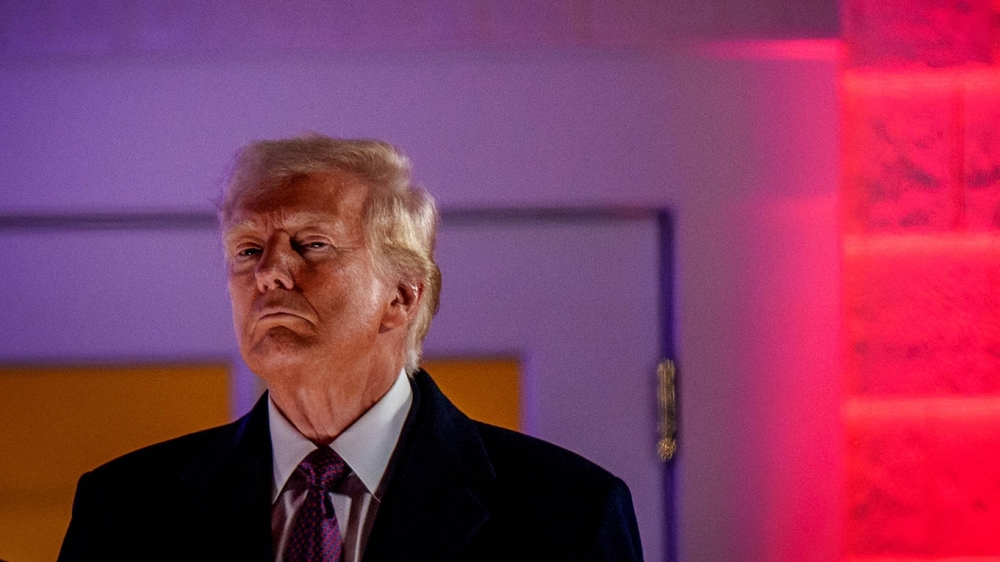
We are barely 100 days into US President Donald Trump’s second term, but much is already clear. Trump 2.0 is starkly different: more confident and surrounded by a team determined to implement a far more sweeping agenda. Those staffing the administration – amplifiers more than restrainers, enablers more than guardrails – spent the past four years preparing for this moment.
Trump 2.0 is an activist, imperial presidency, at home and abroad. He seems to be everywhere, dominating public space and private conversations alike in much of the world. The contrast with his predecessor President Joe Biden could not be starker.
The administration’s principal policy goal thus far has been to make good on Trump’s campaign pledge to secure the United States’ southern border. But import tariffs – an across-the-board 10 per cent baseline levy, plus additional country-specific tariffs, reaching 145 per cent in China’s case – have become the defining initiative of his presidency.
Foreign policy is also substantially changed. The US has shifted from being a steadfast supporter of Ukraine to tilting decidedly in Russia’s favour. The shift appears to be motivated by a clear dislike for Ukrainian President Volodymyr Zelensky and an embrace of Russian President Vladimir Putin for reasons unknown.
Trump, who boasted during his campaign that all he needed was a day to end the war, which he regularly blames on Biden and Zelensky, is now talking about walking away from diplomacy to end the war entirely. He is finding it difficult to make good on his campaign promise, in no small part because his pro-Russia policy fails to give Putin any incentive to compromise or Zelensky the confidence to do so. The agreement to establish a US-Ukraine Reconstruction Investment Fund should help, but, to achieve a cessation of hostilities, much more will need to be done to assist Ukraine.
Europe and America’s other traditional allies receive no special treatment, either. Vice President J D Vance travelled to Munich in February to ignite a cultural clash with Europeans, while Defence Secretary Pete Hegseth openly raised doubts about the US commitment to Europe at Nato headquarters. This has spurred European preparations to support Ukraine if American assistance wanes and to achieve strategic self-sufficiency more broadly.
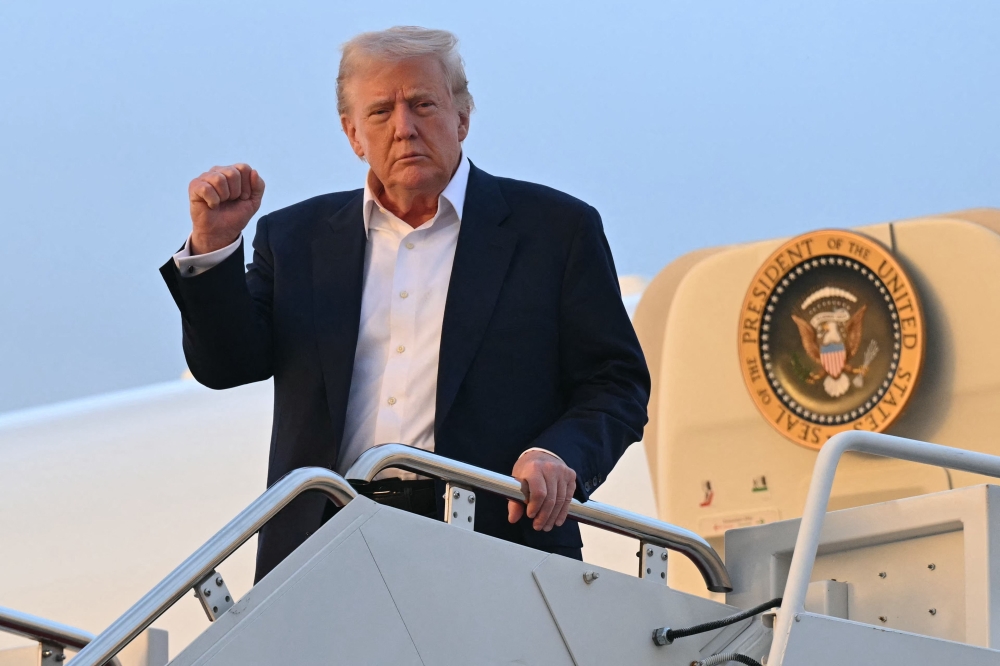
In the Middle East, the administration launched what could well prove to be a promising negotiation with Iran. If the Trump administration is willing to allow Iran limited uranium enrichment – a concession that may be required to secure a deal – it can expect criticism from some in the US and Israel. But Trump is strong enough to weather the pushback if it comes.
Otherwise, the Trump administration has essentially given Israel’s government a free hand to do what it wants in both Gaza and the West Bank. It seems to have lost interest in extending the Hamas-Israel ceasefire, as this would put it at odds with Israeli Prime Minister Binyamin Netanyahu, who appears to prioritise his coalition’s survival.
Gone is pressure on Israel to rein in its military operations or to even allow humanitarian aid into Gaza, which is almost two months into a full blockade. Trump’s own proposal for Gaza, to empty it of its two million Palestinian inhabitants and to rebuild a new Riviera, went nowhere, but seems to have emboldened the Israeli government to depopulate, occupy, and potentially settle large swaths of the enclave.
The most unexpected dimension of US foreign policy, one neither previewed in Trump’s first term nor during the campaign, has been the focus on the Western Hemisphere. Canada and Mexico were singled out for early tariffs over alleged failures to control their borders. There were also heavy-handed calls to assert US sovereignty over the Panama Canal, Greenland, and Canada. More than anything else, these goals have triggered an anti-American backlash – even flipping the outcome of Canada’s recent federal election.
There is also what might be described as an amoral slant to US foreign policy.
The biggest foreign-policy uncertainty remains in China. On one hand, Trump granted TikTok waivers that allowed it to remain on Americans’ phones, despite uncertainty about whether he has the authority to do so. He continues to speak highly of Chinese President Xi Jinping and expresses confidence that the US and China will reach a deal.
But the massive tariffs he has levied on China mean that the US and Chinese economies will increasingly separate, if not actually decouple. Whether the tariffs are an attempt to gain bargaining leverage or are ends in themselves remains perhaps the biggest question in Sino-US relations.
Overall, Trump 2.0’s foreign policy is more unilateralist than isolationist. This will remain the case. Less clear is the extent to which Trump will move to reduce tariffs, rethink his pro-Russian stance on Ukraine, and press Israel to modify its approach to Gaza and the West Bank – policies that could revive US and global economic growth and bring peace to two regions that have known little of it. Much will depend on the choices of a man who, for better or worse, is already among the most consequential of US presidents. @Project Syndicate, 2025
Copyright Project Syndicate
Oman Observer is now on the WhatsApp channel. Click here