




Muscat: The Ministry of Commerce, Industry and Investment Promotion (MoCIIP) has issued Ministerial Decision No 142/2025 outlining the conditions for issuing licences to establish and operate fuel filling stations across the Sultanate of Oman.
Under the new regulation, all parties concerned must regularise their status within one year from the date the regulation comes into force.
According to Article 2, the regulation applies to all fuel filling stations. No operations may be undertaken unless a licence has been obtained.
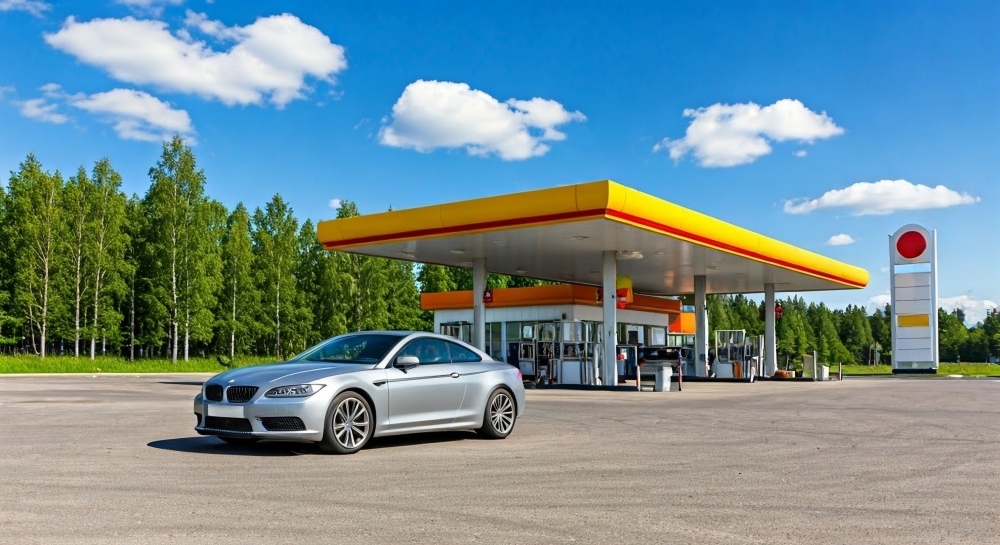
The regulation mandates that all fuel stations must be equipped with fuel pumps, underground fuel tanks, an emergency generator, sunshades, automated teller machines (ATMs), charging points for electric vehicles and bicycles, restrooms for staff, a restaurant, a grocery outlet for food and beverages, a pharmacy, and a separate mosque building for both men and women.
Additionally, stations must include infrastructure that supports solar energy alongside conventional electrical power. The minimum required area for a fuel station is 10,000 square metres.
Integrated fuel filling stations are required to offer enhanced services, including a motel facility, a comprehensive vehicle service centre with car washing, oil and tyre services, an air pump, parking for buses, trucks, taxis, and private vehicles, designated parking spaces for fuel trucks, green landscaped areas with trees, shaded seating areas, a children’s play zone, restrooms for staff, gender-specific public toilets, and facilities for people with special needs.
A site for a water well must also be designated to monitor potential oil pollution in surrounding areas.
Provisions have been made for optional services such as hydrogen vehicle filling points and other services, provided prior written approval is obtained from the Ministry.
As stipulated in Article 8, a minimum distance of 5km must be maintained between any new and existing (or under-construction/approved) fuel filling stations in the same or opposite direction—except in Muscat, Salalah, and Suhar. In these areas, economic feasibility and adherence to security, technical, and planning standards must be considered.
For integrated stations, the required minimum distance between sites is 50km in the same direction. However, the committee may grant exemptions based on justifiable economic need and alignment with approved standards.
Under Articles 32 and 33, it is prohibited to sell fuel at private fuel stations. Aside from licenced mobile fuel filling stations, licensees may not sell fuel in tanks, barrels, or other containers. Fuel sales must be limited to vehicle, equipment, or boat tanks. An exception allows up to 100 litres per day per vehicle, with the condition of recording vehicle details and driver identification and submitting monthly reports to the relevant authority.
Oman Observer is now on the WhatsApp channel. Click here