


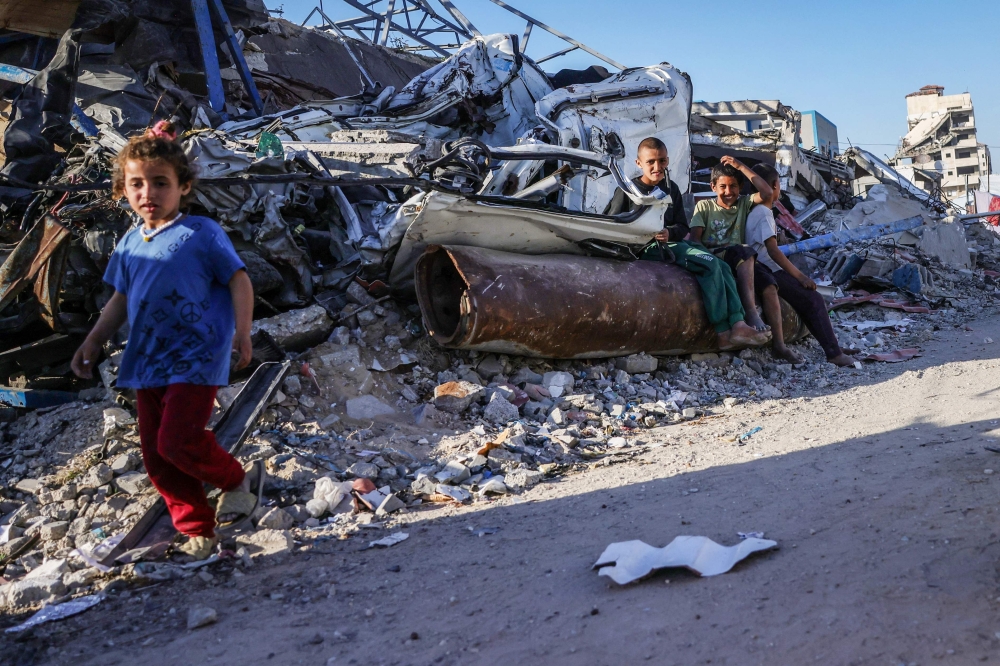





DOHA: Qatar's chief negotiator says 'frustrated' by talks for a truce in Gaza in an interview, a month after Israel resumed its strikes on the Palestinian territory and another round of negotiations ended without a deal. "We're definitely frustrated by the slowness, sometimes, of the process in the negotiation. This is an urgent matter. There are lives at stake here if this military operation continues day by day," Mohammed al Khulaifi said.
Qatar, with the United States and Egypt, brokered a truce in Gaza between Israel and Hamas which came into force on January 19 and largely halted over a year of war triggered by Palestinians October 7, 2023 attack on Israel. The initial phase of the truce ended in early March, with the two sides unable to agree on the next steps. Hamas has insisted that negotiations be held for a second phase to the truce, leading to a permanent end to the war, as outlined in the January framework.
Israel, which had called for an extension to the opening phase, resumed air and ground attacks across the Gaza Strip on March 18 after earlier halting the entry of aid. Late on Thursday, Hamas signalled the group would not accept Israel's newest proposal for a 45-day ceasefire. Israel had wanted the release of 10 living hostages held by the Palestinian group, the militant group said. "We've been working continuously in the last days to try to bring the parties together and revive the agreement that has been endorsed by the two sides," the Qatari minister of state said. "And we will remain committed to this, in spite of the difficulties," he added.
During the long mediation process, Qatar has been the target of direct criticism from Israel and Israeli Prime Minister Benjamin Netanyahu. At least two of Netanyahu's aides are suspected of receiving payments from the Qatari government to promote Doha's interests in Israel, prompting an Israeli criminal probe. Qatar has dismissed the attacks as a "smear campaign".
Earlier in March, an investigation by Israel's domestic security agency attributed funds from the Gulf state to an increase in Hamas's military strength before the October 7 attack. Qatar has rebuffed the accusation as "false". "We've been receiving those types of criticism and negative comments since the early times of our involvement," Al Khulaifi said. "Critiques without any context, such as the ones that we keep hearing from Netanyahu himself, are often just noise," he added.
Al Khulaifi rejected recent remarks from Netanyahu to the US-based evangelical Christian channel Daystar that Qatar had promoted "anti-Americanism and anti-Zionism" on US college campuses. "His claims about Qatar's educational partnerships have been repeatedly disproven. Everything we do is transparent," the Qatari official added.
Meanwhile, Gaza's civil defence agency reported that Israeli air strikes since dawn on Sunday have killed at least 25 people across the Gaza Strip, including women and children. Israel resumed its aerial and ground assault on Gaza on March 18, reigniting fighting after a two-month ceasefire that had paused more than 15 months of war in the coastal territory. "Since dawn today, the occupation's air strikes have killed 20 people and injured dozens more, including children and women across the Gaza Strip," Mahmud Bassal, spokesman for the civil defence agency said.
In a separate statement later, the agency reported that five people were killed in an Israeli drone strike on a group of civilians in eastern Rafah. Since Israel resumed its offensive last month, at least 1,827 people have been killed in Gaza, according to the Hamas-run territory's health ministry. The overall death toll in the Gaza war has reached 51,201, the majority of them civilians, according to the ministry, figures the UN considers reliable. — AFP
Oman Observer is now on the WhatsApp channel. Click here


