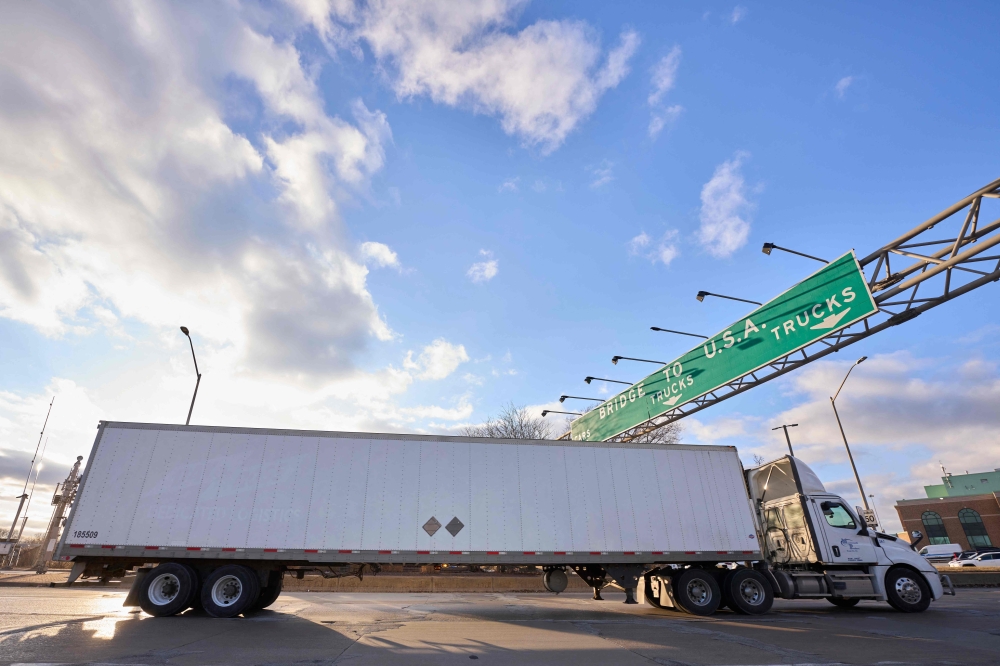
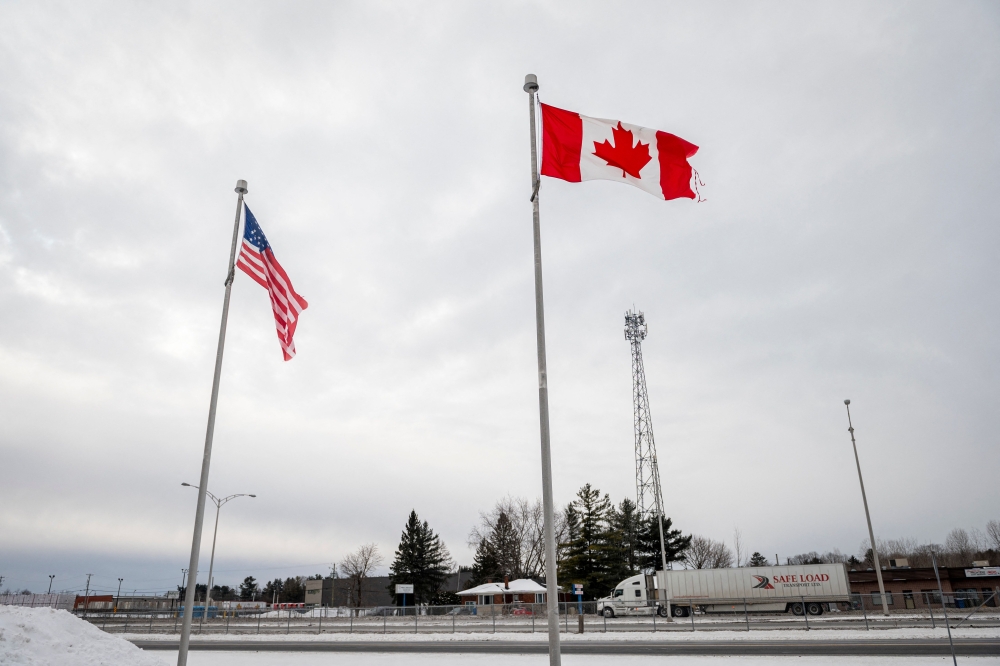





Washington - Steep US tariffs on Canadian and Mexican goods came into effect Tuesday as a deadline to avert President Donald Trump's levies passed without the nations striking a deal, in a move set to snarl supply chains.
Trump had unveiled -- and then paused -- blanket tariffs on imports from major trading partners Canada and Mexico in February, accusing them of failing to stop illegal immigration and drug trafficking. In pushing ahead with the duties, Trump cited a lack of progress in tackling the flow of drugs like fentanyl into the United States. US stock markets tumbled Monday after Trump told reporters there was "no room left" for the North American neighbors to avoid the levies.
The duties stand to impact over $918 billion worth of US imports from both countries. Trump also inked an order Monday to increase a previously imposed 10 percent tariff on China to 20 percent -- piling atop existing levies on various Chinese goods.
Beijing warned it would take countermeasures against the new tariffs to safeguard its own interests. Economists caution that tariffs could raise consumer prices while weighing on growth and employment. Asian markets fell on opening Tuesday, with Japan's Nikkei index dropping more than two percent and Hong Kong's Hang Seng down 1.5 percent after Trump's latest tariff actions. The Tax Foundation estimates that before accounting for foreign retaliation, tariffs on Canada, Mexico and China this time would each cut US economic output by 0.1 percent.
And sweeping duties, particularly on Canada and Mexico, are set to upset supply chains for key sectors like automobiles and construction materials, risking cost increases to households. This could complicate Trump's efforts to fulfill his campaign promises of lowering prices for Americans.
On Monday, Trump told reporters that Canada and Mexico should "build their car plants, frankly, and other things in the United States" in order to face no tariffs. Former US officials see Trump's tariffs over drugs like fentanyl as a means to tackle socio-economic problems -- while providing legal justifications to move quickly. Washington is also seeking leverage and to rebalance trade ties, analysts say. But using emergency economic powers to impose tariffs on Canada, Mexico and China is a novel move, and could trigger lawsuits.
- 'Existential threat' - Canadian Prime Minister Justin Trudeau on Monday pledged to impose retaliatory 25 percent tariffs on Washington, saying in a statement: "Canada will not let this unjustified decision go unanswered." Mexican President Claudia Sheinbaum said her country has contingency plans. If Trump continues with his tariff plans, KPMG chief economist Diane Swonk warned ahead of them going into effect: "We could easily reach the highest effective tariff rate since 1936 by the beginning of 2026."
Both consumers and manufacturers stand to bear the costs of additional tariffs, which could diminish demand and trigger layoffs as businesses try to keep costs under control, she told AFP. Robert Dietz, chief economist at the National Association of Home Builders, told AFP the group expects a possible "combined duty tariff rate of above 50 percent on Canadian lumber" as proposed duties add up. Even as the United States also plans to expand forestry, Dietz said, prices will likely rise in the short-run.
Anecdotally, some builders expect they could face higher costs of $7,500 to $10,000 per newly built single family home, he said. - Industry pushback - Trump's doubling down on tariffs has already drawn industry pushback. The US-China Business Council, a group of around 270 American firms that do business in China, warned in a statement that sweeping tariffs would hurt US firms, consumers and farmers "and undermine our global competitiveness." "Any use of tariffs should be strategic and targeted, focusing on specific US national security goals and unfair Chinese economic practices," the council's president Sean Stein said.
Asian markets tumbled on Tuesday after US President Donald Trump hiked tariffs on Chinese imports and warned that levies on Mexico and Canada could not be averted. Japan's Nikkei and Hong Kong's Hang Seng saw the biggest drop, falling more than two percent and 1.5 percent respectively. It comes after the White House said on Monday that Trump had signed an executive order to increase a previously imposed 10 percent tariff on China to 20 percent. Trump also stressed that Canada and Mexico would not avoid being hit with 25 percent levies, causing US stocks to fall sharply on Monday.
The new levies came into effect soon after midnight. Canada responded on Monday by putting 25 percent tariffs on $155 billion worth of American goods. Beijing also warned that it was "strongly dissatisfied" and would be taking countermeasures to safeguard its "rights and interests", a commerce ministry spokesperson said in a statement. Fears that the retaliatory tariffs could escalate into a full-blown trade war drove markets down across Asia.
Japanese automakers with Mexican factories in their supply chains suffered, with Nissan, Toyota and Honda among the major losers and all down more than two percent. Exchanges across Asia mirrored the downward trajectory, with Thailand, Australia, New Zealand and Taiwan dropping around one percent. Equities also fell in the Philippines, Malaysia and South Korea, where a second stock exchange named Nextrade was opened on Tuesday.
"The spectre of a full-blown trade war is once again looming, threatening to choke global economic growth just as investors were starting to regain confidence," said Stephen Innes of SPI Asset Management. Investors are hoping China will announce a huge stimulus package at its key parliamentary meeting on Wednesday, the National People's Congress, to stimulate the economy.
Oman Observer is now on the WhatsApp channel. Click here