




Humanity’s achievements over the last 60,000 years are astonishing. From the first tight rope knot tied by Neanderthals (archaic humans) to the Large Hadron Collider of the 21st century, there is a story that sums up the greatness and superiority of humankind.
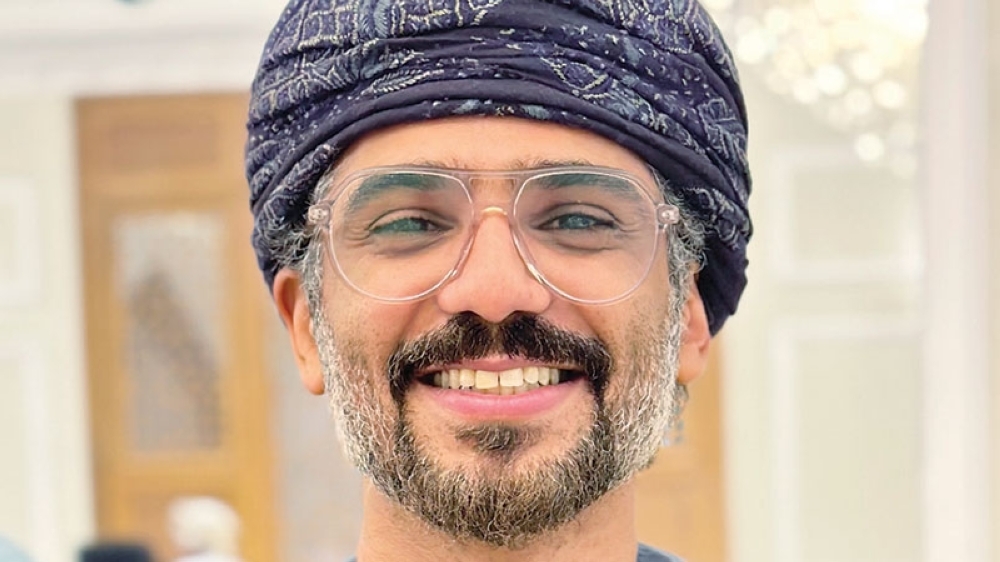
Dr. Badar Al Mamari, Head of the Art Education Department at Sultan Qaboos University, emphasised the significant impact of upbringing and the environment around us in creating, stimulating, and directing the sense of creativity, in addition to biological readiness (abilities and potentials that distinguish some people from others), and many other factors. This explains why there are more creative individuals in some countries than in others.
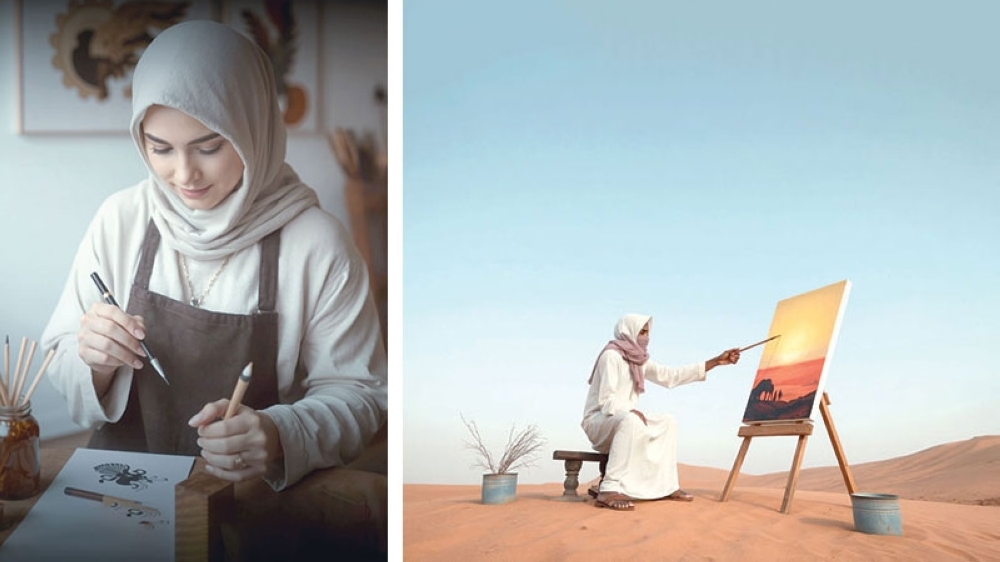
The diversity of Oman's geographical environments (coast, plain, mountain, valley, and desert) has clearly affected the diversity of human creativity in the Sultanate of Oman. Dr. Badar observed through his daily experiences as a lecturer that these environments have influenced the level of creativity in the visual arts. He added, “An artist from a desert environment has artistic horizons and the colours used in their artistic production characterised by a lack of detail, while city and mountain artists often prefer detailed work and a multitude of colour shades. Additionally, the city dweller possesses better skills in the field of three-dimensional art because they live amongst buildings and walls.”
Dr. Badar stressed that the geographical environment and the temporal boundaries between the present and the past also affect human creativity in Omani society, notably in the nature and form of modern facilities. “It has been proven to us through contact and experience with the Omani plastic arts movement that the inhabitants of modern cities tend towards sharp geometric shapes more than the artists who produced Omani art in the early ancient stages, particularly in the sixties and seventies,” he explained.
Fortunately, creative generations can be raised through educational systems that stimulate human creativity at both school and university levels. This can be achieved, as he referred, by “adopting modern teaching methods, focusing on practical education, facilitating communication between educational institutions and the practical field in public life (job environments), and keeping abreast of developments in cognitive and practical fields related to different specialisations. These are all essential to advancing an educational environment that stimulates creativity,” he confirmed.
Al Mamari added, “Unfortunately, there are still those who are entrenched in teaching traditional auto mechanics in engineering colleges, whereas today we are witnessing the electric car revolution, which has transformed from a recreational option in countries around the world to a realistic and practical option apparent on our streets. Such educational gaps are a shattering of hopes for the emergence of education based on creativity and innovation.”
In order to overcome the obstacles to achieving creativity in the educational environment, whether at home or in educational institutions, he highlighted that "it is essential to end the old methods of education that relate to indoctrination and the reproduction of knowledge in a traditional way. When it comes to scientific subjects, course descriptions and instructions should not be overly detailed, but rather provide general guidelines that give the student the opportunity to transcend the norm and often provide innovative and out-of-the-box solutions.”
This means, as he added, that combining modern teaching methods with providing responsible freedom will work together to create a scientific environment that stimulates creativity and innovation. Developing teachers’ skills is also an important step. He noted that a teacher who does not develop themselves cannot contribute to fostering creativity in educational fields, as applying the same strategies in education and curricula conflicts with creativity.
The family also plays a crucial role in forming a creative generation. He emphasised, “Allow your children the freedom to follow their curiosity, to explore and try things around them, provided that it does not pose a danger, because freedom nurtures creativity while excessive monitoring stifles it.”
What the child watches on electronic devices and television, as Al Mamari pointed out, "affects the formation of their perceptions. What we see, hear, touch, and smell shapes our perceptions (even at the level of language, ideas, and values), and perceptions eventually turn into creativity. Therefore, the child must be granted some freedom in a manner that does not endanger them."
Countries can also serve as incubators and enablers of creativity, as Al Mamari mentioned, by supporting small and medium enterprises of a creative nature. Moreover, the work of incubators and facilitators should be regulated by the relevant authorities to ensure the effectiveness and market suitability of creative projects.
Additionally, effective city planning undoubtedly contributes to the creation of creative societies, as the visual content and environments that people experience daily play a role in shaping their perceptions and horizons, thus stimulating further creativity. A city designed to serve people above all else, rather than merely focus on vehicle movement, is better equipped to foster creativity and creative individuals. The planning of Sultan Haitham City in Muscat, for example, promotes the creation of an exceptional environment that supports creativity. “The connection between green spaces and the proximity of facilities provides a fertile and integrated environment for people to produce innovation. Furthermore, the design of the city, with its environmentally friendly streets and pathways, fosters a sense of familiarity between people and the architectural components of this promising city,” he shared.
All members of society can prepare themselves to be influential and effective in accelerating and advancing the wheel of human creativity in their countries. He mentioned that when members of society care about everything beautiful and creative, they will work to cultivate a competitive, creative environment that pushes creative individuals towards development and diligence. Through this, a market can emerge that thrives on competition through creative products desired by consumers.
People also need to keep pace with advances in knowledge and technology, demonstrating boldness and a willingness to take risks in entrepreneurship without fear.
Technological advancements have further shaped creativity in the Sultanate of Oman. These innovations have enabled the Omani people to become more connected and informed about global achievements in all creative fields. As a result, Omanis have a golden opportunity to innovate and create based on their awareness of the progress made by humankind around the world.
Today, for instance, as Al Mamari pointed out, “We have achieved a significant milestone in the production of computers (the Onsor computer). If we had not been aware of the current state of computer technology, this computer would have seemed outdated, traditional, and lacking in creativity and development features.”
The Internet and the technological revolution, such as advancements in artificial intelligence, have propelled innovation and creativity to new heights. However, these technologies have also introduced challenges that creators must navigate, most notably the absence of intellectual property rights and the risk of creativity being appropriated, as well as the potential for computers to assume roles traditionally held by human creators. Al Mamari suggested that aligning the roles of these technologies with human contributions to creativity will ensure that the benefits of these technologies are maximised while their negative impacts are mitigated.
Ultimately, fostering a culture of creativity in Oman requires a collective effort from individuals, families, educational institutions, and government bodies. By investing in education, encouraging exploration, and embracing new technologies, Oman can cultivate an environment where creativity flourishes. This transformative journey will not only empower the next generation but also enrich the cultural and economic landscape of the nation, making Oman a beacon of innovation and creativity on the global stage.
Oman Observer is now on the WhatsApp channel. Click here