




ROME: Archaeologists in the ancient Roman city of Pompeii have uncovered a richly decorated but uncommonly small house with finely preserved frescoes of mythological scenes, the site said on Thursday.
The dwelling, called the House of Phaedra after the mythological queen of Athens who features in one of its wall paintings, sheds light on changing architectural styles in the first century AD, the Pompeii archaeological park said in a statement.
Unlike many of the houses excavated at the site, it was not built around the traditional Roman atrium, an open space with a pool for collecting rain water.
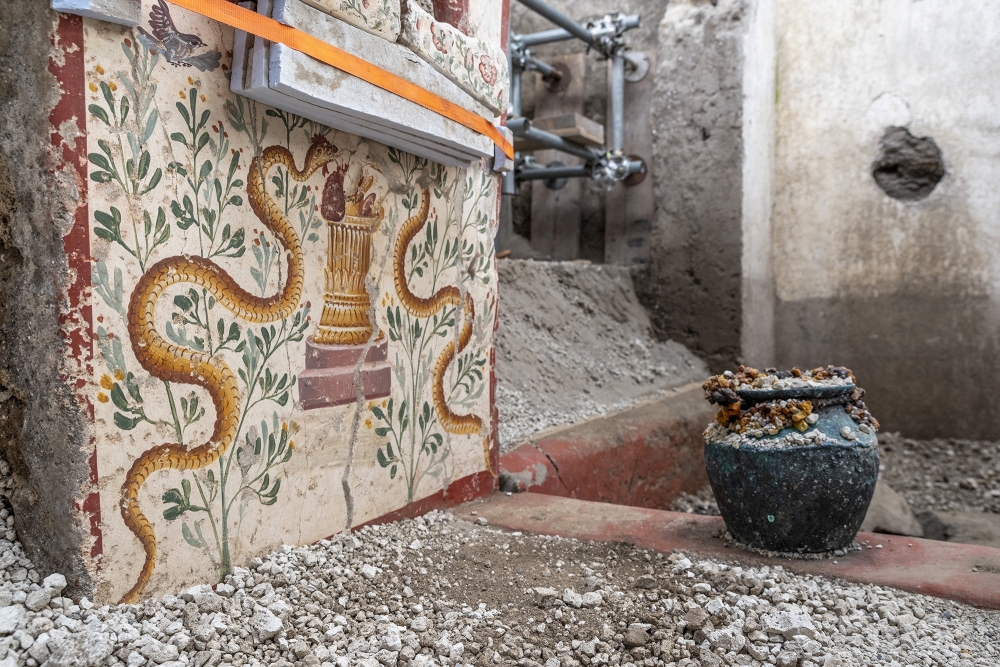
Despite its small size, the house "strikes us for the high level of its wall decorations," the statement said, noting they were of similar quality to much larger and more opulent homes near the new discovery, which lies in the centre of the site.
The once-thriving city of Pompeii and the surrounding countryside in southern Italy was submerged by volcanic ash when Mount Vesuvius exploded in 79 AD.
The eruption killed thousands of Romans who had no idea they were living in the shadow of one of Europe's biggest volcanoes. It buried the city in a thick layer of ash, preserving many of its residents and buildings.
Besides the fresco of Phaedra and Hippolytus, who spurned her love, other mythological scenes adorning the vividly coloured walls of the house include gods who the site said may have been Venus and Adonis.
The building also boasts numerous smaller, but detailed and beautifully preserved patterns and scenes from nature. — AFP
Oman Observer is now on the WhatsApp channel. Click here