For millions in the world today, eating the minimum amount of food every day is a dream! Several of them have already joined the ranks of that chronically undernourished group.
According to the 2024 edition of the State of Food Security and Nutrition in the World report published by five UN agencies, between 713 and 757 million people, corresponding to 8.9 and 9.4 per cent of the global population, respectively, may have faced hunger in 2023.
In the foreword note of the report, the heads of the five agencies warn that those years after the world leaders committed to end hunger, food insecurity, and all forms of malnutrition, the world is still off the track to achieve this objective.
“Despite some progress, an alarming number of people continue to face food insecurity and malnutrition as global hunger levels plateau for three consecutive years, with approximately 152 million more hungry people than 733 million in 2019," the report says.
According to the report, in 2023, an estimated 2.33 billion people, equalling 28.9 per cent of the global population, were moderately or severely food insecure. This means they did not have regular access to adequate food for the entire day or more at times.
Adult obesity has registered a steady increase over the last decade, from 12.1 per cent in 2012 to 15.8 per cent in 2022. Projections indicate that by 2030, the world will have more than 1.2 billion obese adults.
Though hunger affects everyone in the world, children and women are the worst hit this food crisis that is mainly driven by armed conflicts. We know that when children do not get enough food, their brains and bodies suffer badly. It finally stops them from growing and learning and prevents them from reaching their full potential.
“We must urgently step up financing to end child malnutrition. The world can and must do it. It is not only a moral imperative but also a sound investment in the future," Catherine Russell, Executive Director, Unicef, one of the agencies of the report, wrote in the forward.
Globally, one in four children under the age of five suffers from undernutrition, which can lead to long-term damage. Malnourished children are up to 12 times more likely to die than a healthy child.
Since the end of 2019, a devastating combination of factors, including the global pandemic, armed geopolitical conflicts, climate extremes, and economic shocks like soaring food prices, have together driven the food crisis to unprecedented proportions in the world.
History shows that conflict always played in tandem with the history of hunger in many parts of the world. Conflict not only disrupts income sources but also hinders food access due to market disruptions, leading to price spikes and food shortages.
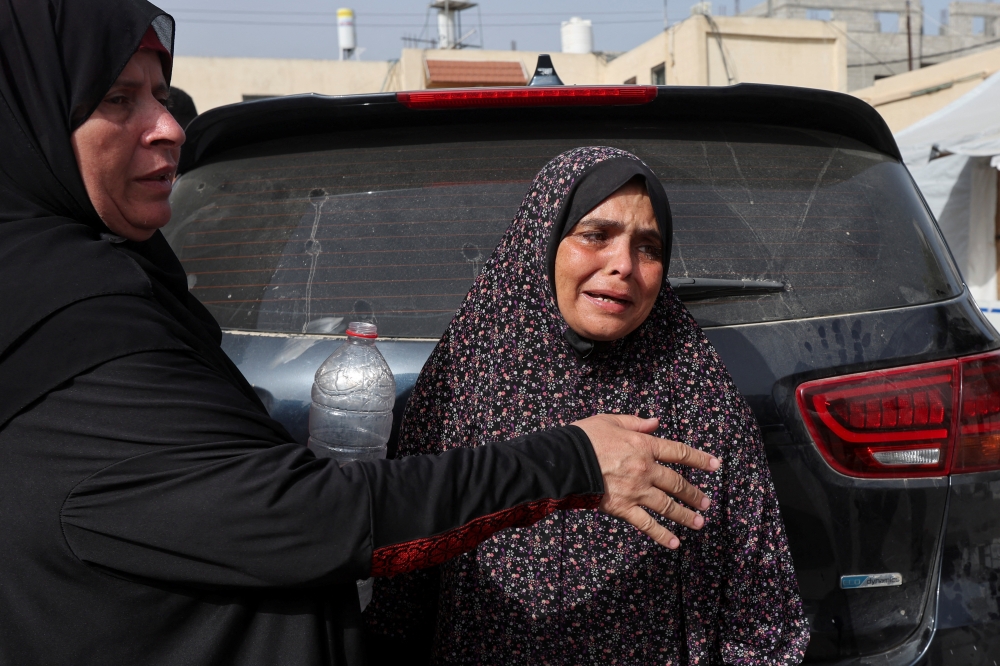
Examples are hunger hotspots like Palestine, Sudan, Syria, Yemen, and Ukraine. Look at the war-hit Gaza strip of Palestine where the UN's Integrated Food Security Phase Classification system projected in June this year that a high risk of famine will persist as long as conflict continues.
The hunger system report found that 96 per cent of the population, equivalent to 2.15 million people, face acute food insecurity, with 495,000 individuals experiencing catastrophic levels of food insecurity through September 2024. Famine is the most severe form of food insecurity!
The gravity of the situation is a reminder of the urgent need to make sure food and other supplies reach all people in Gaza. As Matthew Hollingworth, World Food Programme Country Director for Palestine, pointed out, “Famine is a reality. It’s all manmade. It’s shocking to see how this devastating situation has gotten so quickly.”
Oman Observer is now on the WhatsApp channel. Click here