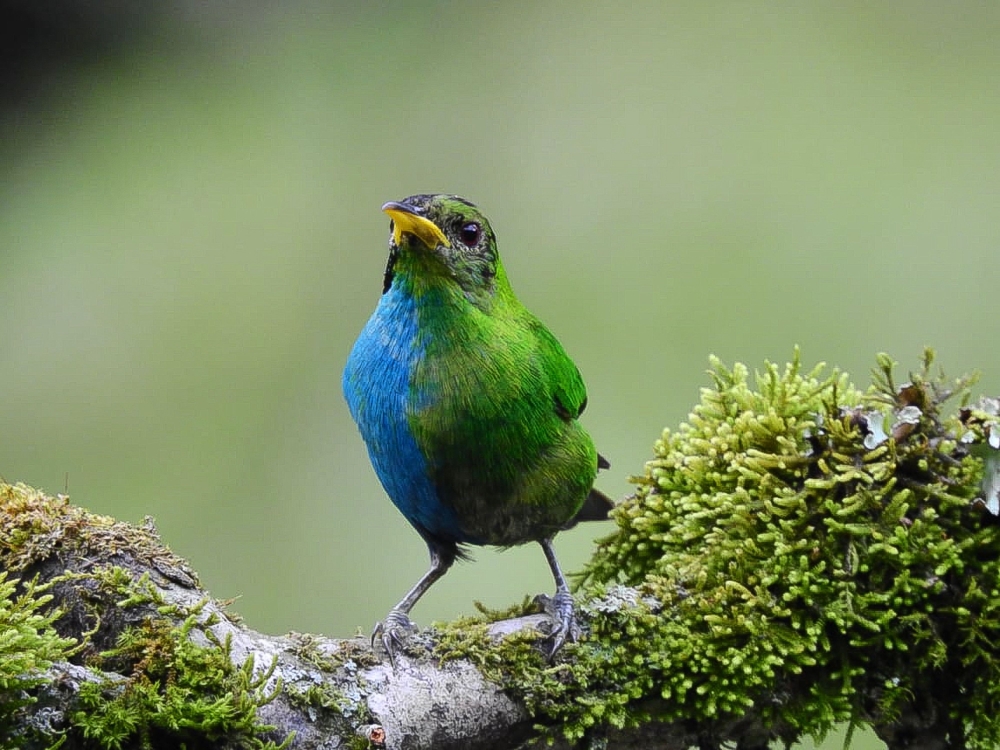





On the right side of its body, the bird flaunted the typical blue plumage and black head of the male Green Honeycreeper. On the left, it was a beautiful grass green.
According to experts, the specimen spotted in Colombia was a rare example of "bilateral gynandromorphy" -- a condition in which one side of an animal exhibits male characteristics and the other female.
Amateur photographer John Murillo said he first spotted the unique bird through his camera lens when it landed on a feeder to enjoy a meal of bananas and grapes at a nature reserve in Villamaria in Colombia's west in late 2019.
It was then observed by Murillo and experts for more than a year, but never captured.
In an article published last month in the Journal of Field Ornithology, Murillo and a group of bird scientists report the first recorded observation of gynandromorphy in a living Green Honeycreeper (Chlorophanes spiza.)
Green Honeycreepers are small birds found in the tropics from southern Mexico to Brazil.
Murillo, 56, told AFP he felt very fortunate to have observed something "very different from anything we have seen."
He also recounted the bird's "strange" behavior: "it was always alone" at the feeder.
Murillo said the bird seemed more comfortable with humans than with individuals of its kind.
"It is unique in the world, and so it will die," he said.--AFP
Oman Observer is now on the WhatsApp channel. Click here