




Lobster fishing season for 2023 will start on Wednesday, March 1 and continue till the end of May,
according to the Ministry of Agriculture, Fisheries and Water Resources.
The ministry exhorted the fishermen to fish during the specified season using authorised fishing
methods -- lobster cages only -- to preserve this marine wealth from the risk of depletion and
sustainability of its stock.
The ministry seeks to follow up on the movement of fish in the fish markets in the various governorates
of the Sultanate of Oman to ensure the availability of fish products and to note the reasons that lead to
shortages in supply and their impact on meeting consumers' needs.
Fishermen must abide by the permitted fishing methods during the season and not catch
lobster loaded with eggs, as well as not fish less than eight centimetres long.
The ministry has started efforts to reduce the infringements of the lobster fish represented by the
coastal control teams in the governorates of the Sultanate of Oman. It is all for stressing the importance
of cooperation among fishermen to preserve fish wealth, adhere to the fishing seasons and comply with the
ban period on lobster fishing during its breeding season from the beginning of June of each year to the
end of February.
The current laws prohibit lobster fishing using nets and spears, which led to the depletion of this wealth
and consequently decreased economic value due to its low quality.
In this regard, the fish control team in Al Wusta Governorate last month seized 50 pieces of
banned nylon nets from the deck of two unlicensed boats, in addition to small lobster caught outside
the season. Legal measures were taken against the violators. Also, the fish control team in the Dhofar
Governorate also seized from a violator 1,036 kg of lobster fish outside the fishing season in the Wilayat
of Mirbat. The seized lobsters have been preserved while the legal procedures are underway against the
violator.
As per law, there is a provision of imprisonment between one and three months, a fine between RO 300
to RO 5,000 or both. In addition, there would be confiscation of the caught fish and fishing equipment used.
Also, the penalty is doubled in case of a repeat violation for a specified period or permanently.
The statistics indicated that the stock has deteriorated and decreased in the past years due to
overfishing and wrong fishing methods.
To maintain the lobster population in the Oman Sea, the research centres of the General Directorate of
Fisheries Research in the ministry, such as the Centre for Marine and Fisheries Sciences and the Fish
Farming Centre, have implemented several research and scientific studies on the 'Sharkhah' (lobster) to
multiply and cultivate this wealth and achieve sustainable management and development of the lobster
as a marine wealth abounds in Omani waters.
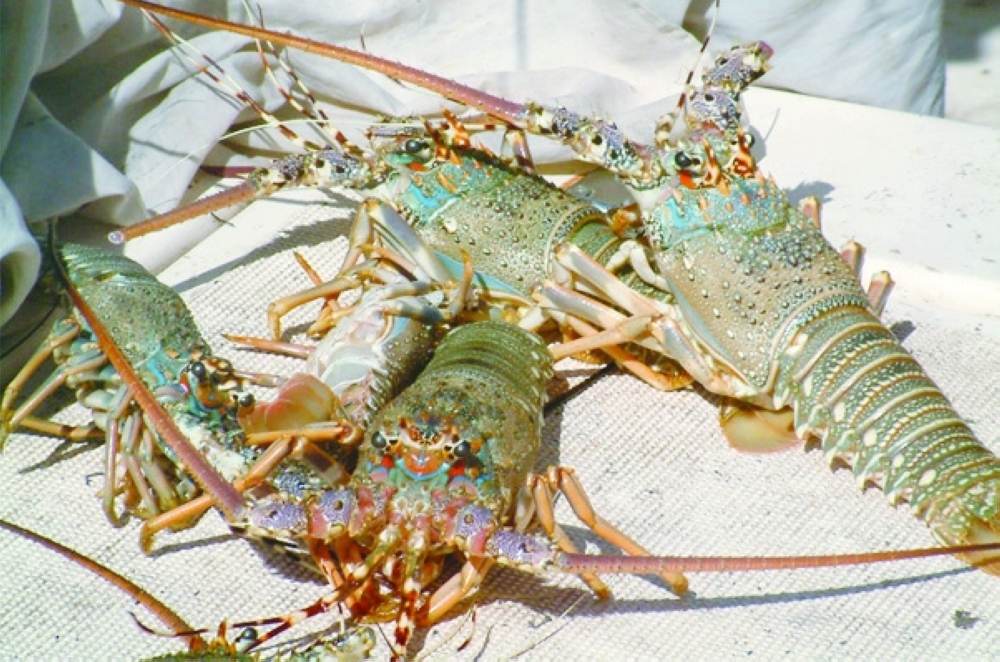
It should be noted that the lobster or 'Sharkhah' is an arthropod of crustaceans with a hard shell and ten
legs. It is considered one of the marine resources that abound in the waters of the Sultanate of Oman.
Lobster is an essential source of protein and is rich in potassium, zinc, nicotine and iron. Even it contains
an appropriate amount of calcium, magnesium, sodium and a number of vitamins.
The lobster-fishing season is of economic and social importance to the fishermen living in the coastal
areas extending along the coastal strip of the Arabian Sea.
@Afrahalbalushia
Oman Observer is now on the WhatsApp channel. Click here