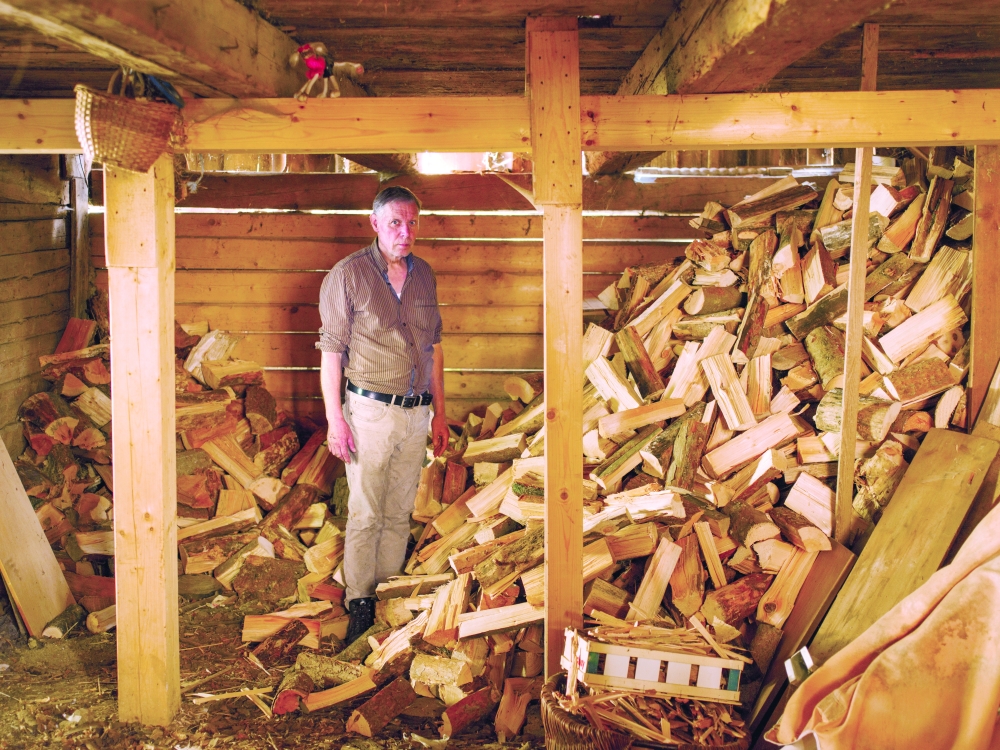





Tightly stacked cords of wood line the side of a couple’s home in southern Germany, while members of another family farther north have lined their basement with shelves stacked with pasta, rice, cooking oil and cans of chickpeas, lentils and tomatoes.
In central Germany, a man long wary of relying on the government has ensured that he can make it through weeks without power or heat; he’s filled his attic with coolers to hold food, along with a camping stove, gas canisters and solar power equipment to keep the lights on and stay connected online. Others brave the chilly waters of a local lake for a daily dip, forgoing a hot shower at home.
Across Europe’s largest economy, people are stocking up and battening down. Even as authorities publish lists of essential items to prepare for power outages or natural gas rationing, many Germans are taking matters into their own hands to ensure that they have a warm home and food on the table through the winter.
A majority of Germans, a full 60%, trust their government, according to the Organization for Economic Cooperation and Development. But with a seemingly endless barrage of Russian-fired missiles falling on Ukraine, helping to send prices for energy and food at home soaring, many Germans have decided that if faced with the worst, they might be on their own. They want to be prepared.
The Woodsman
Leo Bäumler spends his afternoons splitting logs from trees that he fells in a forest that is owned by his sister, near his home near Weiden, in the southern state of Bavaria. He stacks them in his woodshed until he feeds them into the stove in the kitchen of the low-slung house where he grew up.
While thousands of people across Germany have reopened sealed-off fireplaces and installed wood-burning stoves to avoid burning natural gas, which doubled in price over the past year, Bäumler heats his rooms, boils water for his morning coffee and bakes pizza with his wood-burning stove as ever.
Years ago, he recalls, his father refused to install a gas-fired central heating system, back when the first pipelines reached his home region, connecting Siberian gas fields with then-West Germany, across the Iron Curtain. For decades, natural gas piped in from Russia was abundant and cheap. Half the homes in Germany use gas for their heating.
Even before the Russian army invaded Ukraine in February, flows of Russian gas had started to dwindle, causing the wholesale price to more than double. But German leaders, citing the reliable deliveries since the Soviet era, refused to believe that President Vladimir Putin would deprive Europe of gas in retaliation for the European Union’s support for Ukraine. Many Germans, though, whose bills were already beginning to soar at the end of 2021, began to prepare.
By the time Russia had made their first cut to gas deliveries in late spring, the government began floating the idea that Germans might have to face rationing come winter. That sent many people to heating supply stores to purchase wood stoves, and since then the price of cords of wood and wood pellets has jumped by more than 87% compared with 2021.
But Bäumler hasn’t noticed.
“Since I live in the middle of the forest in eastern Bavaria, surrounded by trees,” he said, “I don’t have to worry that I will run out of wood.”
The Ice Bather
While some Germans are readying for an eventual blackout or gas stoppage, still others are focusing on ways to conserve energy. The country’s economy minister, Robert Habeck, became the butt of jokes over the summer when he encouraged Germans to take shorter, cooler showers.
Gregor Ranz and his friends didn’t need the encouragement. Every morning between 8 and 9, they meet to skinny dip in a lake in the Wedemark district, north of Hanover. They have been holding their morning ritual since well before the energy crisis — even when the temperatures dip below freezing.
Although the gathering is social as well, Ranz said that once the energy crisis set in, it made more sense. Bathing nude — common in much of Germany — each morning served as effectively taking the cold shower approach to the extreme.
“I shower once a week, when I go to the sauna,” he said. “Of course I have a shower at home, but I don’t use it. A washcloth works just fine.”
Making Connections
Bernd Sebastian has relied on a 25-year-old gas furnace to power the boiler that provides warm water and heating for his home. When the price of gas began to rise, he upgraded his furnace, but he also hooked up his wood-burning stove to heat the water in his main boiler.
“We sit in front of our fireplace every day, and it warms the water in my boiler, and the heater draws from that,” he said. When the fireplace is off, the gas furnace kicks in.
He said that he contemplated getting a heat pump, which draws warmth from the air. “That would be ideal, but that runs on electricity, and with power prices going up, it wouldn’t save me money unless I installed solar panels, which is another outlay.”
Sebastian gathers wood from a nearby forest that is managed by a friend who alerts him when trees have fallen or been felled. Then he gathers it up and brings it home to be split and stacked. — The New York Times
Melissa Eddy is a correspondent based in Berlin who covers German politics, social issues and culture for The New York Times.
Oman Observer is now on the WhatsApp channel. Click here